





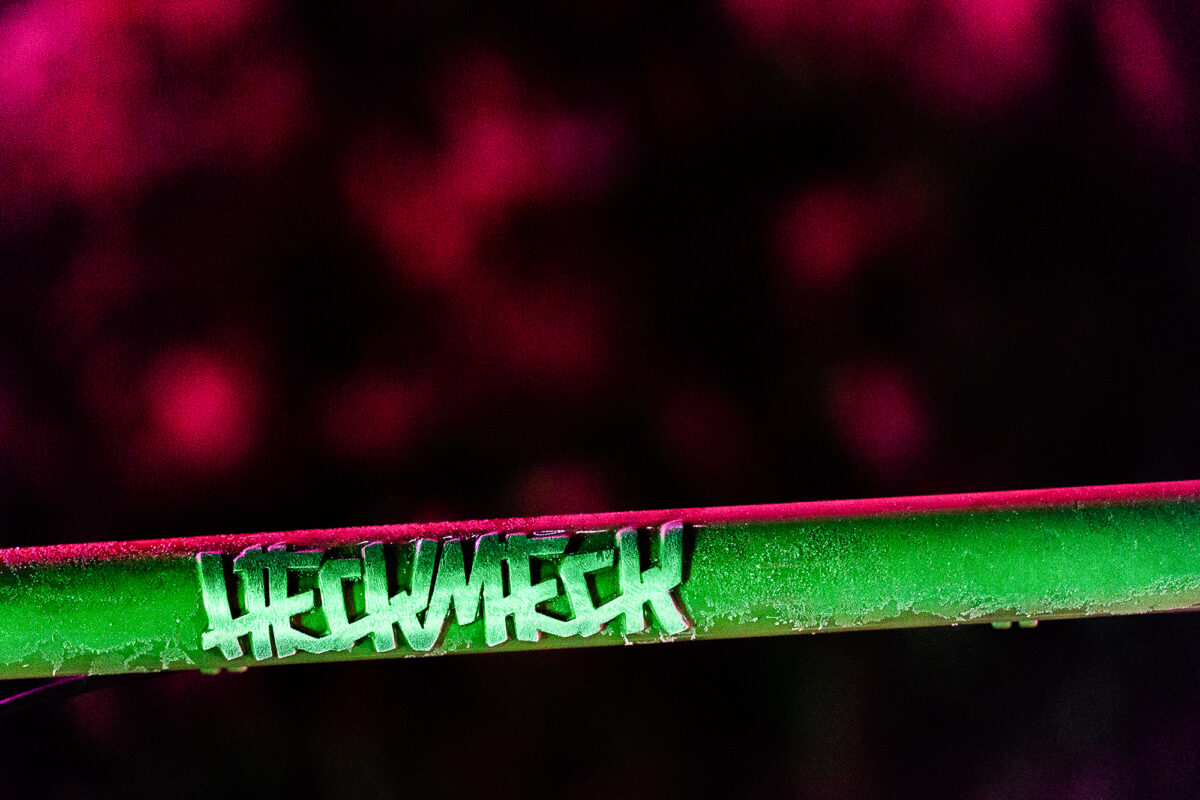
Heckmeck is a word that captures a certain German flavor of chaos — and also the perfect name for a bike from Drust Cycles that has no business being as good as it is. Built in Berlin by Konstantin Drust, the Heckmeck is his first attempt at something “normal,” which of course makes it deeply strange. Our European correspondent Petor Georgallou presents something resembling a straight bike review — or at least as close as he gets. Join the chaos…
The Definition of Heckmeck
“Heckmeck is a noun. When you’re outside of the club and you’re making too much noise, the bouncer says, ‘Hey, stop the heckmeck.’ Like when kids are making heckmeck, you say to stop the heckmeck. Basically, if anyone is making heckmeck, you say, ‘Stop the heckmeck.’ Germans don’t like it when people make heckmeck, but all Germans are making heckmeck. It’s just one of those German words that there’s no point in trying to explain to a non-German speaker. Heckmeck has loads of meanings, but it’s just like… heckmeck.”
The first time I met Konstantin Drust was at the afterparty of the first Bespoked in London.
“Do you know who I am?” he asked (because we’d had some exchanges online, not because he introduces himself that way).
“Yes,” I lied.
I stared at him intensely for a while, trying to work it out, until I was sure that he knew I was lying.
“Actually, no… that was a lie.”
He gave me a head tube badge, and that’s when I realized that I did know him. We’d messaged each other a decent amount on Instagram. Our framebuilding careers overlapped a little – at that point, Konstantin was one of those weird guys who I didn’t really understand, but kind of envied for their patience. Building bikes for me was like trying to slay a hydra, hacking off heads here and there where I could reach them, in the hope that it would die so I could finally focus on my career as an artist. That’s what made Konstantin weird for me. He had the ability to focus on the process without needing to achieve “a bike” immediately at the end.

Evolution of Drust
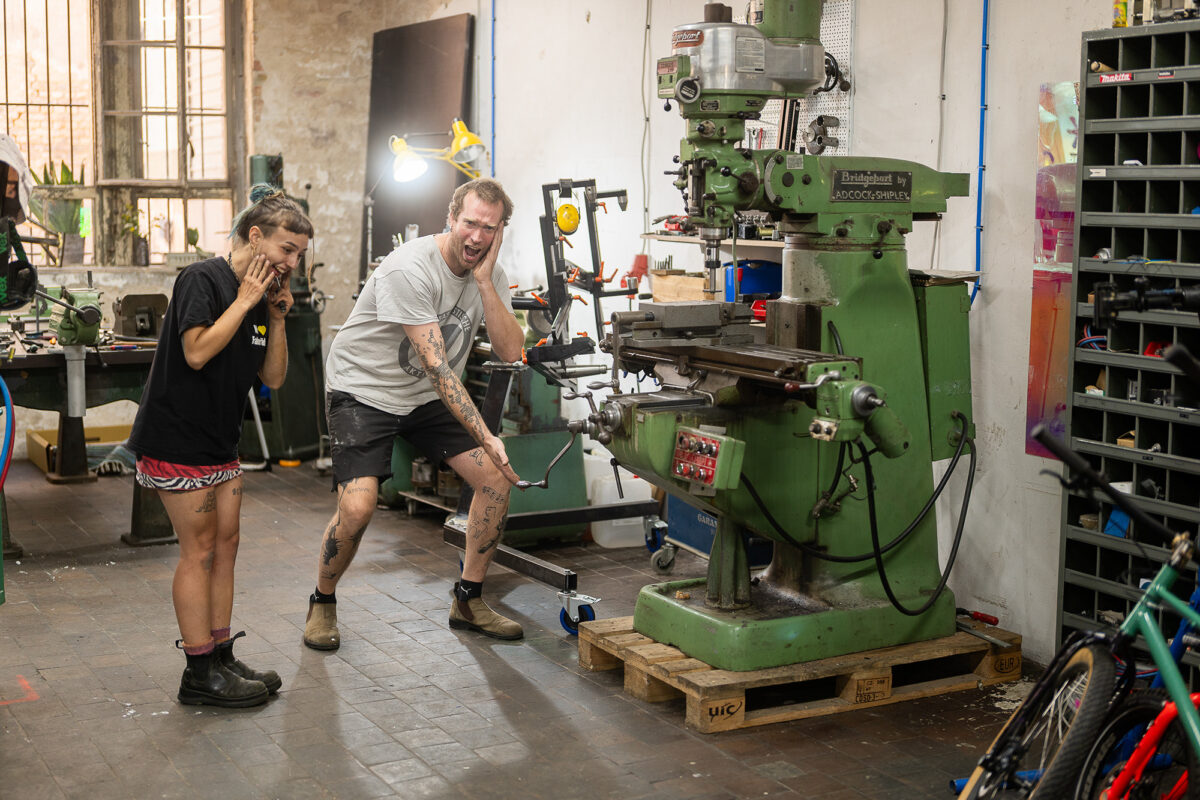
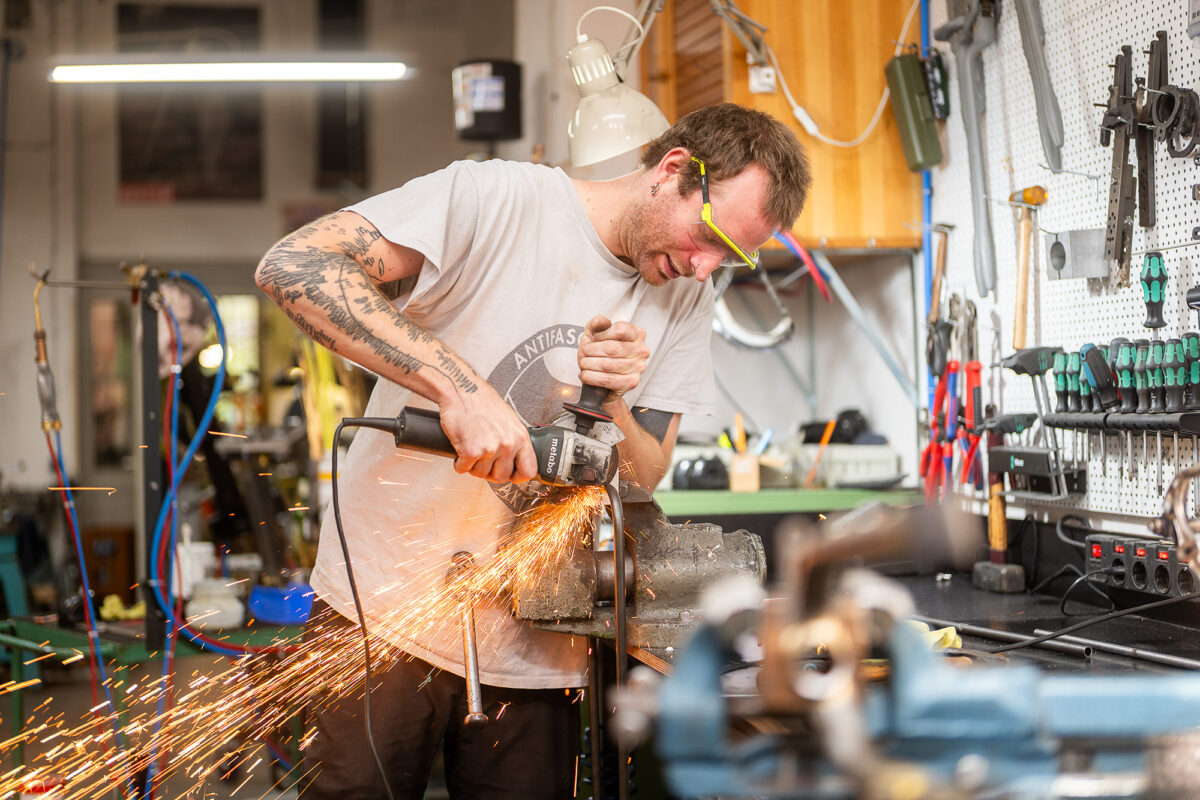
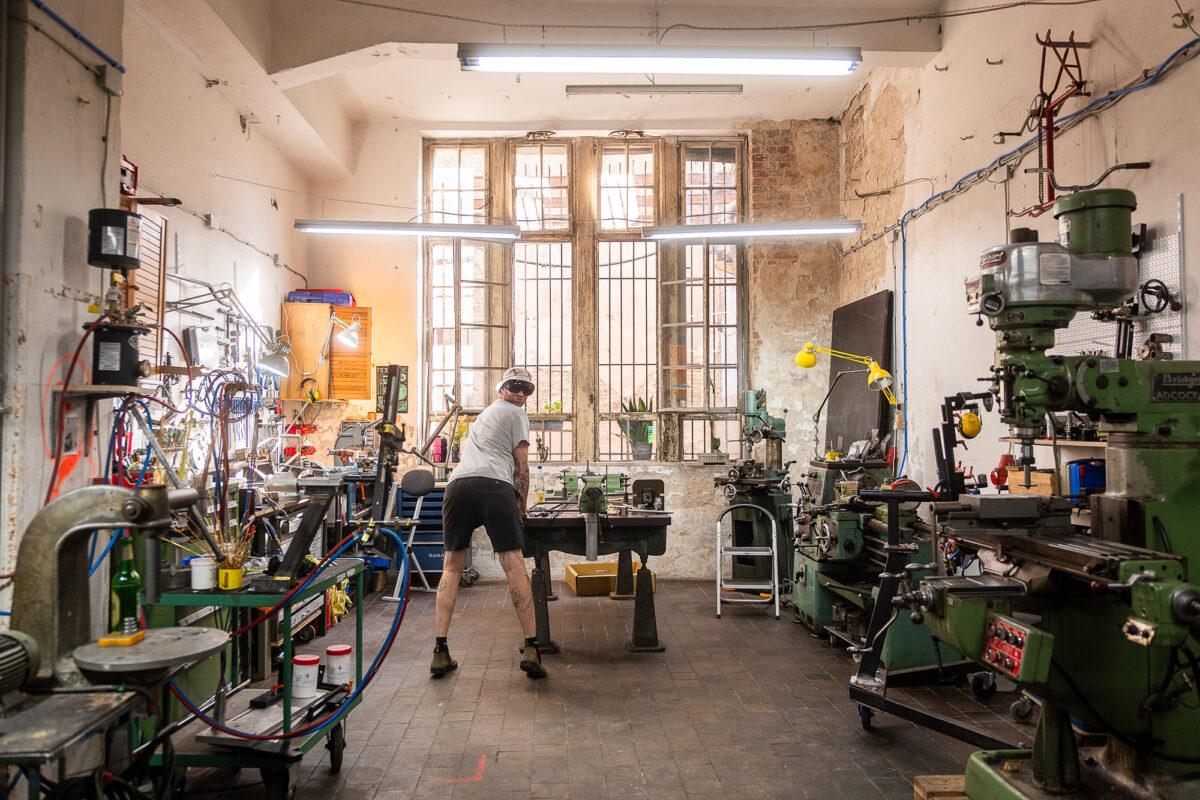
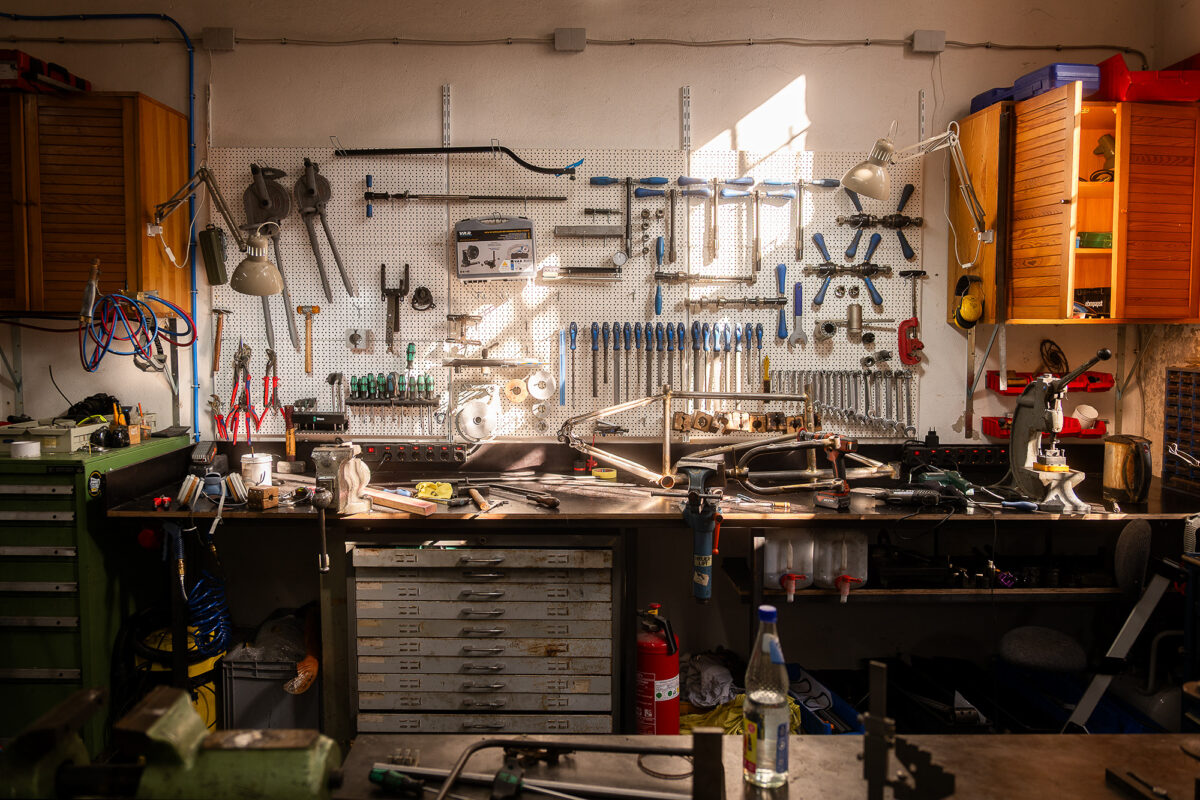
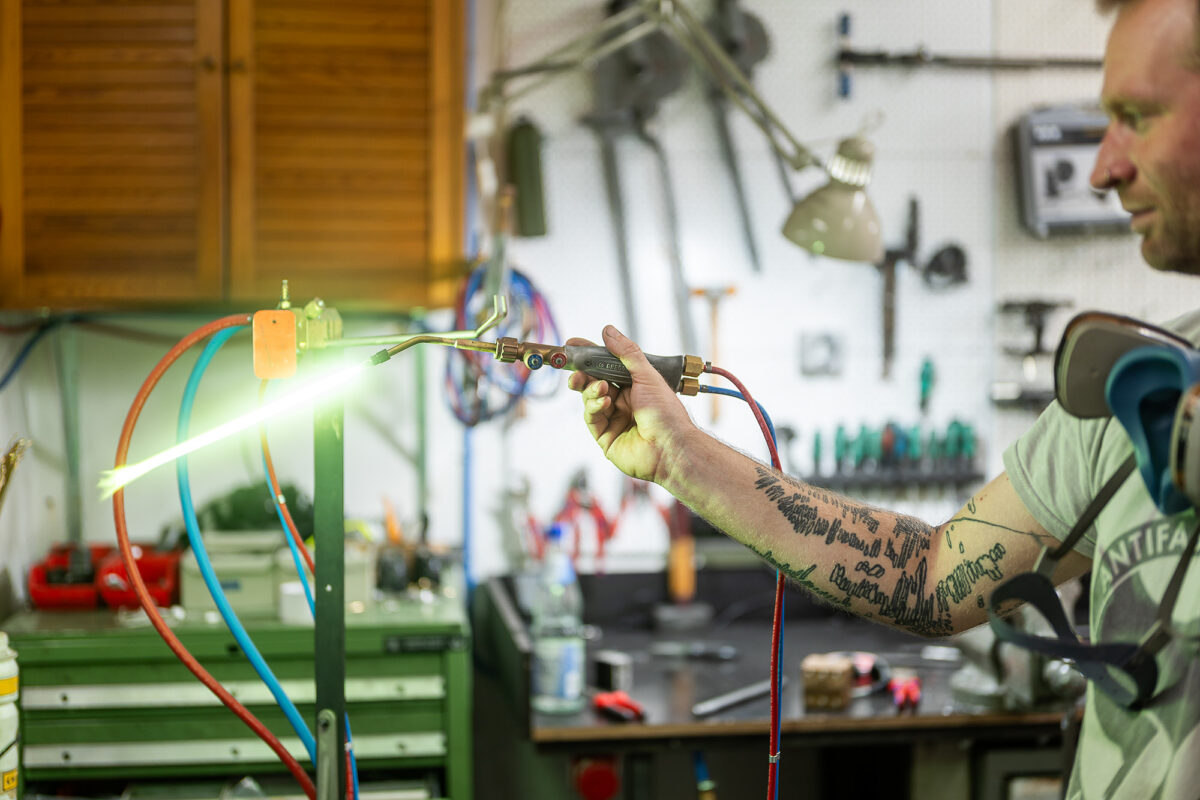
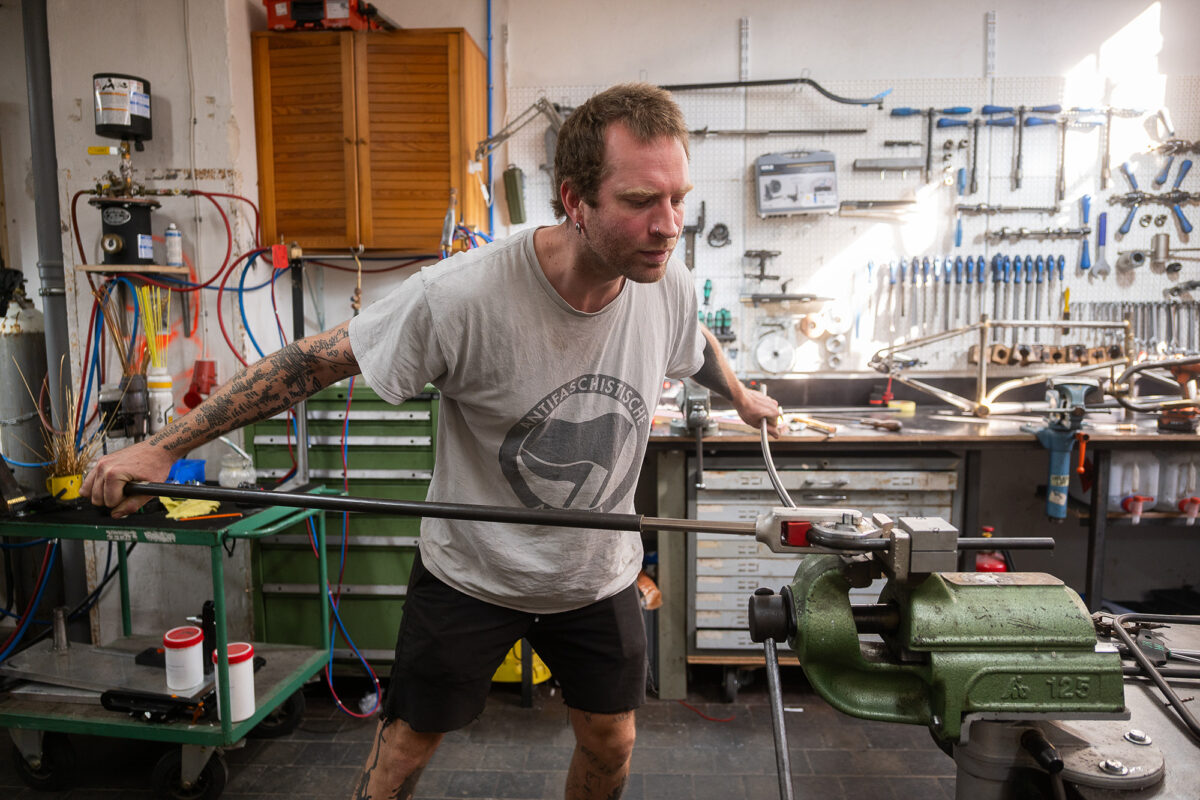
In his early career, Konstantin learned framebuilding at Big Forest Frameworks, where he later became a teacher, so as a framebuilder he was, at the beginning, employed. From afar at least, there seemed to be a lot of focus on refining the process, learning to braze in a certain way, for predominantly aesthetic reasons, and filling a workshop with premium German-made machines. I was an art guy with a bike problem; Konstantin was a bike guy with a machine problem, using a framebuilding career to justify his absurd machine-collecting hobby. Konstantin and I both practiced building using the Lego method: building with a plan, but allowing space for the plan to evolve according to aesthetic considerations and available materials.
Like me, Konstantin became a builder of weird bikes for weird people. It’s a phase that a lot of builders grow out of because it’s not especially financially rewarding and requires a decent amount of curiosity, which is often a young quality. Builders who can stay curious and stay in business are few and far between, often living on the luxury of being “too small to fail.” For Konstantin, being that rare and excellent but very specific variety of oddball, there’s no odder path, no stranger direction, and no greater departure from the expectations of your audience than designing and building an off-the-peg “production” gravel bike.
When Konstantin told me three years ago that he was designing an inexpensive ready-to-wear line of gravel bikes, I was conflicted. Had he lost his marbles or become an elite troll who’d taken the practice of trolling and given it form? Real, physical, material form – so tongue-in-cheek that the bike itself would have to actually be good.
This is how the Heckmeck trolled me. I’d wanted my own Drust for a while, and now I had a chance to get a leg over one of his bikes, built around my bike fit, but then that Drust being the most basic Drust to date… a Drust, but just not a very Drusty one.
In On The Joke
Konstantin told me that he’d always wanted to make production models for people who wanted to order bikes, to simplify the process and make custom more accessible, but that he’d never had the time to build that way because everyone just ordered weird bikes, so he spends all his time building weird bikes. This is plausible for sure, though I still feel like I’m being gaslit into believing Konstantin is just a regular guy trying to build regular bikes for regular people and somehow getting it wrong. I can only take that seriously like the deadpan punchline to a Werner Herzog joke, where the humor comes from how deadly serious he actually is while all the time being acutely aware of the absurdity of his narrative. It’s funny as long as the audience plays along with the charade of seriousness, so as a good audience, I have to take the Heckmeck seriously; otherwise, it’s me who is destroying the joke.
Somehow, the first pre-production Heckmeck made its way to my house. I looked at it a lot to start with, because I received the bike having recently herniated three discs in my spine, so I couldn’t get on a bike or carry it down the stairs of my flat to street level, let alone get it back up again. So it sat for months collecting dust in my living room, goading me, reminding me every day that I wasn’t doing what I wanted to be doing because my body wouldn’t allow it. Anger, failure, disappointment, and apparent frailty made incarnate.
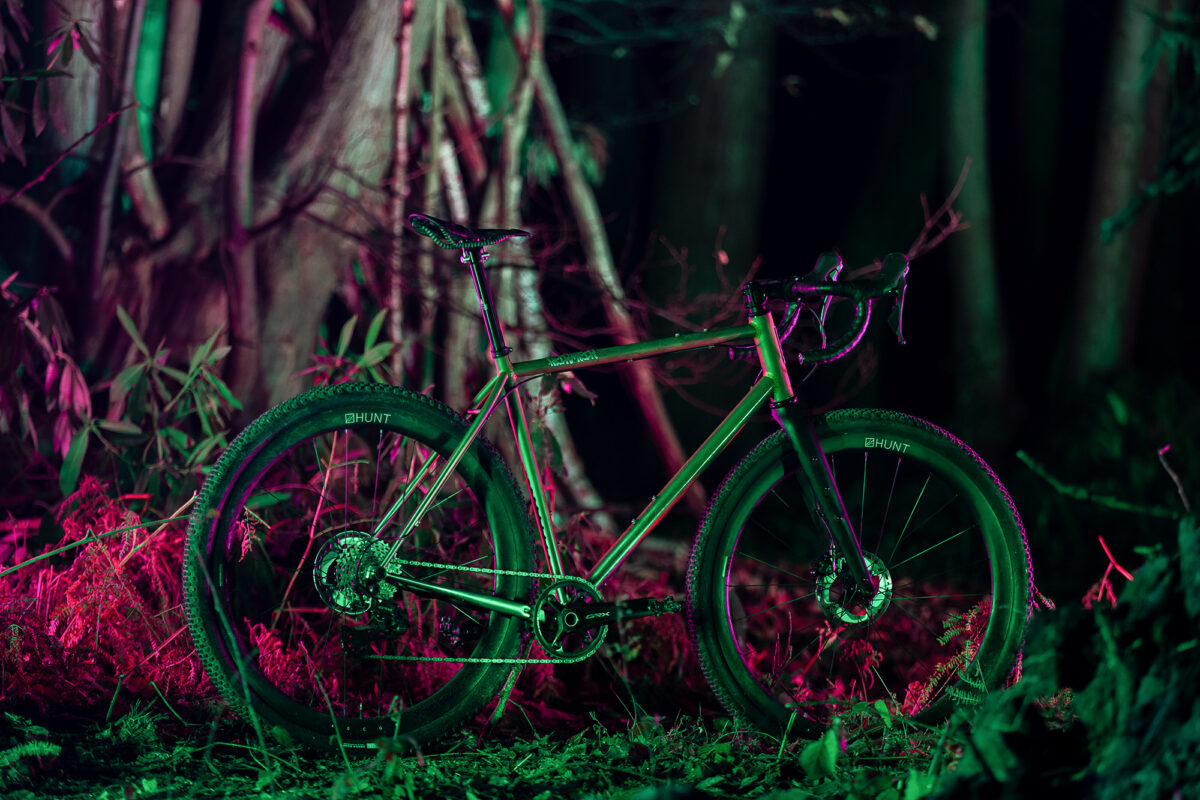
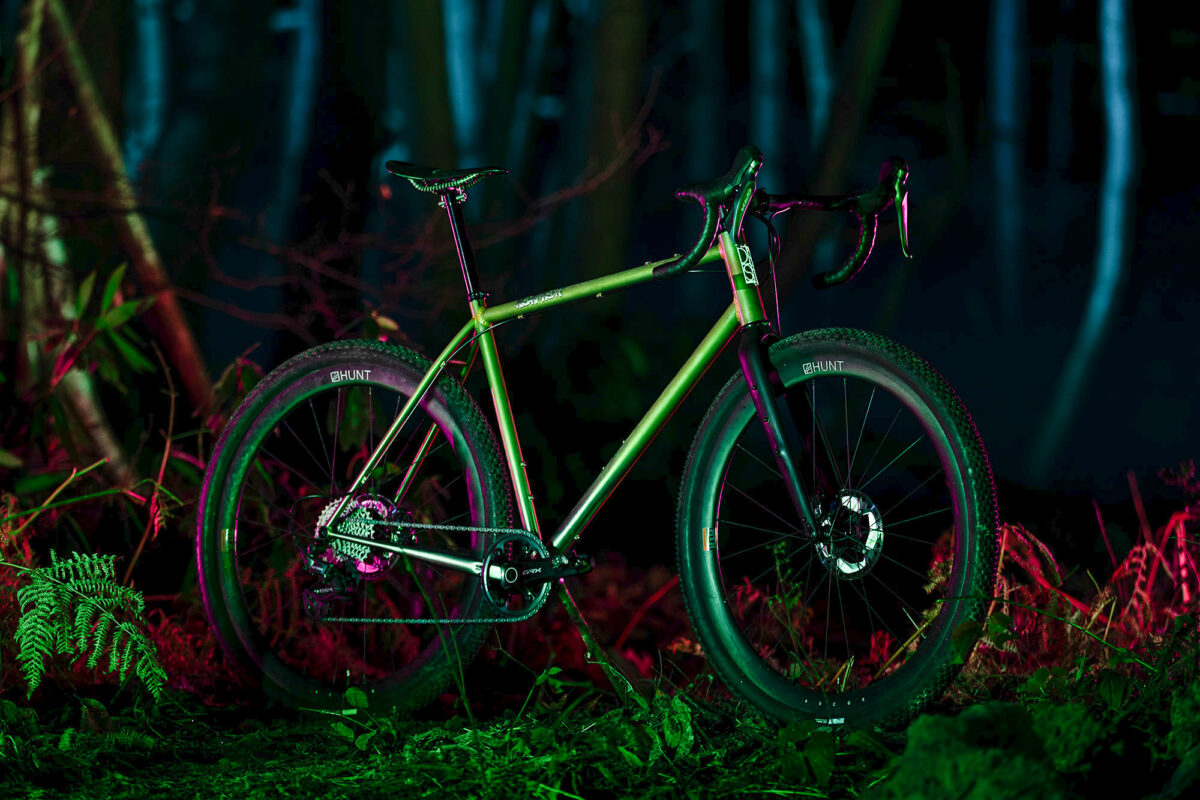
Around Halloween, I changed all the lightbulbs in our house to blacklights. The Heckmeck lived in the living room like an albatross around my neck. It was powdercoated toxic green fading to clear, but when I turned the black lights on it, the bike fluoresced unexpectedly. It was a sign that told me I was ready. I had to ride it, so the next day I did, and the day after that, and the day after that, and so on. I rode the Heckmeck a lot.
Berlin Gravel: The Drust Cycles Heckmeck
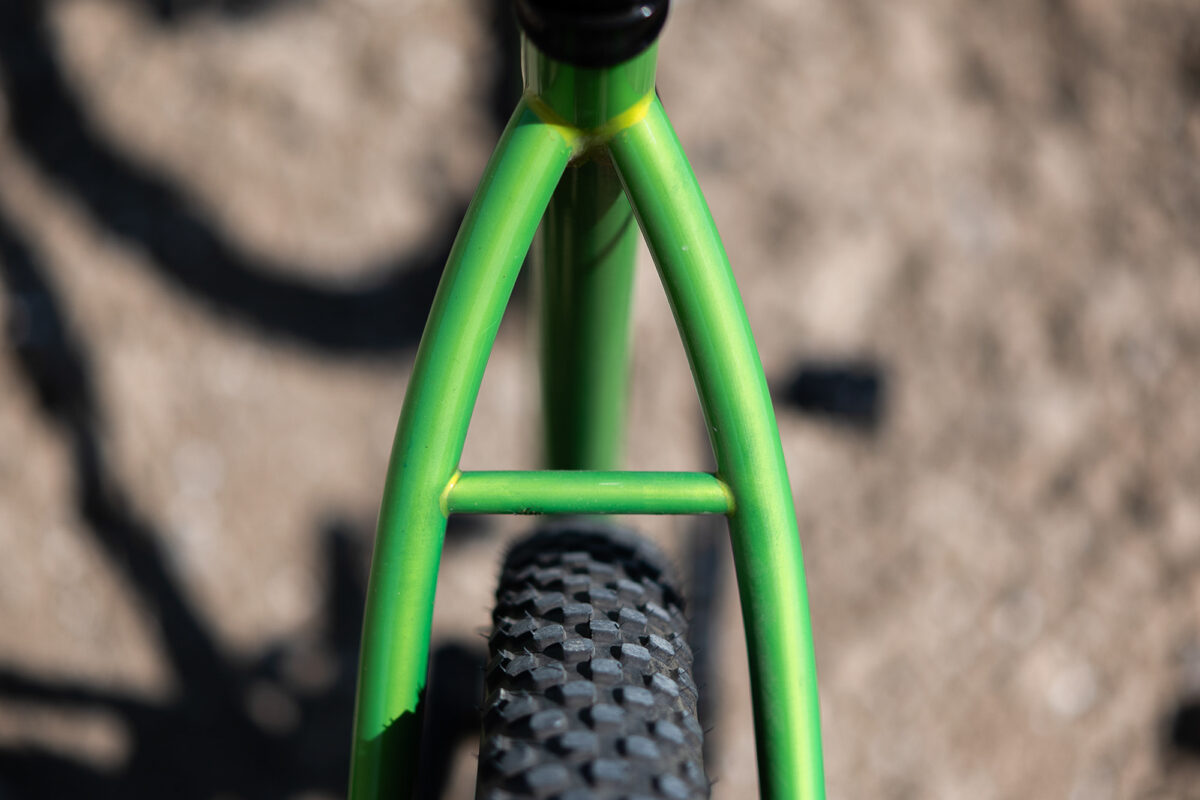
The Heckmeck is the first off-the-peg bike from Berlin-based Drust. It’s a relatively light gravel bike, with geometry that sits on the roadier end of the gravel spectrum while also accommodating 700 x 55 mm knobby tires. The design ethos is that if you spend most of your time riding on paved roads, a road-centric geometry feels fast, fun, and good on the road. Big, lightweight tubeless tires feel floaty and roll fast, but if you want to make some heckmeck of your own, there’s enough rubber to bounce around on. It’s a good design ethos that makes sense for a lot of riders using one bike for most things. It’s almost the opposite of my Sturdy, so it fits in nicely with the bikes I own, and for a few months became my big, fast, floaty road bike.
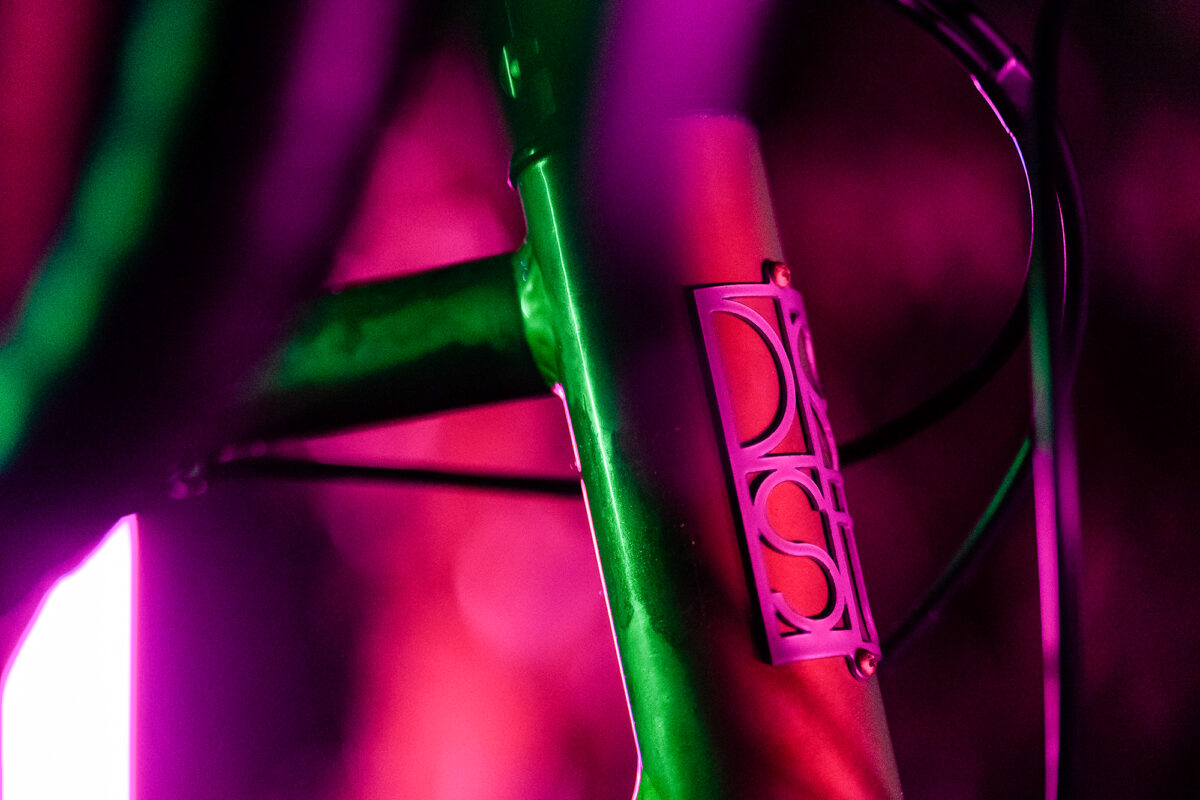
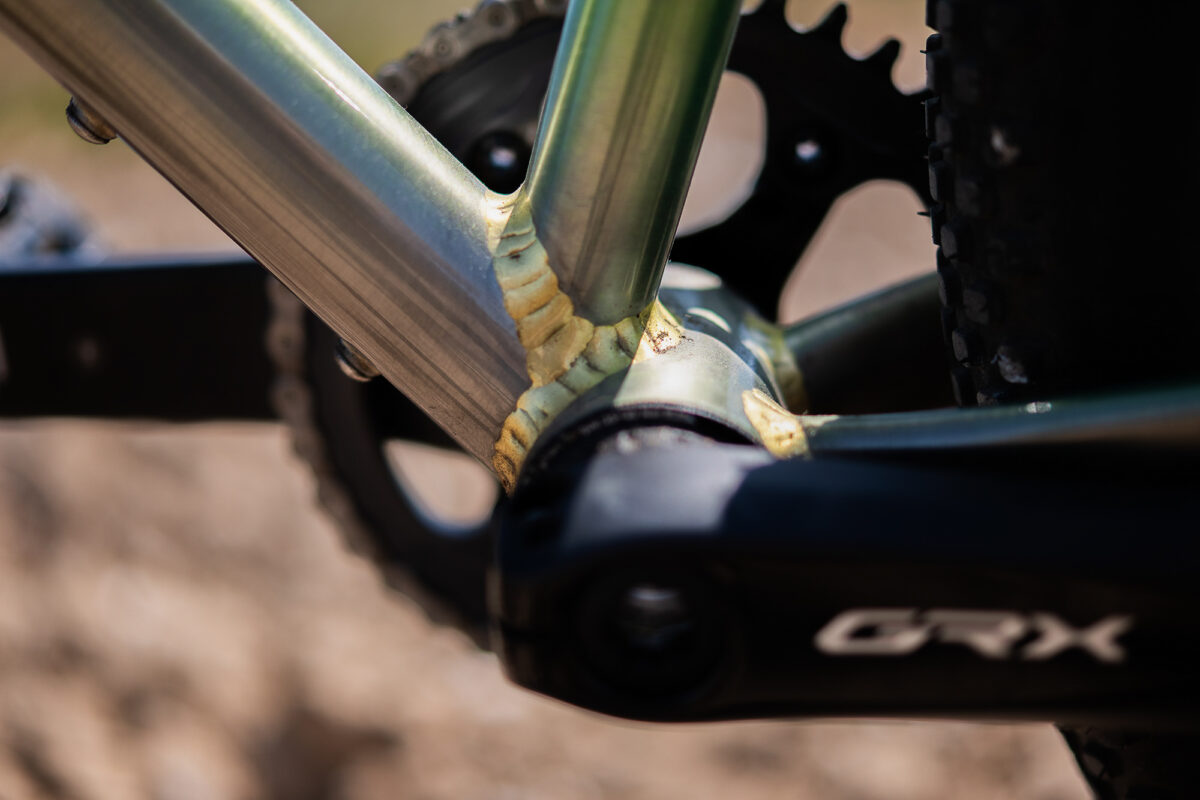
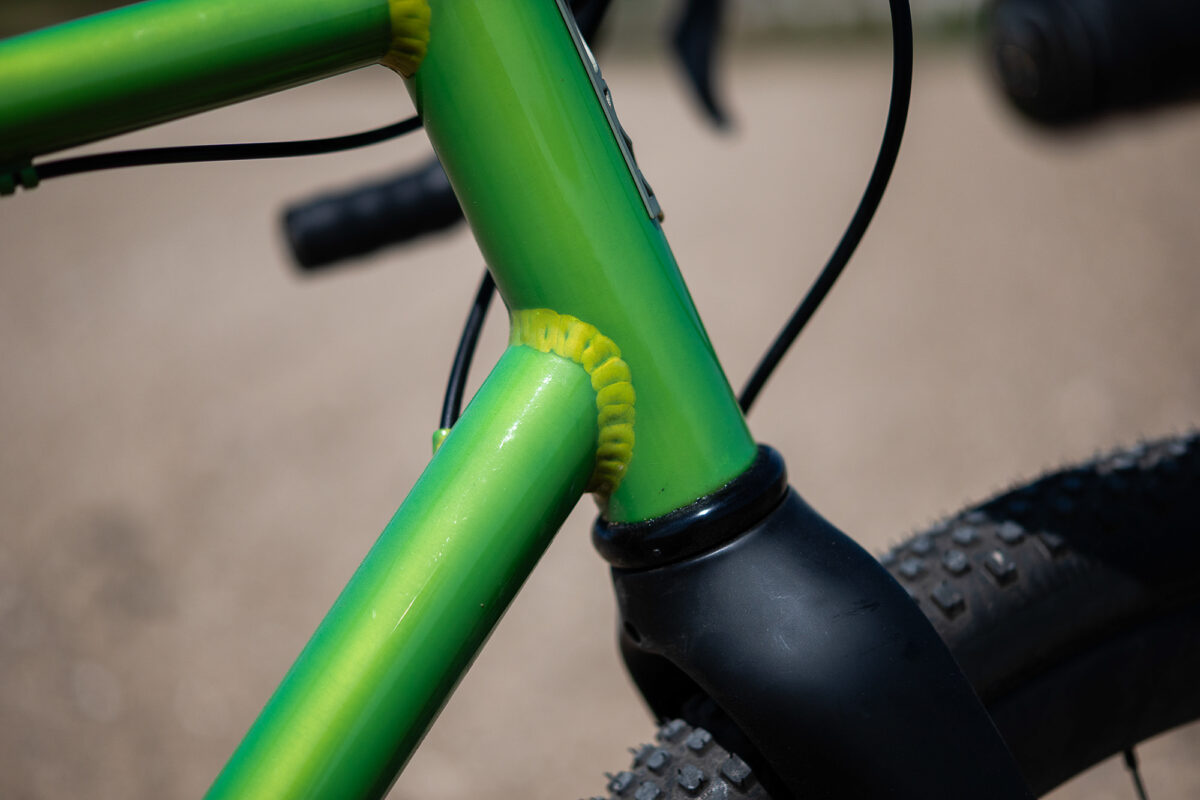
The Heckmeck will retail at €2500 for a frameset including either the Allygn or Sour carbon gravel forks. While the tube selection and frame design are fixed, you are free to choose your own reach, stack, braze-ons, and powdercoat color. Germany is seemingly the home of the absolute best bicycle powder coaters in the world. The powdercoat on the Heckmeck that I reviewed had a seamless fade to clear, and a flawless finish that makes most production bike finishes look amateurish. It also featured a glow-in-the-dark headtube badge. On the clear section, I had zero rust spiders after a wet winter of riding, but I’d expect those lil guys to show up after a few more, and I’d love it even more when they did.
Philosophy of Heckmeck
“It’s a gravel bike. Why should I waste my time trying to do something strange each time somebody wants a gravel bike? If you want a gravel bike, here is a gravel bike. Take it.”
This Build in Review
I received it with the Sour Business carbon fork, which has mounts for everything, includes dynamo routing, is relatively light, weirdly comfortable, and is the first fork of its kind to pass the SGS EFBE Prüftechnik tri-test, which exceeds the expectations of ISO testing. I think both conceptually, in terms of the features it offers, and from having used it for a while, it’s a very good carbon fork for most gravel bikes.
My Heckmeck came with Shimano GRX 820 series mechanical 12-speed groupset, which feels decent and gets the job done. It’s moderately light, shifts nicely, is relatively easy to maintain, and is probably my preferred high-end, mechanical, gravel-oriented drivetrain.
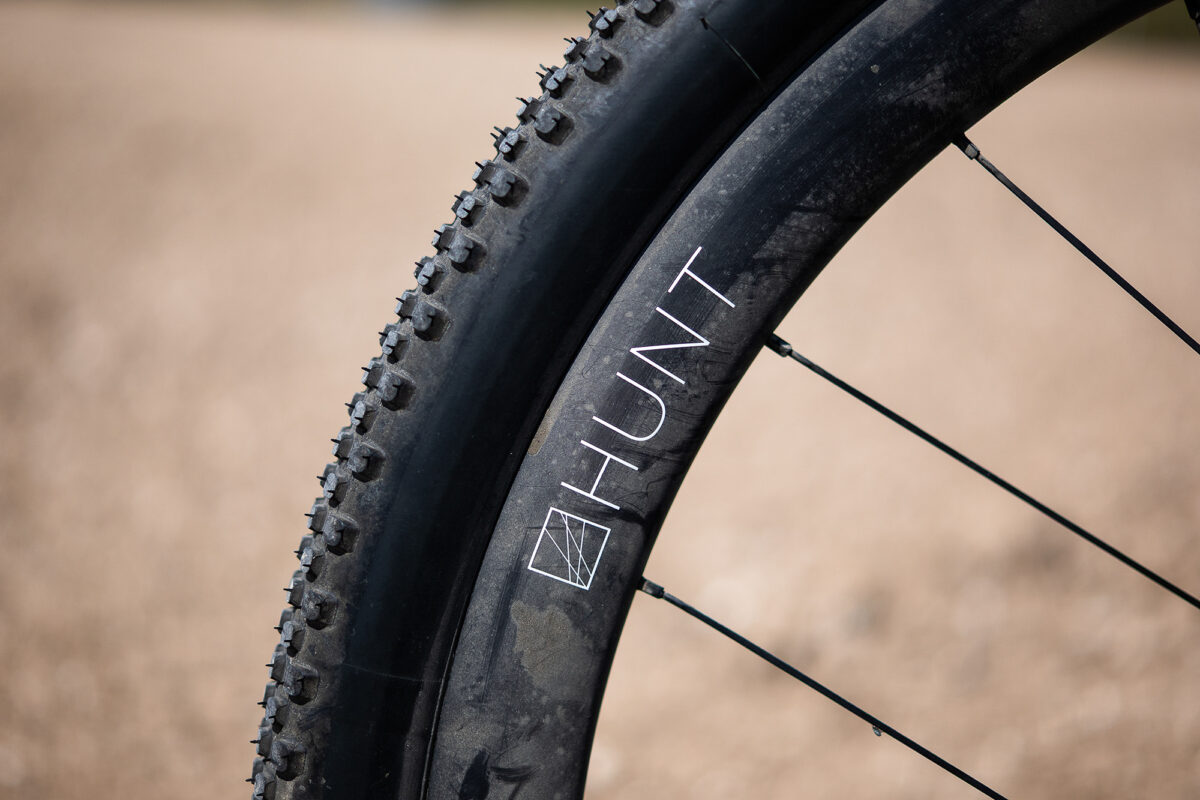
The Hunt 35 gravel wheels felt light, stiff, fast, and all that stuff. They performed admirably, although I don’t feel I tested the bike to any extreme off-road (owing to my bad back). They seem pretty good value, retailing at £649 for a pair in the UK at the time of writing (although the RRP is £999). There were some quite wacky nipple-to-spoke angles, particularly on the rear wheel of the copy I tested, which would send wheel builders into fits of rage. In practice, they felt great, stayed true, and worked well for the duration of my long review period.
Classified Powershift Critique
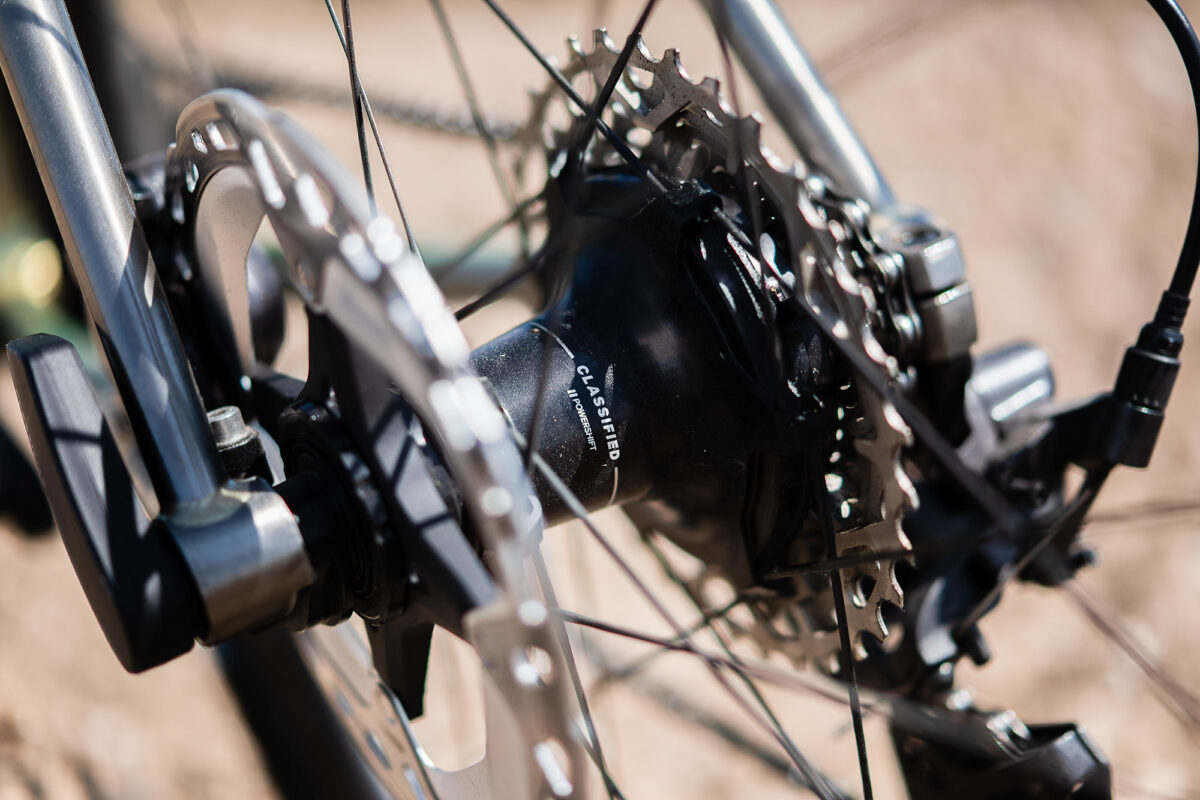
The rear rim was laced to a Classified Powershift 2-speed hub, which worked well shifting either under load or not under load. The Classified hub shifts at the same time as shifting on the rear mech, without the risk of the chain doing anything strange, which is great.
There were a few things that bugged me about the Classified hub; for one, the crappy plastic piece that you have to lift up to charge, it’s just bad. I broke one and lost another, both of which would have been avoidable with better design/ material selection. Once you lift that thingy up, underneath is a micro USB socket. This is basically an obsolete standard and should be updated to the ubiquitous USB-C. Other than that, it took a little getting used to. If you’ve always used a front mech, you know what to expect from shifting and when to expect it, so it’s initially disconcerting when that happens differently to your expectations. The Classified is more immediate which is better, but it’s also un-learning 30 years of doing a different thing.
Finally, the lack of visual indicators was annoying. You can’t look down and see which cog you’re in, so if you’re riding with people and being social or just listening to music and not concentrating on the actual riding, it’s easy to forget which gear you’re in and shift in the wrong direction. As with all electronic shifting, I’d love a battery level indicator like you get on power tool batteries, just one light for nearly empty and three for full when you push a button, or an LED that starts green and fades through yellow to red to indicate battery capacity. Nothing accurate, just a clue.
This Build in Review, Continued
The tires were René Herse Oracle Ridge, which were wonderful. 700 x 48 with some gentle knobbles and a roundish profile, in an extra-lightweight casing is an absolute dream pairing for a road(ish) bike with clearance and relatively lightweight rims.
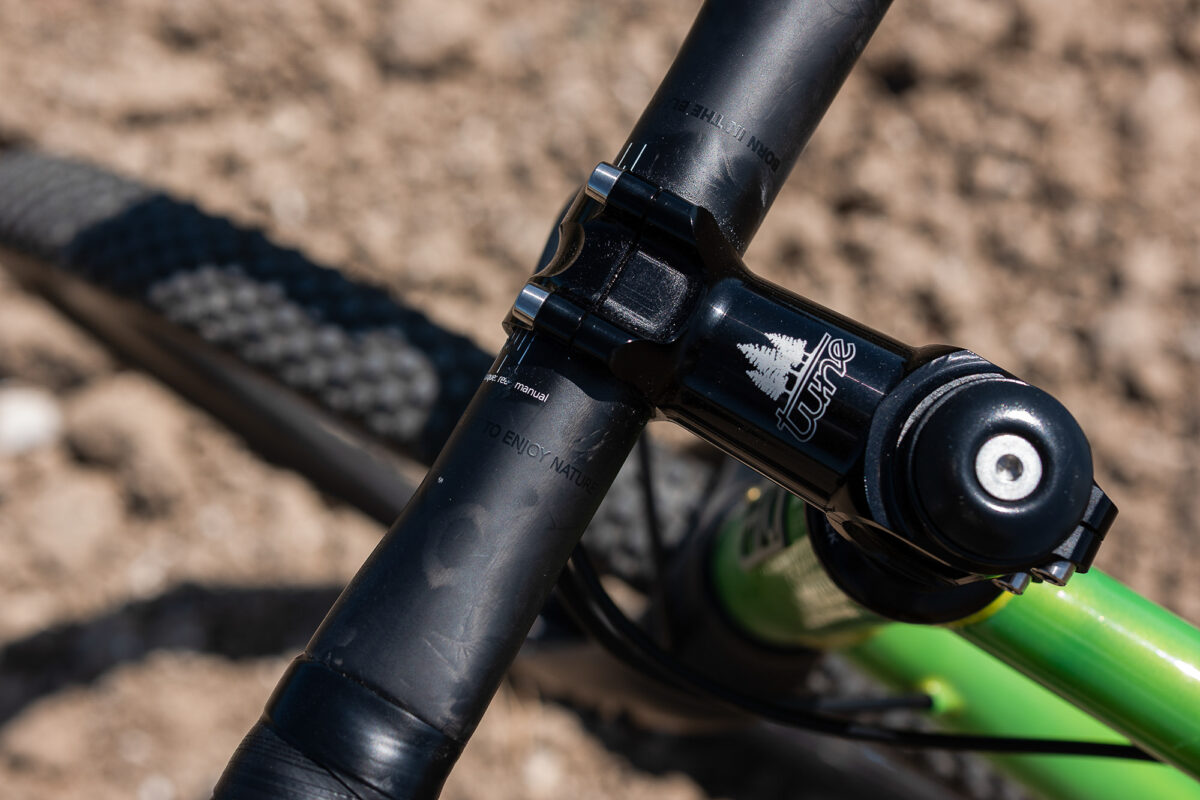
The Heckmeck is the first bike I’ve ridden in perhaps 15 years with an all-Tune build kit, and I loved it. Tune stuff is known for being very light, which has not really been my vibe. I seem to absolutely destroy bags, shoes, cameras, tires, clothes, cars, and everything else I touch, but I’ve never been a cracker of bike parts, so my suspicion of lightweight stuff is mostly unfounded. The Tune Geiles Teil stem and Starkes Stück seatpost look super clean with a few nuanced details that make them unique. The bars and saddle were the real standouts of the Tune setup for me, but each for very different reasons. I loved the bars – they’re very square up top, with tight radius bends to the lever hoods, which gives a big flat surface on top, with a wider usable area relative to the width of the bar than a lot of bars, but with a relatively classic curve for the drops. It’s a shape that really worked for me, and that I found very comfortable. The bars also have a bit of flex, not so much that they feel sloppy, but enough to give a little comfort and vibration damping, and to slightly deaden the blows when I got it wrong off-road.
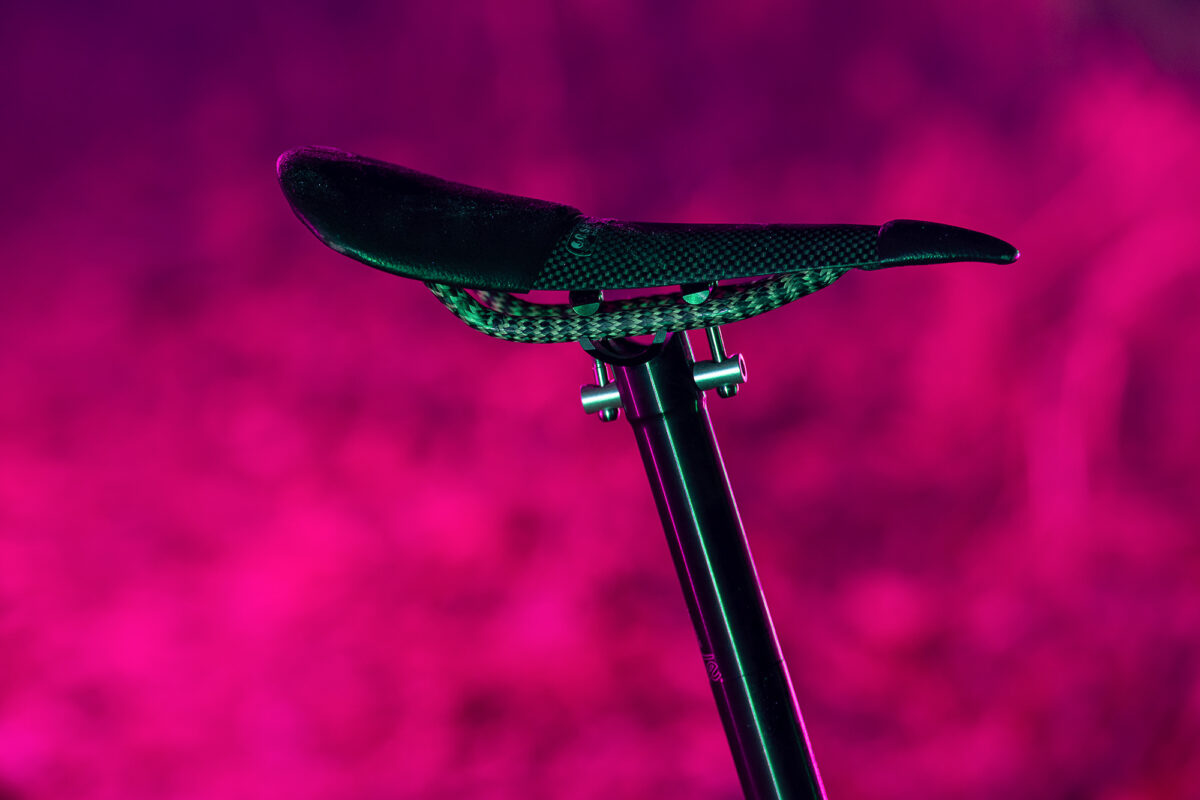
The Speedneedle saddle, on the other hand, I can’t take seriously as a thing to sit on. Tune are the first to admit that it’s not for everyone. It’s 87 grams of pure torture. While everything else on the Tune website is translated to English, Tune know to keep the Speedneedle as a German-only delicacy for local tastes. If you have more than 3% body fat, or weigh anything at all, or if you’re not both a sadist and a masochist, if you’re not a German with inherited existential pain, if you have nerve endings in your butt or don’t have a fetish for self-flagellation, it’s unlikely that the Speedneedle is for you. I believe I had the 109g version with additional padding. Getting a review bike with a Speedneedle on it is like renting an Airbnb which has only a sex swing instead of a bed. For someone it’ll probably be great.
Geometry
It’s the opposite of what I would choose for a gravel bike, but I loved it and maybe it’s changed my mind about what I want from a gravel bike. My review bike had a 72º head angle, which in production becomes marginally slacker on small sizes where necessary to stop toe overlap, and 415 mm chainstay length which felt amazing, and was achieved by offsetting the seat tube on the T47 BB shell. For production, this length has increased by 3 mm for better shifting performance. The seat tube at my saddle height had an effective angle of 73º. The BB height is optimised for 47 mm tires. There’s little value in adding other measurements because reach and stack come from the customers’ fit data.
Conclusions…
Who is this for? Someone who wants a bike that does most things well and fits. €2500 for a frame set that’s handmade in Germany by arguably one of the best builders in the world seems pretty reasonable. “All you can imagine” custom isn’t for everyone, but good bike fit should be. Picking your braze-ons and color is a nice addition to good bike fit, and the bike rides beautifully. Like an ultra-capable rando bike, but sassier, or like a floatier all-road bike with clearance for more than you’ll ever need, which is as much as you want. It’s an ideal fast road touring bike that’s ready for a bit more, and has room for whatever mudguard/ tire combos you like. It’s the perfect bike if you like underbiking, but in relative comfort. It definitely shouldn’t win any awards for innovation. It’s a normal bike for normal people at a reasonable price point, made by a weird guy who makes weird bikes for weird people. Despite all odds, I miss my Heckmeck.

Pros
- Fit, color, and braze-on options
- Versatile af
- Floaty
- Reasonably light
- Well finished
- Goodlooking
- Reasonably priced as “entry level” custom, but made in Germany with premium tubes (mix of tubes and brands)
- Hell of tire clearance relative to geometry
Cons
- Could it be… Drustier?
- I’d love a steel (truss) fork option
- Has a lead time vs buying an existing bike from a shop
- You can’t color-match the fork to the frame, because it’s coated and the fork is carbon