





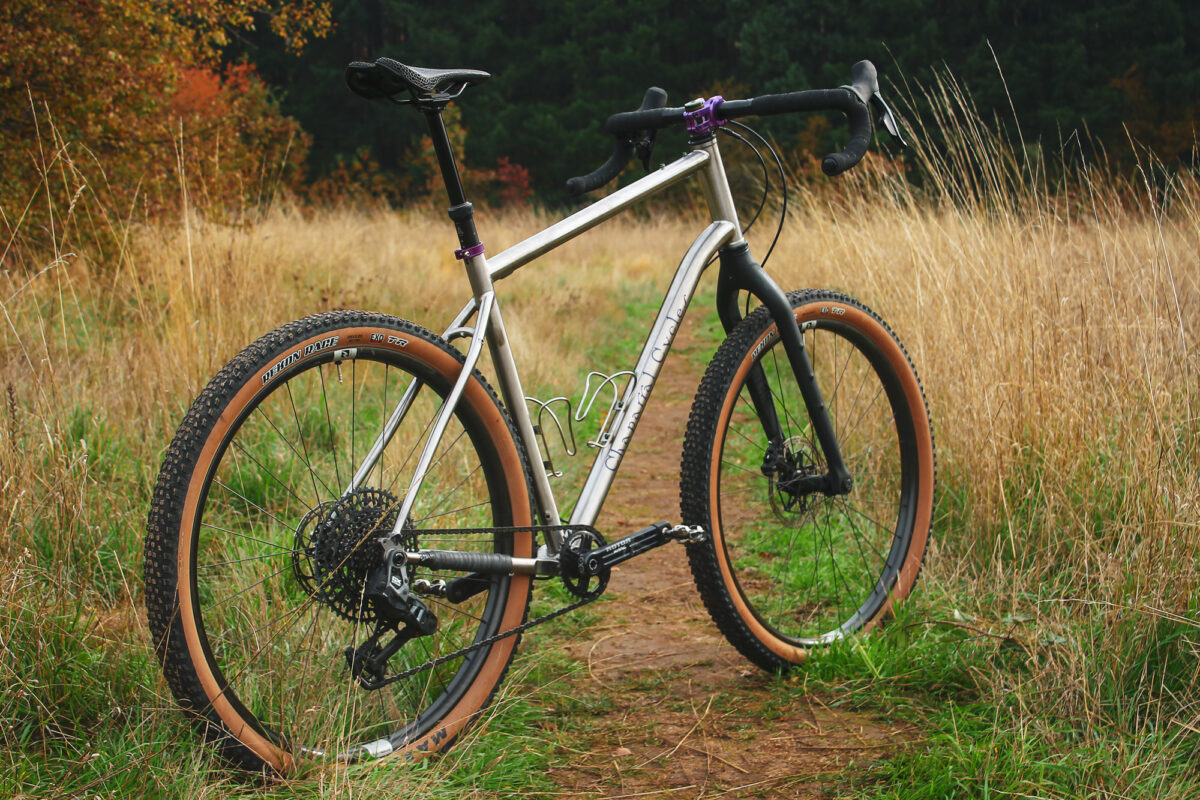
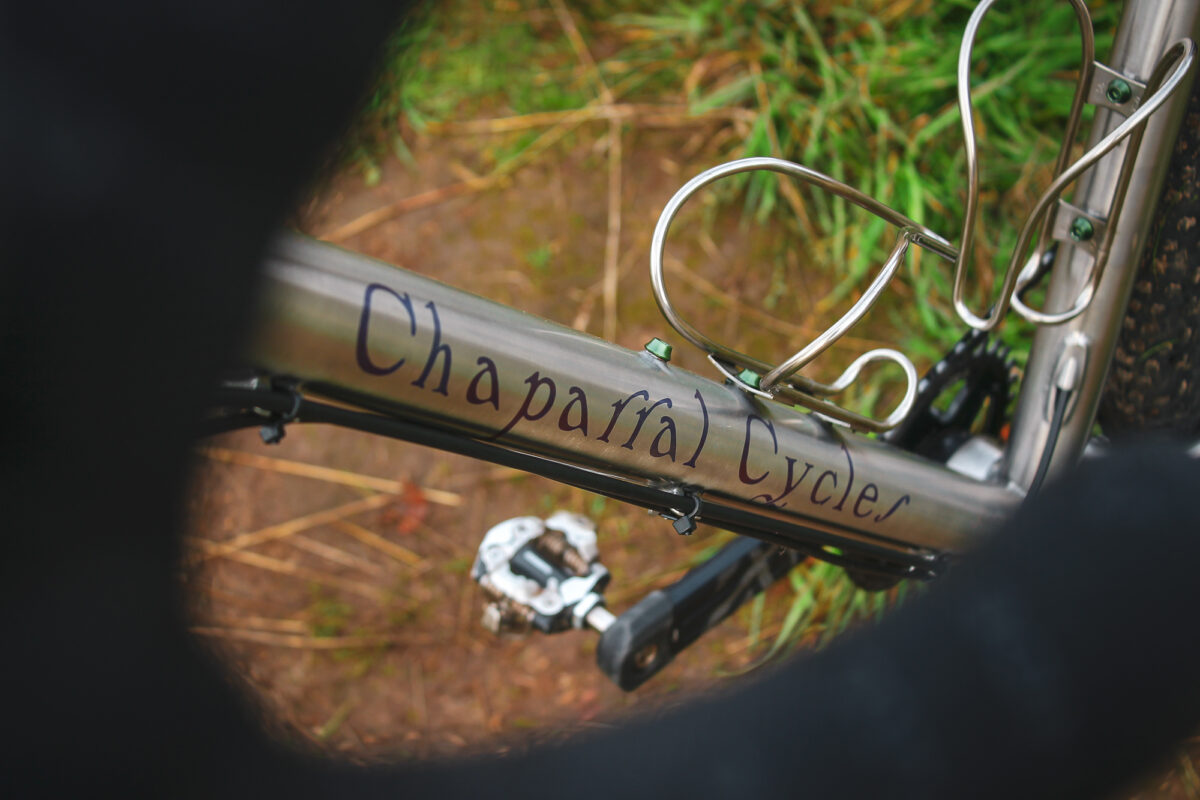
Boundary-nudging newcomer Chaparral Cycles stakes out fertile ground with the release of the Angeles, a titanium drop-bar 29er conceived around a robust 2.4” footprint and 100 mm suspension fork. On paper, the Angeles lands within a crowded field – somewhere between the new Moots Scrambler, Bearclaw Honey Badger, and Salsa Fargo Ti – yet it manages to carve out its own space by leaning into old school hardtail flavor. These small-batch titanium production frames are available in four sizes at a very appealing price point of $2500. Complete bikes are also offered in three build kits: SRAM AXS Transmission GX, GRX Di2, and GRX mechanical.
Southern California founder-riders Brian Sims and Brandon Frank launched Chaparral Cycles after several years ideating on the optimal purpose-built bike for their backyard terrain. Chaparral announced the Angeles in February of 2025 with a design directly inspired by the rutty fire roads, steep singletrack, arroyos, and canyon grades of LA’s San Gabriel Mountains. Ron Lewis judges the initial offering from Chaparral Cycles.
Creative Context
Before we go any further, let’s try a thought experiment. Imagine you are setting out on a 2700-mile bike tour. Maybe the route stretches from the Alberta interior to the Mexican border. Say 90% of this consists of gravel and primitive dirt roads. 80 of those 2700 miles are rough-and-tumble singletrack. You see what I’m getting at. Let’s call it a mixed-media backcountry expedition. What kind of bike do you choose? A mountain bike feels instinctively right, but something about optimizing for so little overall trail mileage doesn’t add up. And 10% of 2700 is still 270 paved miles you’d probably rather ride on something that isn’t a mountain bike.
A drop-bar gravel rig or vélo d’aventure of some variety seems to make sense for most of this scenario. But only after satisfying a hard line of non-negotiables: it’s got to have beefy, high-volume tires, robust climbing gears, and a comfortable, relaxed riding position for weeks in the saddle. Also critical are Boost spacing, suspension fork, and dropper post. So here we are, full circle back to something that sounds a lot like a mountain bike. In this hypothetical scenario, the wishlist may also include cockpit comforts like wide, flared drop bars for multiple hand positions, a full spread of cargo and rack mounts, and integrated ports for internal dynamo wiring. Ideally we want most, if not all, of these boxes checked – and if we squint a little, the bike starting to take shape might look a lot like the Chaparral Angeles.
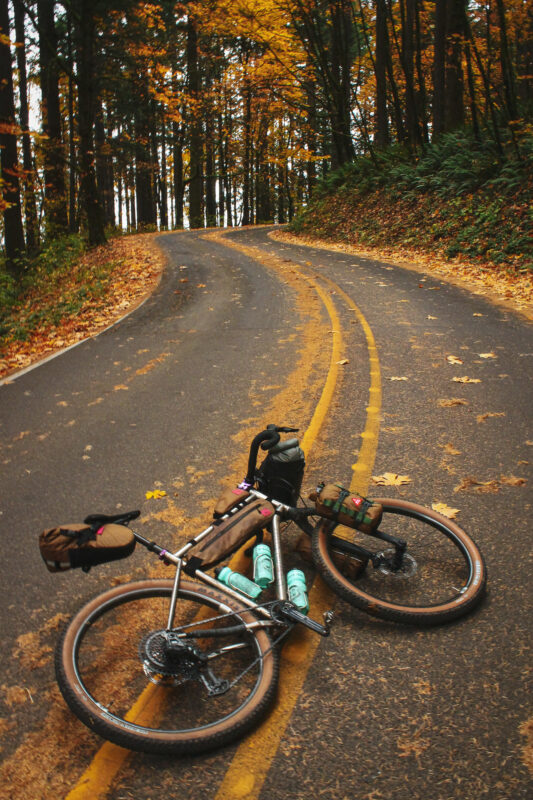
Lexicon: Drop-Bar Mountain Bikes
In this era of fluid disciplinary overlap, we’ve witnessed a modest surge in do-it-all adventure bikes. To be clear, as one who spent their formative years adapting cross bikes to all manner of hors catégorie off-road pursuits, this cross-pollination comes as a quiet triumph: the evolutionary process by which we end up with better, more capable bikes. This particular strain owes much of its lineage to the ancestral rootstock of bikes like the Specialized AWOL and Salsa Fargo.
The breadth of modern category-resistant designs spans everything from long, slack flat bar ATB builds, adventure-oriented quasi-klunkers, and drop-bar hardtails by the dozen. And while the continuum of all-terrain bikes (lowercase) is rather dynamic, it helps to zoom in for a more granular definition of drop-bar mountain bike. In my opinion, touchpoints include suspension-corrected front end, 29er wheel format, Boost spacing, drop bar-specific geometry (which is to say designed specifically around drop bar reach and positioning as opposed to just slapping drops on a standard hardtail), modern 10-52 gearing range, room for a robust dropper (at least 30.9 Ø with 125 mm worth of travel), and clearance for a minimum of 2.35” tires. If it doesn’t clear actual mountain bike tires and you can’t drop the saddle and throw some shapes, let’s be honest – it’s just a plumped-up gravel bike.
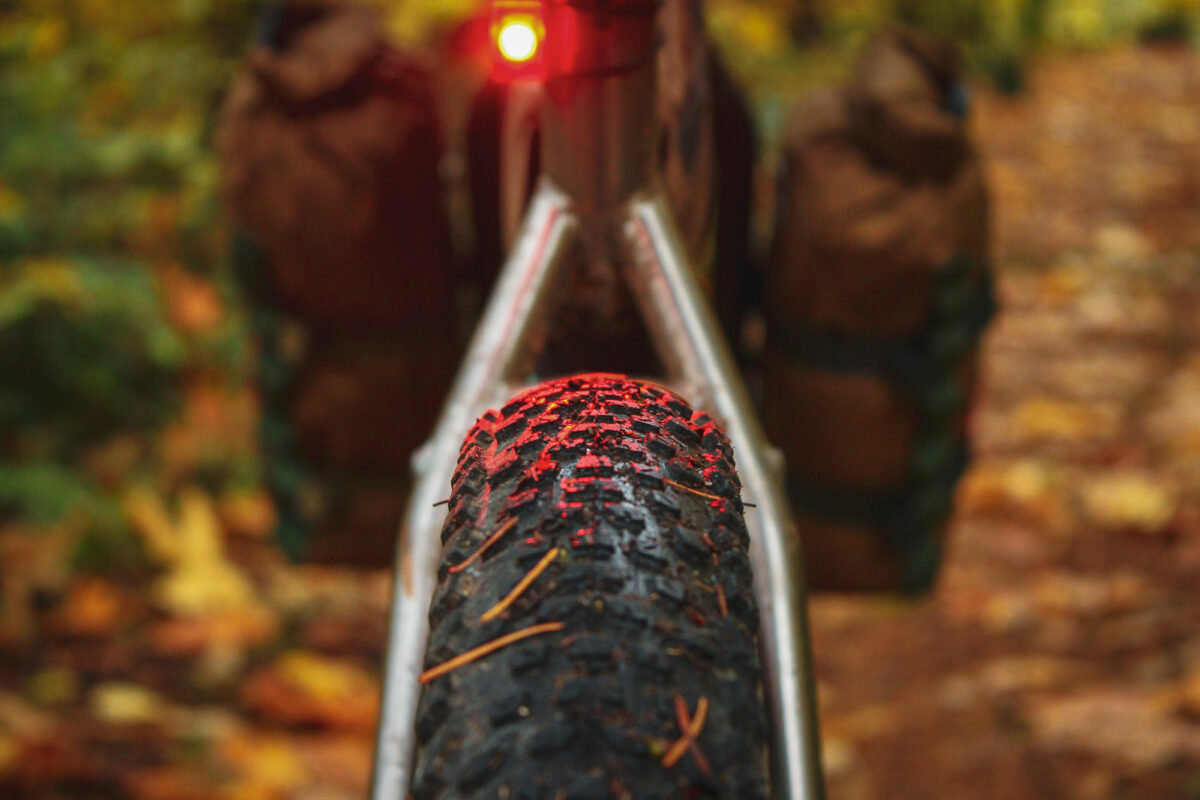
Design Brief
It would be relatively straightforward to tailor a singular-purpose bike to rugged trails like those of the San Gabriels, but that would simply be called a conventional hardtail. The idea here, according to Chaparral designer Brian Sims, was to create something much more versatile and wide-ranging, equally suited for long rides to the trails from the front door and back again with enough grit and pluck for loaded bikepacking and touring – a classic Swiss Army scenario. Therein lies the central challenge of the (lowercase) ATB: reconciling a broad slate of competing priorities, optimizing certain features without compromising others. Don’t make me trot out the Strong, Light, Cheap: Pick Two maxim. The Angeles’ spectrum of use cases is obviously a broad target requiring a tricky balance of stability, support, flex, and feel. Admittedly no easy feat for a nascent brand without a lengthy design history from which to draw.
After multiple rounds of testing steel pre-production prototypes, Sims frames the Angeles’ intent as “leaning further into mountain bike territory than gravel – to strike a balance of stoutness without tipping into an overbuilt, deadened feel.” This ultimately guided the choice of titanium over steel to deliver a plush, lively (and durable) ride while shedding unnecessary weight. Not insignificant as it turns out – the shift to titanium trimmed over 1.5 pounds from the steel V1 Angeles prototype. Note: because this is a pre-production edition, certain measurements will have shifted slightly on production models. For example, the chainstays were lengthened by 7 mm to measure 452 mm, and the headtube height was reduced by 10 mm. Both changes apply across all sizes. Additionally, the Enve Mountain Fork is spec’d as the rigid carbon option for final production instead of the Lithic model tested.


Chaparral Angeles Quick Hits
- Size Reviewed: XL
- Frame Material: Double-butted titanium
- Fork: Lithic Rigid Carbon Mountain Fork (as tested)
- Bike Weight: 26 lbs on the scale without the bottle cage, frame bag, or pedals
- Sizes Offered: S, M, L, XL
- Wheel Size: 29 x 2.4”
- Suspension Travel: 100mm or suspension-corrected rigid
- Headtube Angle: 70.5° (all sizes)
- Seattube Angle: 72.5° (XL)
- Bottom bracket: T47 threaded
- Chainstay Length: 445 mm (all sizes)
- Wheelbase: 1104.8 mm (XL)(-7.5 mm offset option w/ Lithic carbon mountain fork flip chip)
- Stack height: 707.2 (XL)
- Fork Axle to Crown: 488 mm (all sizes)
- Pricing: Frame only $2500. Complete builds from $7660
- Build Kits: GRX mechanical, GRX Di2, SRAM AXS Transmission GX
- UDH dropouts
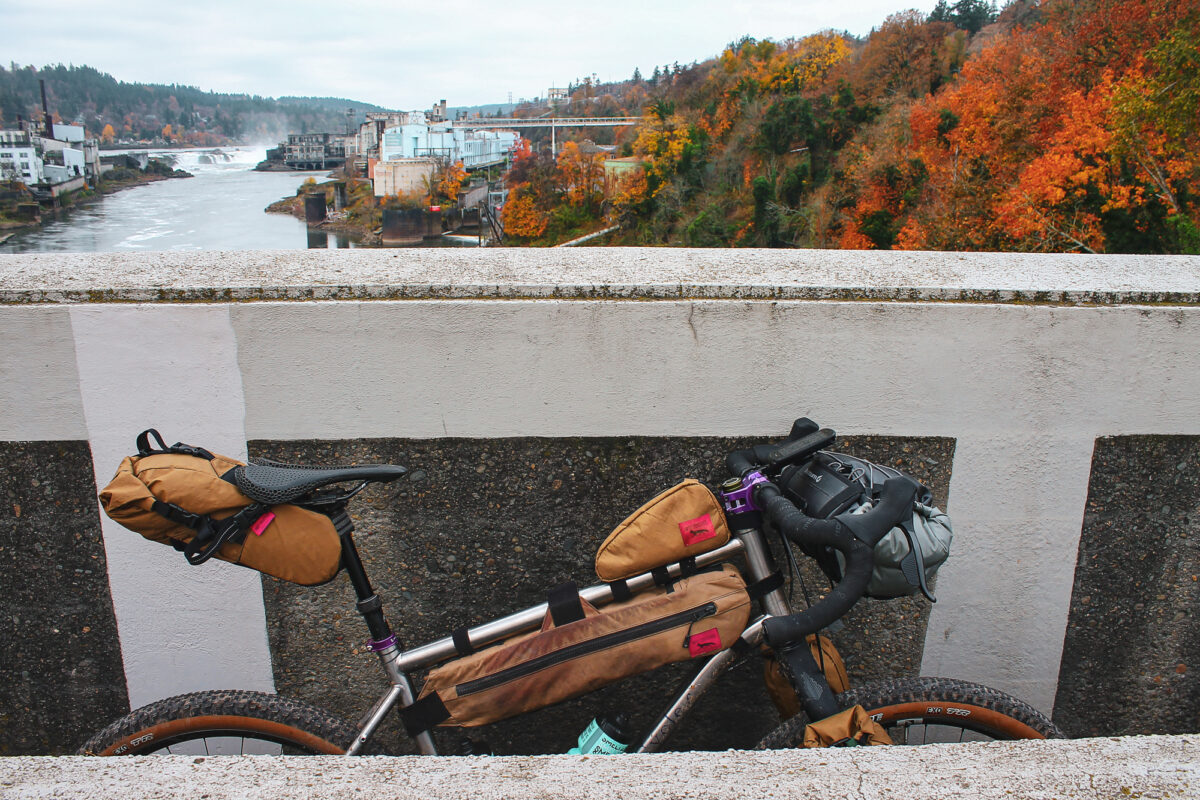
Titanium Exposé
Full transparency: this is my first amount of meaningful time spent on titanium. I am by no means an expert here, so I’ll refrain from metallurgical deep dives or opinioneering on why Ti exerts such a cultish appeal. That territory has already been thoroughly covered by other, more qualified, parties. What I am going to do is describe in a very generalized sense how and why the material is used to create this particular bike and the resulting ride experience.
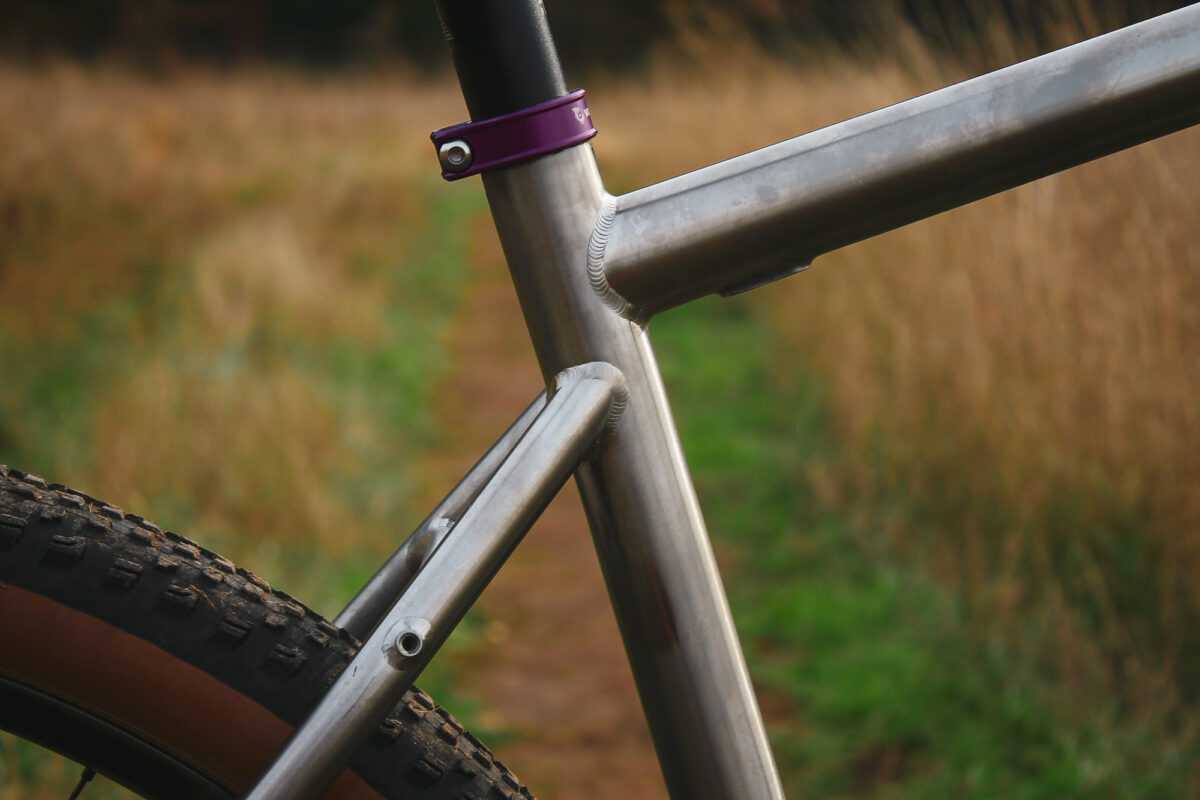
The Angeles’ tubesets are sourced from ORA Engineering in Taiwan, noteworthy as production Ti builders for Salsa, Neuhaus, and Slug, among others. ORA draws their own double-butted tubing in-house. Drawing is the process of taking shorter, thicker-walled billet or pre-formed tubes and stretching to make the walls thinner. ORA inserts a plug or metal insert when stretching to form a double-butted tube with a thinner middle section and thicker ends to support welded joints and high stress zones like downtubes. This process can be tuned to strategically reduce tube weight but, more importantly, dial in ride quality by allowing a desired ratio of strength to flex in specific areas like top tubes and seatstays. Got it? Good. Moving on.
So why titanium? It is lightweight, durable, and exceedingly fatigue-resistant with a ride quality that is the stuff of legend. While the material is notoriously tricky to work with, it is well established that Ti combines many of the best characteristics of high-grade steel and carbon without their respective downsides, which explains the material’s enduring allure: a kind of transmetallic jazz fusion. You’ll hear well-worn descriptors like springy, lively, compliant, and buttery. But the same is often said of high-end steel in the hands of skilled builders. Without delving into an exhaustive A/B comparison, I will simply add that as a building material, Ti checks almost every box on the Angeles’ wish list, particularly in the strength-to-weight category. Be that as it may, all this ultra-premium ridefeel tends to come with an ultra-premium price tag – generally twice that of a comparable build in steel. This is obviously prohibitive for some and part of the appeal for others.
Build Kit & Details
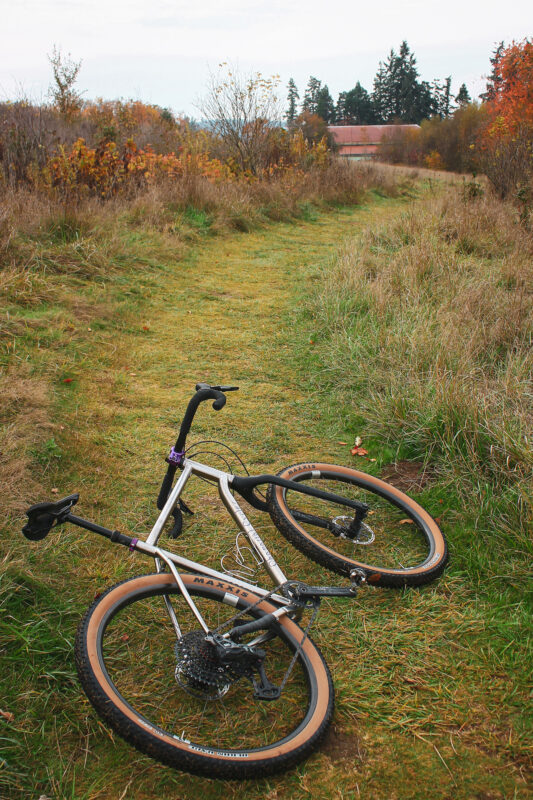
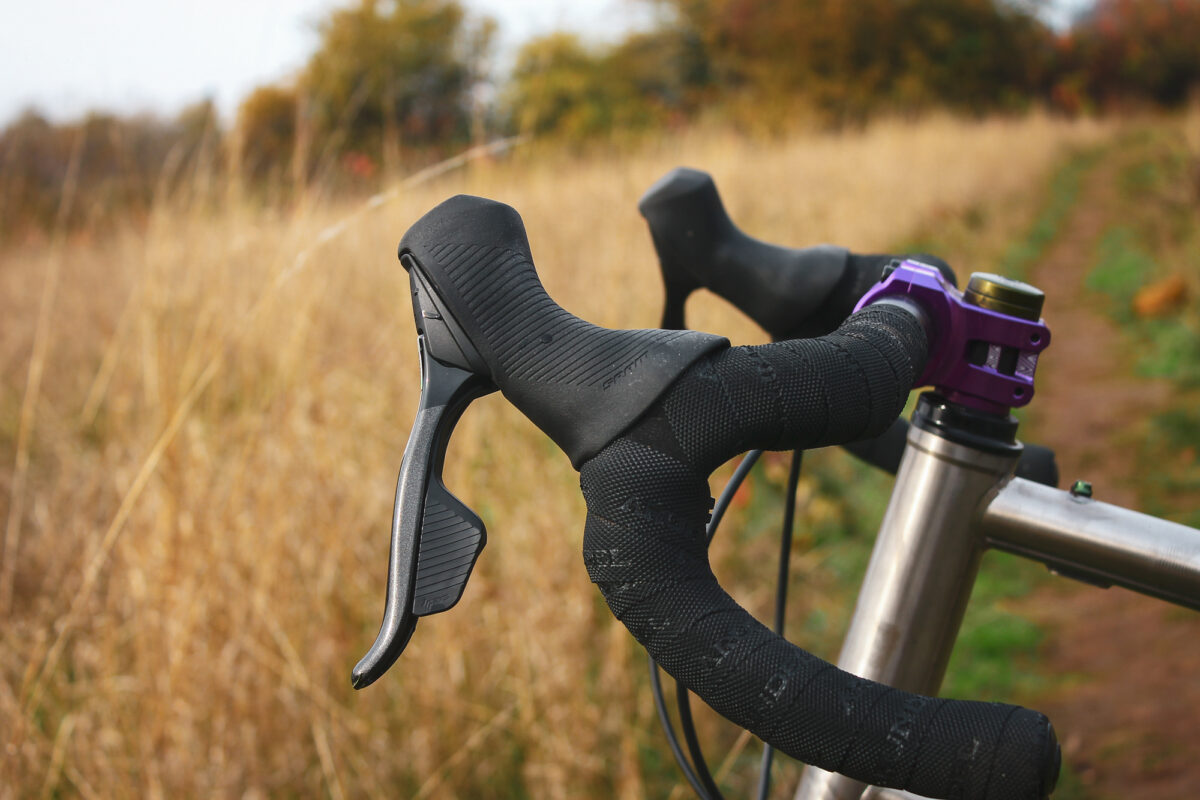
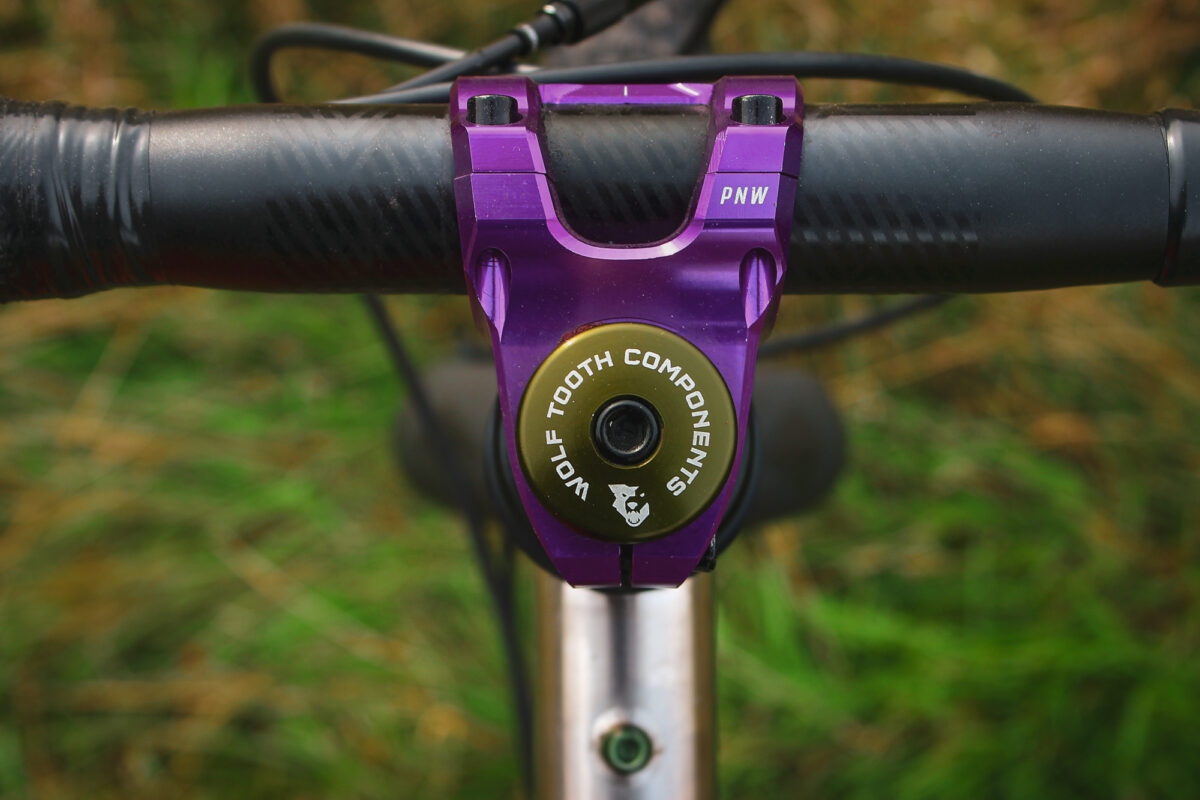
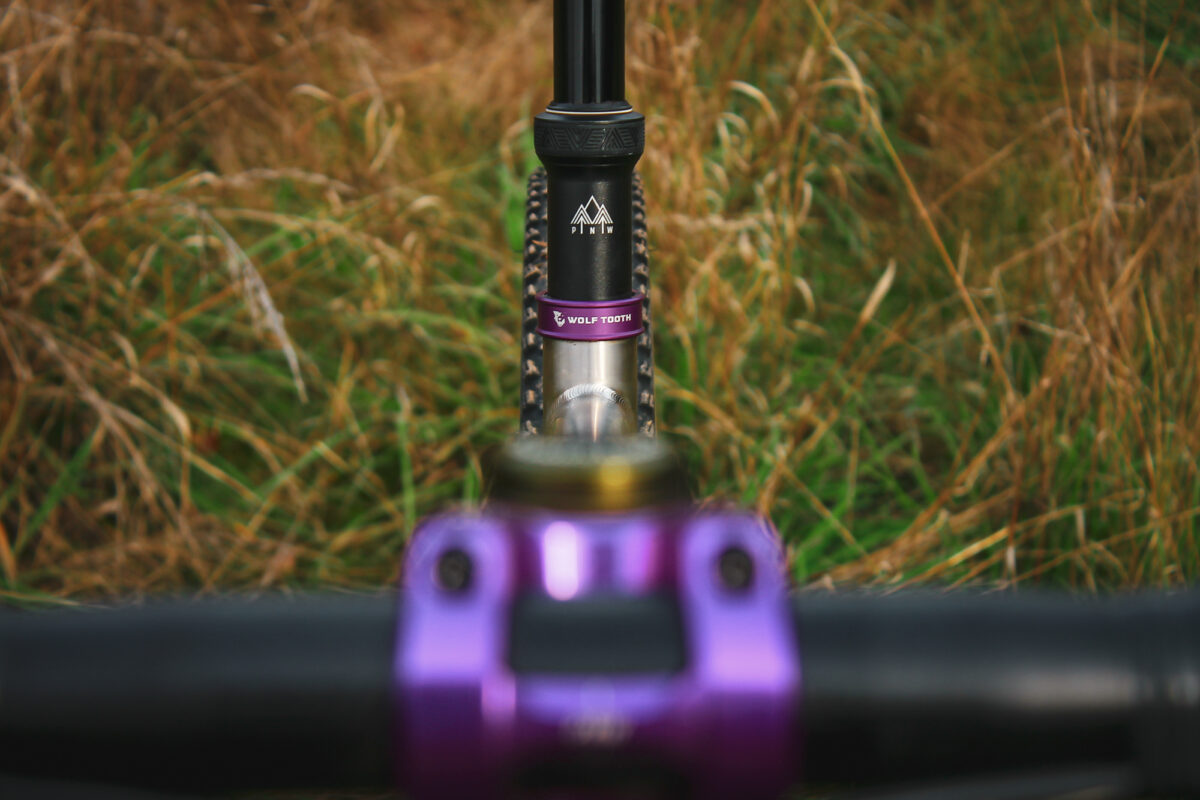
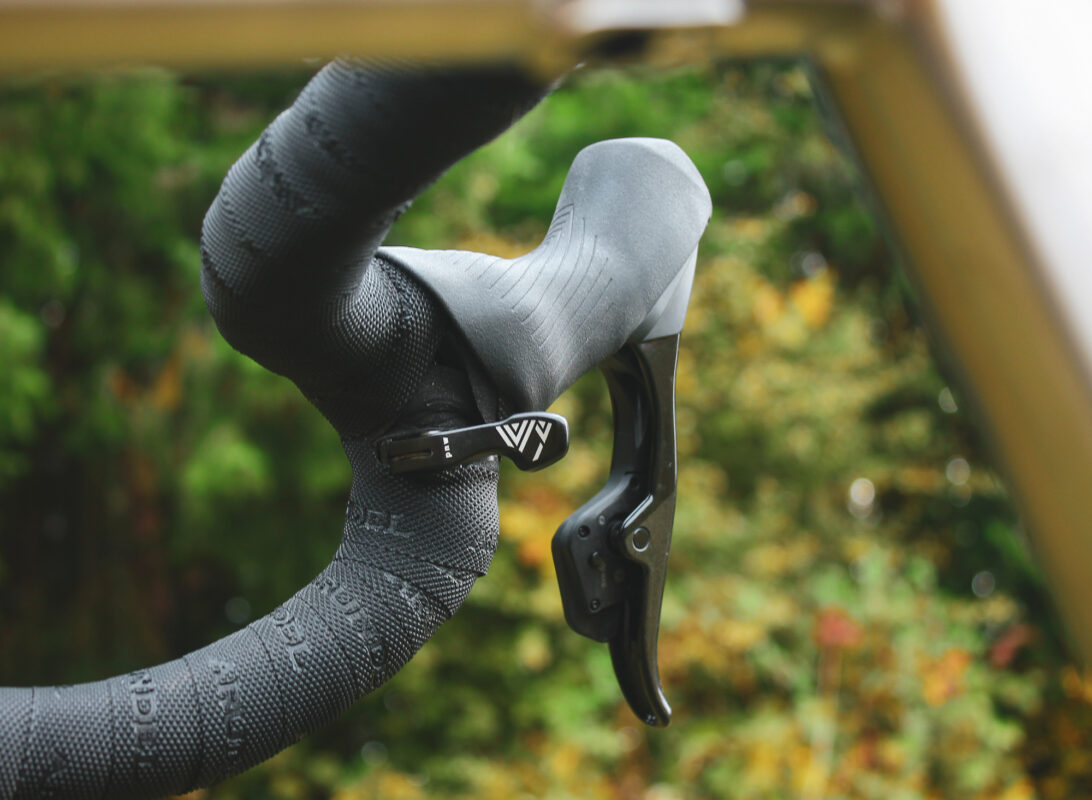
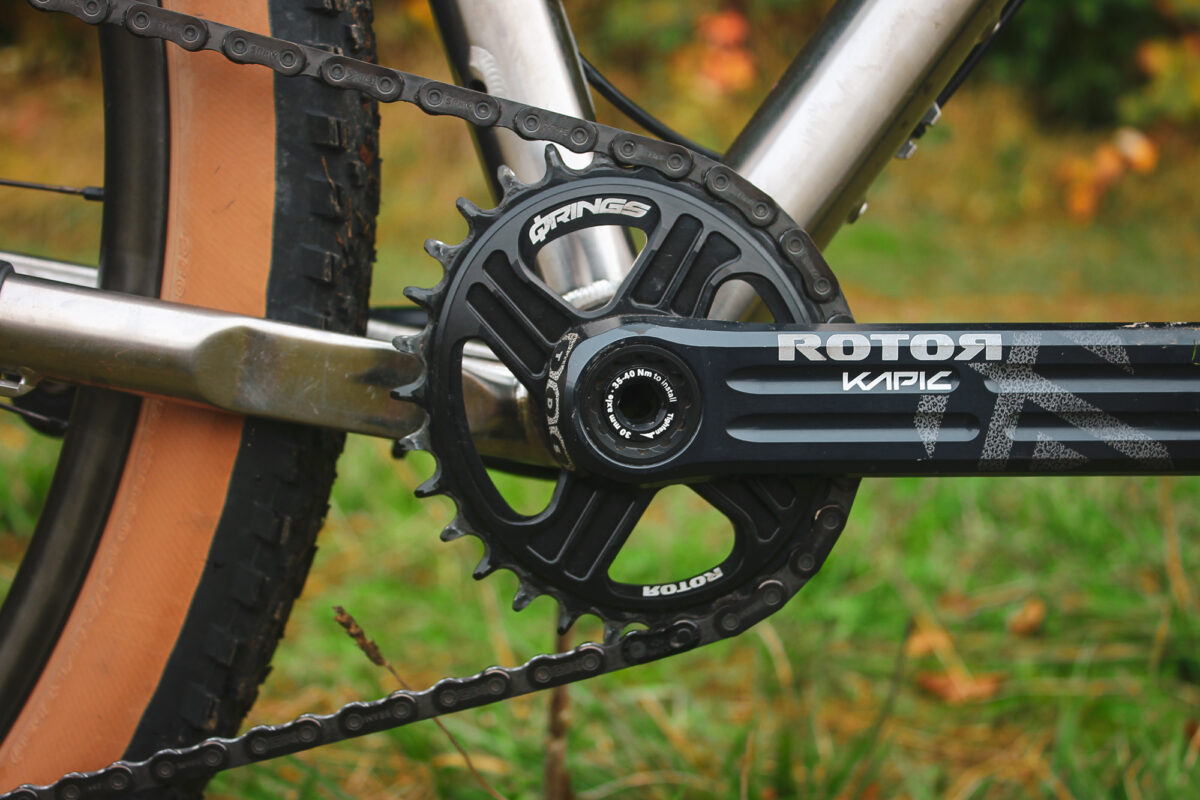
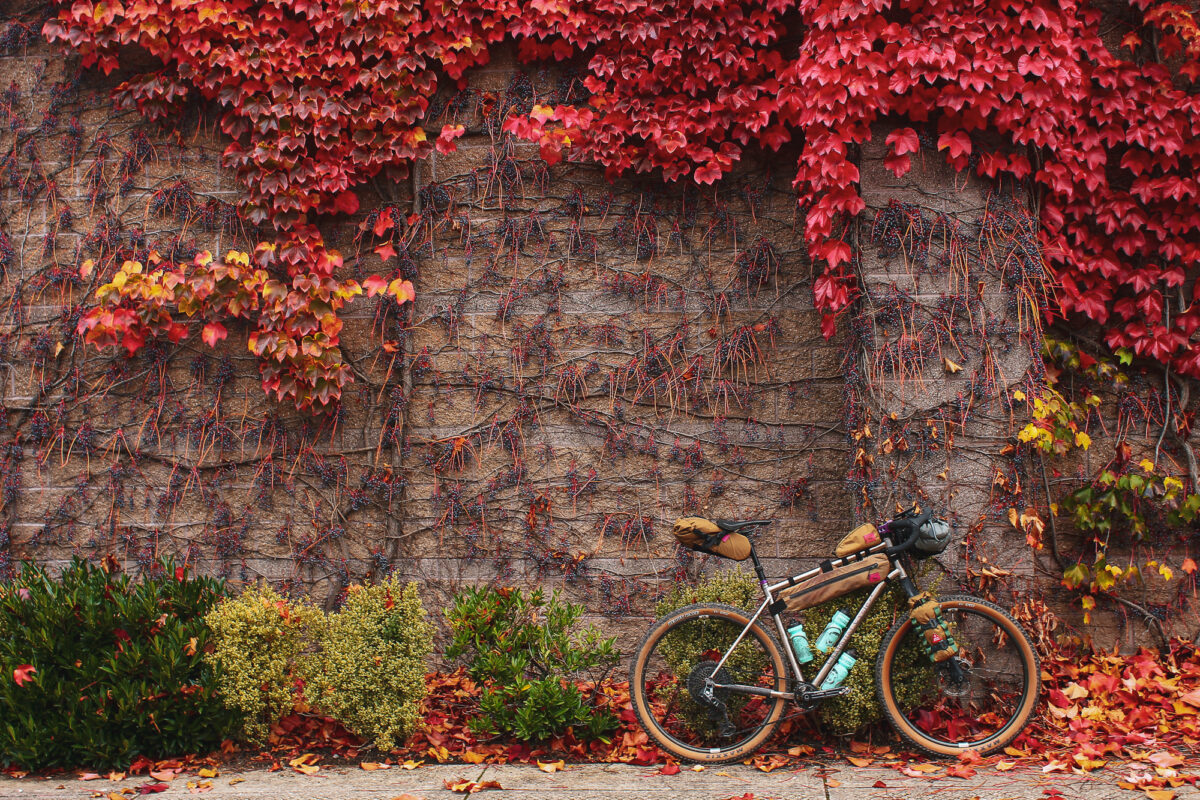
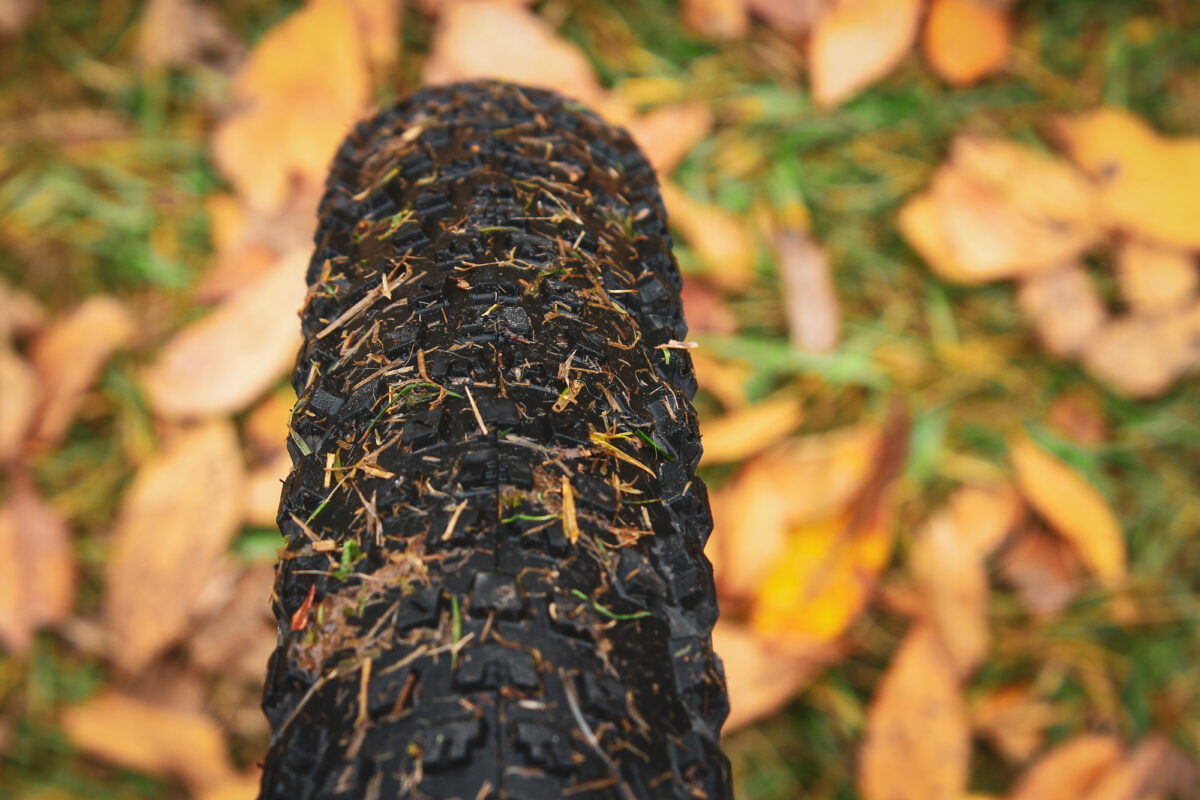
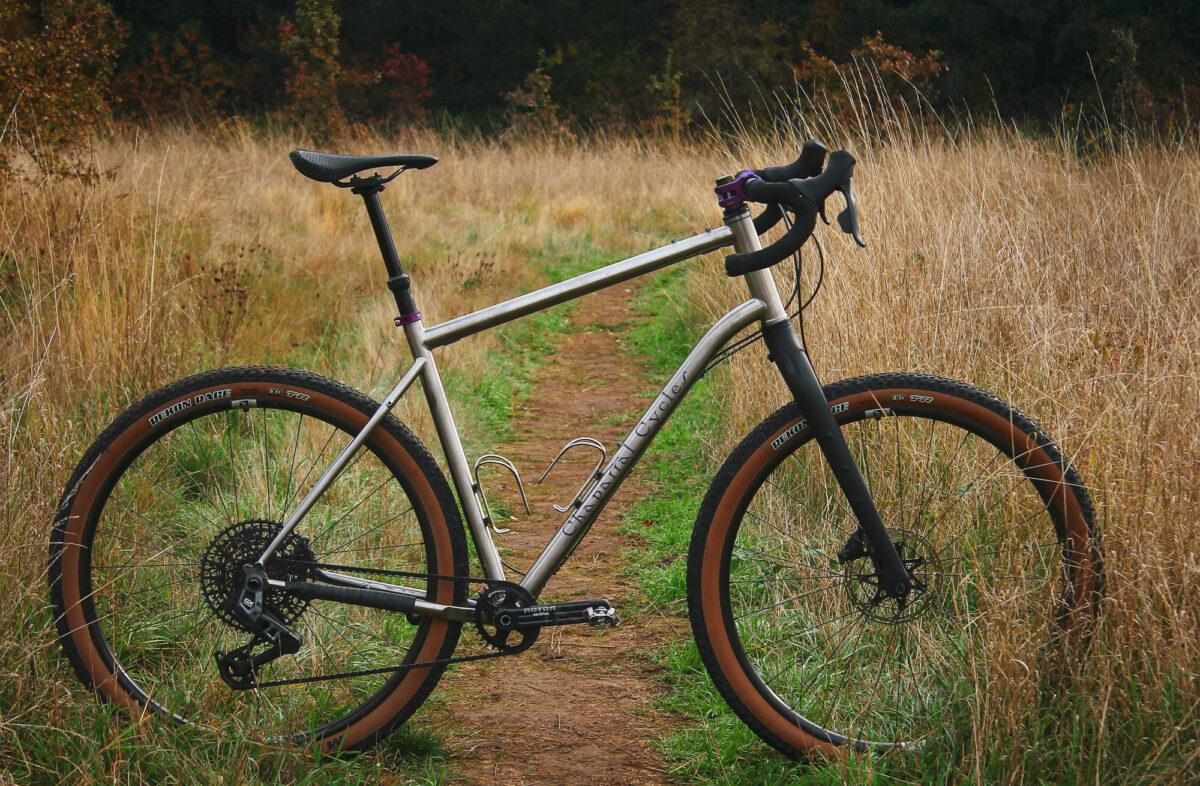
The version tested is a pre-production XL prototype. Despite being designed around a 100 mm suspension fork, I already have a hardtail and short-travel trail bike, so I was more curious about nudging the Angeles toward loaded bikepacking. I opted for a rigid Lithic carbon mountain fork and Reynolds TR329 carbon wheels with Maxxis Rekon Race 29 x 2.4” XC tires. The groupset pairs SRAM Force AXS shifters and flat mount brakes (180/160) with full mount GX Transmission on a 10-52 Eagle cassette and 30t oval Q-ring. The cockpit uses 520 mm width PNW Coast bars on a 40 mm Loam MTB stem. Bars are double-wrapped with an underlayer of Cinelli cork and finished with 3 mm Arundel Gecko tape, which I prefer for that bagel dog bar feel. The build employs a 150 mm PNW Loam Gen 1 dropper post in 30.9 Ø cable-enabled via PNW drop bar-mounted lever. Headset and bottom bracket are Wolf Tooth Components.
One curious design choice is the decision to lean into flat-mount brakes. How flat-mount gravel-tier braking and rotor scale will work with loaded weight and sustained MTB descending remains to be seen. I suppose there is only one way to find out. The frame is equipped with the requisite fitments and bosses for bags, bottles, rear cargo rack, internal dropper routing, and theoretically fenders, though seat tube clearance will significantly limit fendered tire size. Beyond that, the base of the top tube has two convenience ports – one near the head tube, one near the seat tube – to accommodate internal dynamo wiring with another on the drive-side chainstay for wired Di2 compatibility. There is an additional port above the bottom bracket for 2x applications. All other cabling is conveniently routed externally along the underside of the downtube and non-driveside chainstay.
Geometrically Inclined
At first glance, Angeles’ geometry looks a bit severe with a very large, very upright front triangle. This effect is no doubt exaggerated at the XL end of the spectrum, where the wheelbase feels curiously short in proportion to the lofty stack height. Pausing for a moment, though, it does help to remind myself of two things: this bike is designed for varying degrees of loaded riding and that when my eye sees drop bars, my brain reflexively wants flat top tubes, long, slammed stems, and pro peloton reach – my roadie roots on full display. Setting aside my biases, the closer one looks at the Angeles’ geometry, the more practical sense everything begins to make.
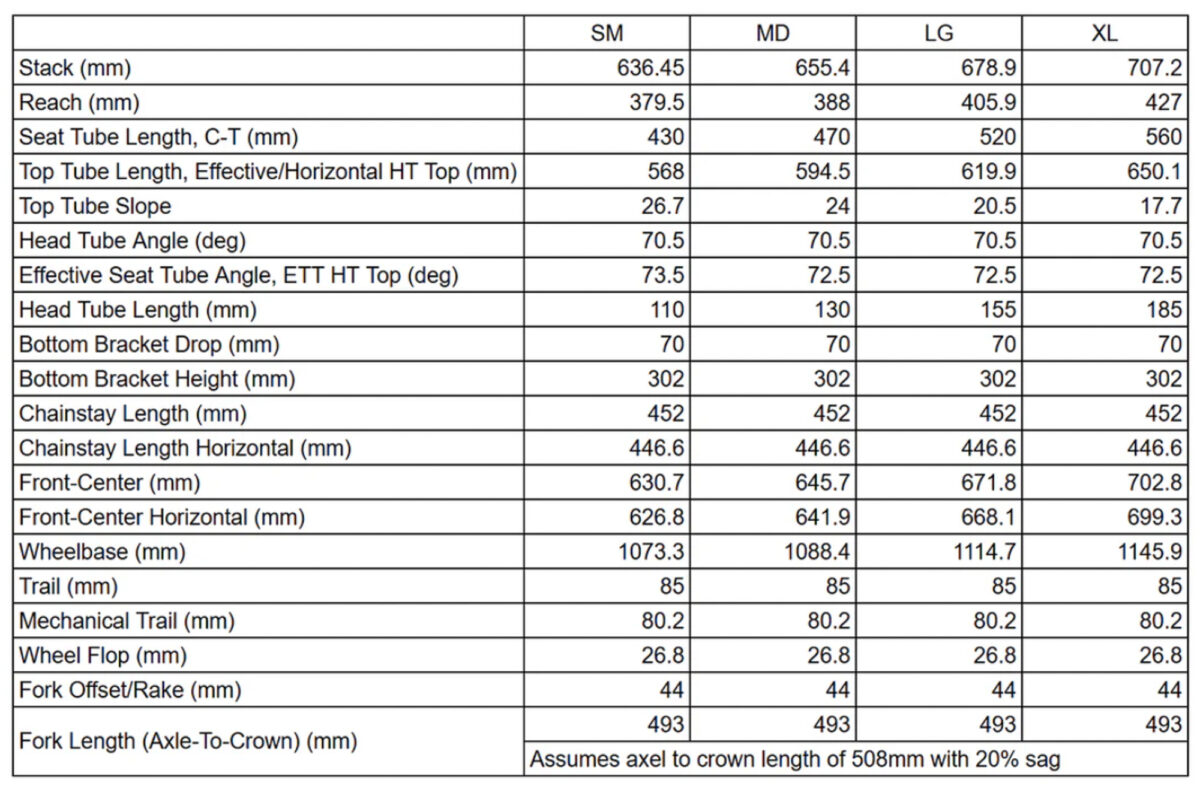
A tall, suspension-corrected front end (moderately steep 16° top tube and 685 mm stack height) paired with a compact-ish rear triangle (445 mm chainstays and short, slack 72.5° seat tube) gives the Angeles a dual persona of sorts. Mountain up front, gravel in the rear – there’s your elevator pitch; you’re welcome. The cockpit is roomy with a 650 mm effective top tube, and a comfortable, upright, adventure-optimized riding position. Reach is truncated on this particular build with a 40 mm stem for a relaxed fit on the bar tops and plenty of room to stretch into the hoods.
Not unlike a Salsa Fargo tweaked for steeper terrain (see Mt. Wilson Toll Road), things start to click when the Angeles points downhill. What seems like excessive stack height becomes a very stable, very controlled position descending in the drops. A slack 72.5° seat tube imparts a rear-biased old-school hardtail dynamic and gives the cockpit ample breathing room. Angeles’ geometric inflections reveal some distinct advantages in steep terrain, notably climbing leverage and fall-line posture on tricky descents, but more on that later. Complementing this, the compact seat tube allows 150-180 mm worth of dropper travel – room for unrestricted body English, further reinforcing that Angeles’ geometric DNA is more hardtail than gravel bike. This holds true in all but one dimension: a not-very-progressive 70.5° head tube angle, calibrated around 100 mm of suspension. Part of me wants to see what effect a 68° head tube would have on wheelbase, stability and handling, particularly on descents. Doesn’t hurt to ask.

Ride Notes
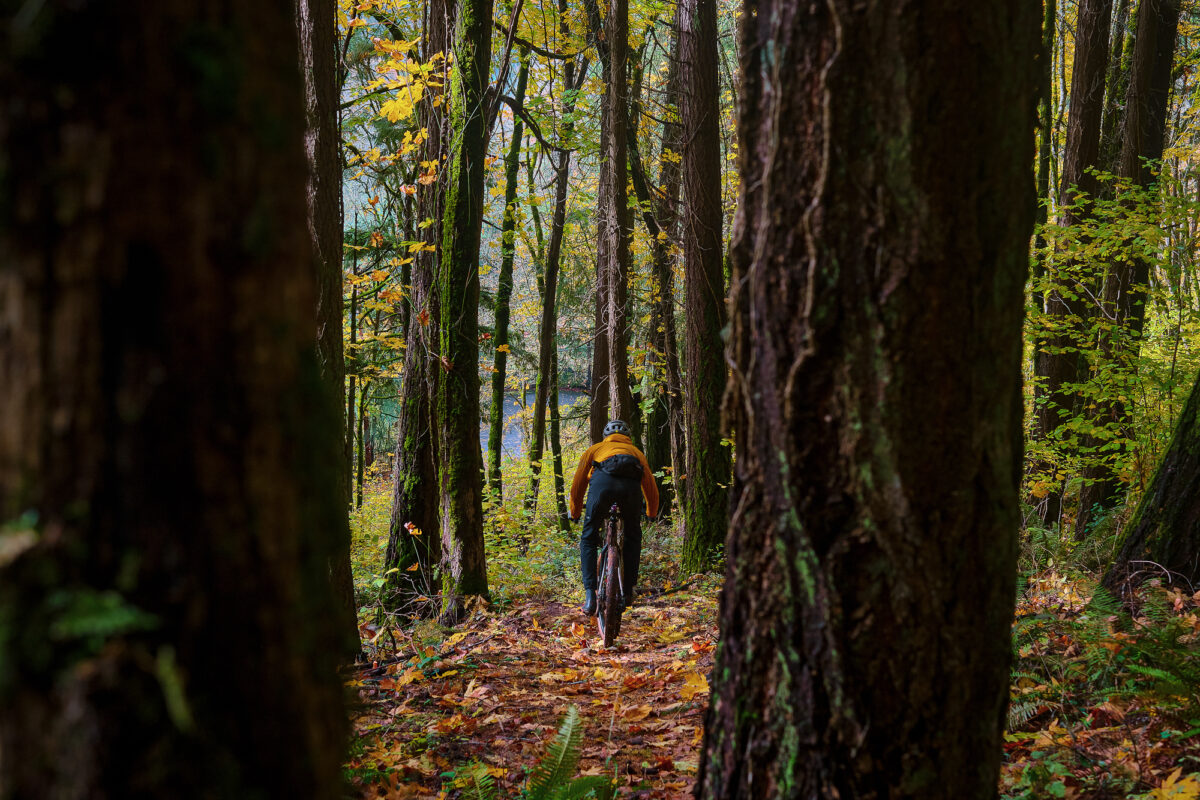
Right out of the gate, I want to say the Angeles is one of the first drop-bar hardtails I’ve ridden that actually feels like a mountain bike. It’s big. It’s brawny. It’s upright. It is astoundingly light and floats through chunder with the same muted hum as my 120 mm hardtail. I refer to this somewhat intangible ridefeel as the magic footprint. Think buoyant yet grounded, not unlike the Japanese concept of Wa or a harmonious unity of elements. Some of this I will attribute to Angeles’ light weight. This is not a tank – far from it, at 26 lb on the nose. As I mentioned, I’m currently running the Angeles rigid, so this dampening effect is immediately apparent, enhanced by a combination of baked-in flex and what you might call pneumatic suspension of 2.4” tiremeat. It is a rather effective pairing.
One thing to note: for a cockpit this high, Angeles’ wheelbase feels short. Some of this may be a combination of my expecting high-stack, hardtail-adjacent designs to have a proportionally lengthy wheelbase and slack-ish front end, which most generally do. The reality here is that the version tested actually does have a quite short 1104 mm wheelbase. This utilizes the longer offset configuration on the Lithic mountain fork, whose flip chip conversely shortens the wheelbase by 7.5 mm. There are two primary upsides here: snappy road and gravel handling, and the ability to navigate prohibitively tight trailspace and switchbacks that would not be possible on longer bikes.
Up & Up: Climbing
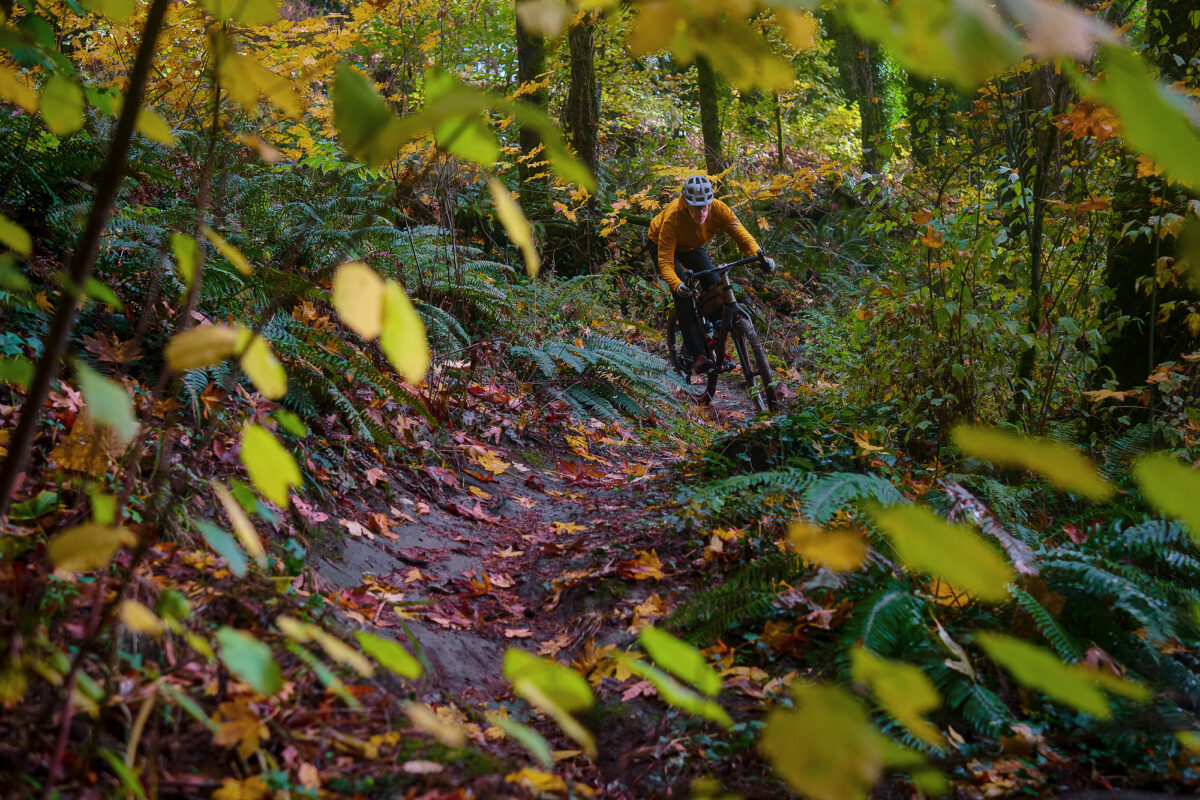
It stands to reason that a 26-pound mountain bike designed for steep climbing is going to (hopefully) climb pretty well. Sure enough, it does. But within that assessment, there is plenty of nuance to unpack. Climbing leverage is a decisive feather in the Angeles’ cap, and one that really brings the drop bar-specific design into focus. The stack height (707.2 mm) and wide bars (52 cm hoods/60 cm drops) give plenty of angular leverage to push and pull on steep climbs, particularly out of the saddle. This bike is unmistakably stout but readily responds when you say GO. Chaparral manages to strike an ideal balance of stiffness to springy zest, translating fluent body English into nimble climbing, the drops almost universally in play thanks to the upright cockpit design. And again, those short, snappy chainstays don’t hurt. This all facilitates micro-positioning and leverage for climbing steep technical pitches. The Angeles’ dexterity feels thoughtfully considered in a way I wish more bikes could deliver.
This brings me to gearing. This build is spec’d with a 30t ring on an 11 by 52 cassette. I might even consider a 28t. It doesn’t sound like much, but the practical difference between spinning a 28/30t over 32 or 34 is massive. Once you start adding loaded weight, rocks, ruts, and steep trail grades, this quickly becomes the difference between riding and pushing. The Angeles, I find, does enable quite a bit more of the former than it requires of the latter. In the places I like to ride – upcountry singletrack where everything is steep – this is huge.
The Descent
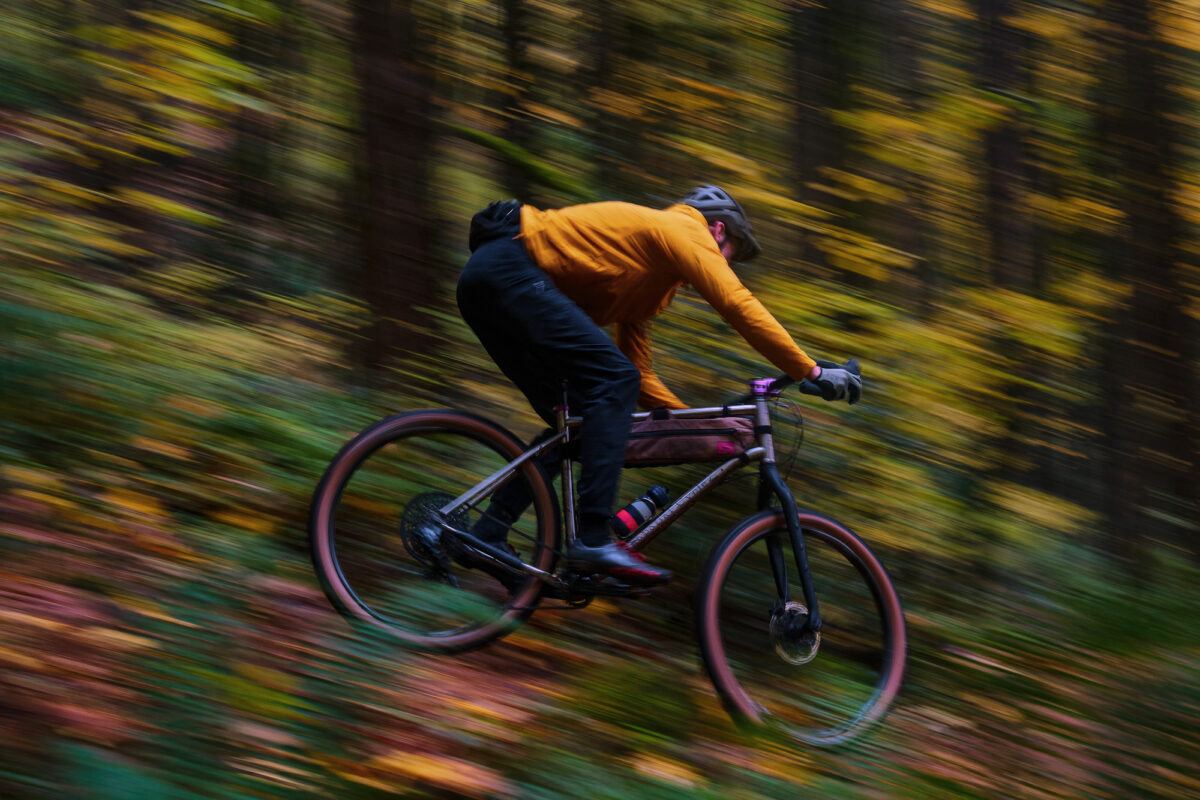
After satisfying a balanced checklist of baseline beats, the Angeles feels particularly biased toward descending. Pitchy PNW singletrack like Skookum Flats, White River, and Gunsight Ridge trails felt like proper forums to push the Chaparral beyond use case, a bit steeper and deeper into technical terrain. I was not disappointed in my choice of trails, though I will admit the geometry comes with a slight learning curve. Body dynamics took a minute to finesse (drop bar braking position on sustained trail descents in particular), but once I settled in, the bike really started to open up. Again, this design responds particularly well to a wide range of rider motion – getting low in the drops, deep angular leans, ass-back behind the saddle – for the communicative rider, the Angeles is clearly willing to accept direction.
Alternating between steep backcountry roots, rocks and duffy tread, the Chaparral tracks like a snappy hardtail. The more I let loose, the more it comes alive. Even in rigid configuration, it wants to get rowdy. I find myself playfully sending root cascades and carving off-piste lines with glee. The Angeles’ control at speed feels like the result of numerous thoughtful design choices: buoyancy versus groundtruth, float versus feedback; it all feels considered. When pushed into the deep end, Angeles balances fundamental ride character in a way I don’t often find with more conventional gravel-oriented underbiking. I’m sure some of this is the Ti talking, but it is hard to pinpoint direct cause and effect between the niche geometry, premium build kit and cushy 2.4” footprint. And I think that’s the overarching point when considering the bike as a tool of layered refinement: a satisfying harmony of purpose.


Fully Loaded
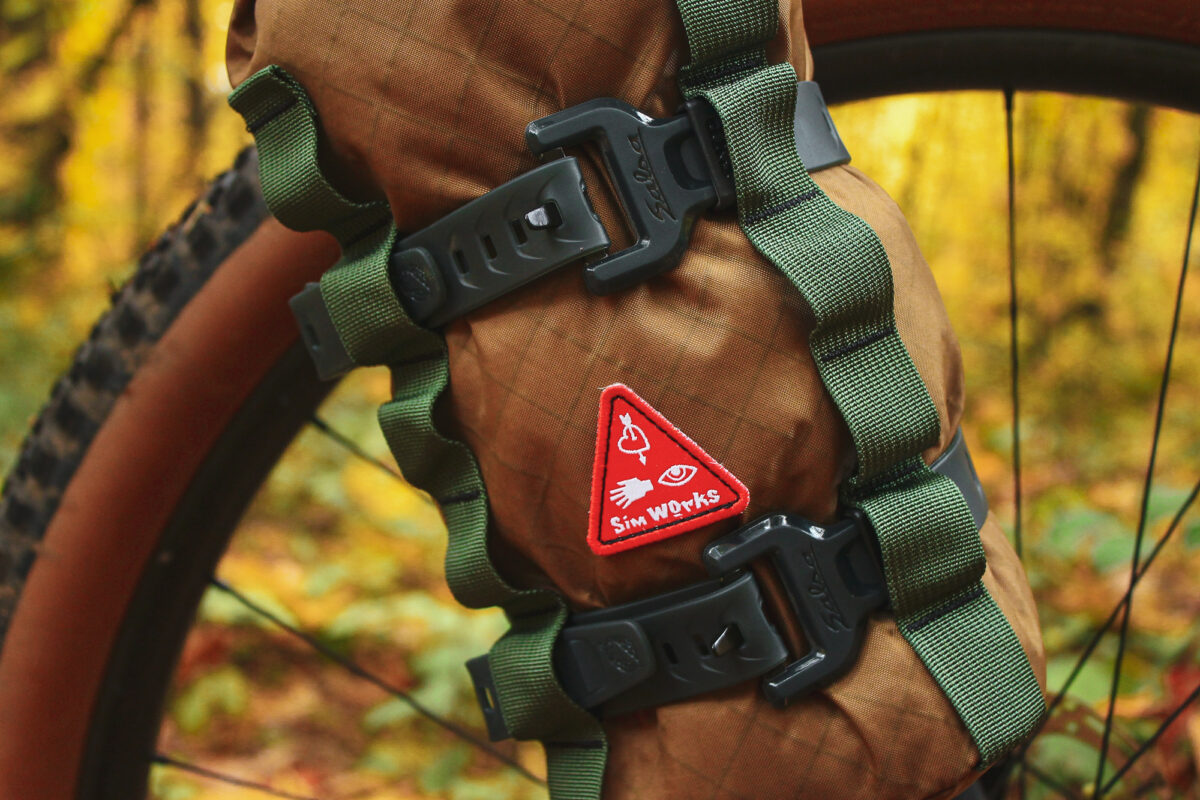
One benefit of bikes designed to take weight is that load-balanced, planted ridefeel we hear so much about. Angeles hits these beats particularly well. Cargo weight enacts less of a handling penalty and more a boost in traction and composure; the magic footprint in full effect. This is a bike that switches modes naturally, with its handling character intact across various configurations – lean gravel to fully-loaded bikepacking. Granted, everyone’s gear distribution is going to be different. I like a minimal fastpacking setup, mid-size bar, and saddle bags for sleep gear and light layers. Shelter, stove, and bulky weight rides low on the fork. Food, snacks, and small bits live in a slim framebag with water accessed from standard cage positions.
The Chaparral’s beefy front end and suspension-corrected fork dovetail in a way that recalls the handling of a Salsa Cutthroat: not particularly sexy, but stable, consistent, predictable, and well-engineered. More wood-paneled Wagoneer than rally car, which if I’m being honest is precisely what I want 138 miles into the backcountry. It’s a surefooted, dependable character I very much appreciate. However, one issue I quickly noticed is that the flat-mount Force-tier braking just isn’t enough on steep, loaded trail descents. Not a dealbreaker per se, but when you can have more modulated control, why wouldn’t you?
Nitpickings
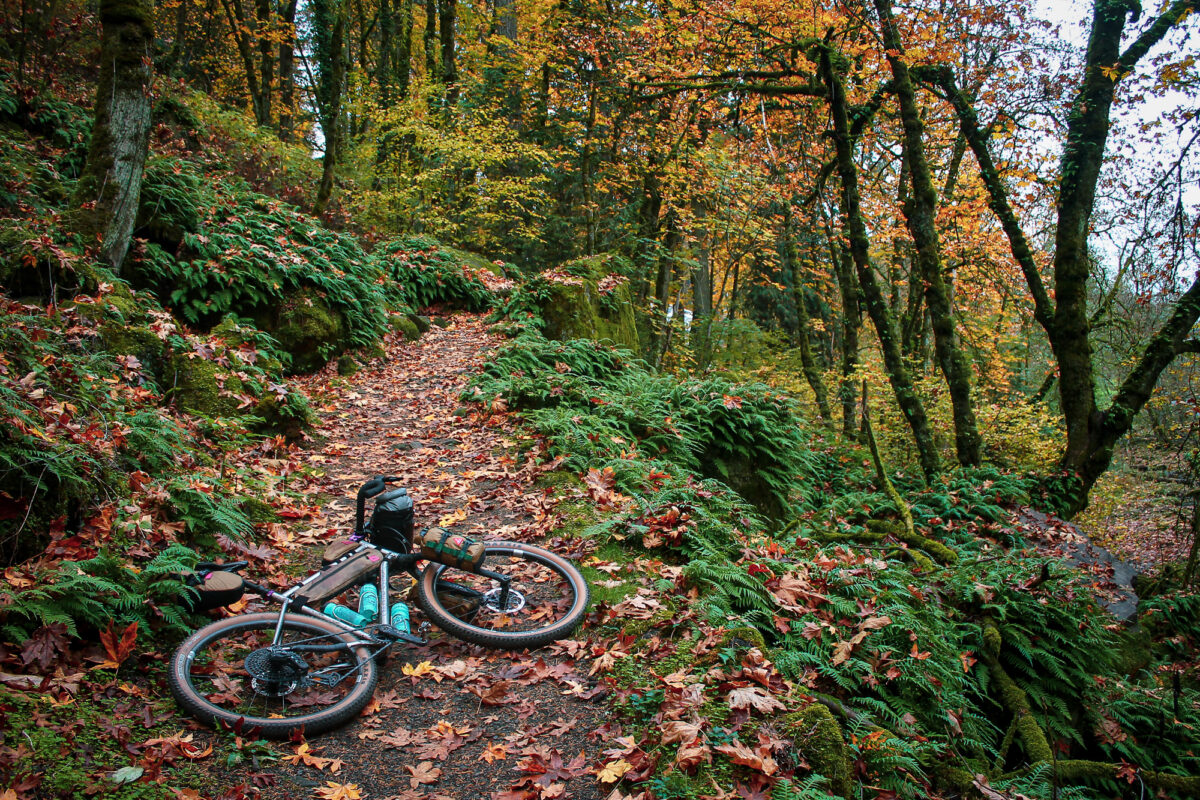
As mentioned earlier, out of curiosity, I would be interested to see how a 68° head tube angle would affect ride dynamics. The existing 70.5° feels a tad steep in certain situations and leaves me yearning for a bit more slackness. The flipside of this is that I fully recognize that further slacking out the front end may compromise the light, peppy roadish handling in longer form paved riding and gravel modes. Alas, the heart wants what the heart wants.
I think one critical miss is the commitment to flat-mount braking. To be fair, the Force hydros work fine when riding more or less unloaded. But the minute you add weight, then throw in trails at speed, gravel-tier braking is just not enough. Most riders are going to want more stopping power and control. The forks spec’d are already post-mount, so why not take that next step and equip the frames as well? Mix and match the Force levers with Code calipers and size up the rotors for more nuanced modulation and control under load. There is no real downside.
The more time I spend on the Angeles, the more I appreciate the geometric nuance – that said, and considering the lofty stack is integral to the design, center of gravity feels a little high at times, like steep trail climbing where the front wheel wants to lift, especially when combined with a slack seat tube angle. To offset this, my hunch is the headtube/stack height could soften just a bit without compromising the design or the ride quality. That said, between the prototype and production phases, the headtube was shortened by 10 mm, but I might advocate for another 10 mm to further ground the front end.
One minor piece of build kit that I would probably swap out (or at least reposition) is the dropper lever. Like I say, minor, but it has an outsize impact on ride dynamics. The current lever is PNW Components’ drop bar-specific lever kit and it’s mounted mid-bend on the left hand drop. Either the lever design or the fact that the cabling is tightly contoured under the bar tape creates quite a bit of sticky latency and a sluggish saddle return. If it meant snappier performance, I’d take an exposed, simplified cable run or a different lever like the Wolf Tooth ReMote.
The Verdict
As Chaparral’s opening statement, the Angeles gets a lot of things right. It lands squarely in the sweet spot between rowdy hardtail energy and drop-bar zest. Drawing from both worlds, the magic here springs from the space where disciplines intersect. Angeles is a purposeful platform for riders inclined toward wide-ranging efforts like the Stagecoach 400 or GDMBR, but just as apt to beeline it to the local trails on a Friday afternoon. The bike doesn’t feel fussed over or fancy, rather a thoughtfully-considered tool that does a lot of things well: sandy doubletrack, steep fire roads, technical trail, and loaded bikepacking, yet remains surprisingly snappy on tarmac.
To Chaparral’s credit, titanium feels like the right call here – light where it counts and forgiving where it matters with a supportive geometry that rewards active body movement. The chassis comes alive with classic hardtail charisma in consequential terrain. Again, there is more mountain bike DNA here than gravel. Would I like to take that even further with a slightly slacker front end and more robust braking? Sure, but none of these minor quibbles are dealbreakers or obscure the fact that Chaparral manages to distinguish itself with a highly compelling (and accessible) debut within the increasingly stacked endurance-adventure space. Rumor has it Chaparral intends to follow up with an all-road model to be announced soon.
Pros
- Excellent all-rounder capability; does a lot of things well
- Affordable Ti: REJOICE!
- Well-balanced: climbs and descends with equal zest
- Buttery, plush ride quality
- Suspension-corrected geo for a 100mm suspension or rigid fork
- Clears 29 x 2.4
- Lightweight: 26 lbs as tested
- External cable routing w/ internal dynamo wiring ports
Cons
- Flat-mount brakes can feel underpowered for loaded trail riding
- A few more degrees of slackness in the front end wouldn’t hurt
- High center of gravity in certain situations
- Seat tube clearance limits fendered rear tire size to 50-55 mm