






1977 saw the introduction of one of the most iconic models in the history of the humble mountain bike, the Lawwill Knight Pro Cruiser. Designed by flat track superstar Mert Lawwill and built by Terry Knight in his Hayward, California workshop, the Pro Cruiser is heralded as the first production mountain bike. The first no-serial prototypes were made in 1977, and only 600 serialized production frames were produced in batches of 50 between 1978 and 1984.
Paul Price from Paul Component Engineering has had his Pro Cruiser for several decades. It hung in the rafters in his Chico, California, shop before it was restored in 2023 by Ken Baker. What makes this restoration so special is that Mert Lawwill himself added the finishing touches to Paul’s bike, literally placing the decals on by hand.
Let’s froth over this no-expense – including time – spared restoration. But first, a bit of background is needed…
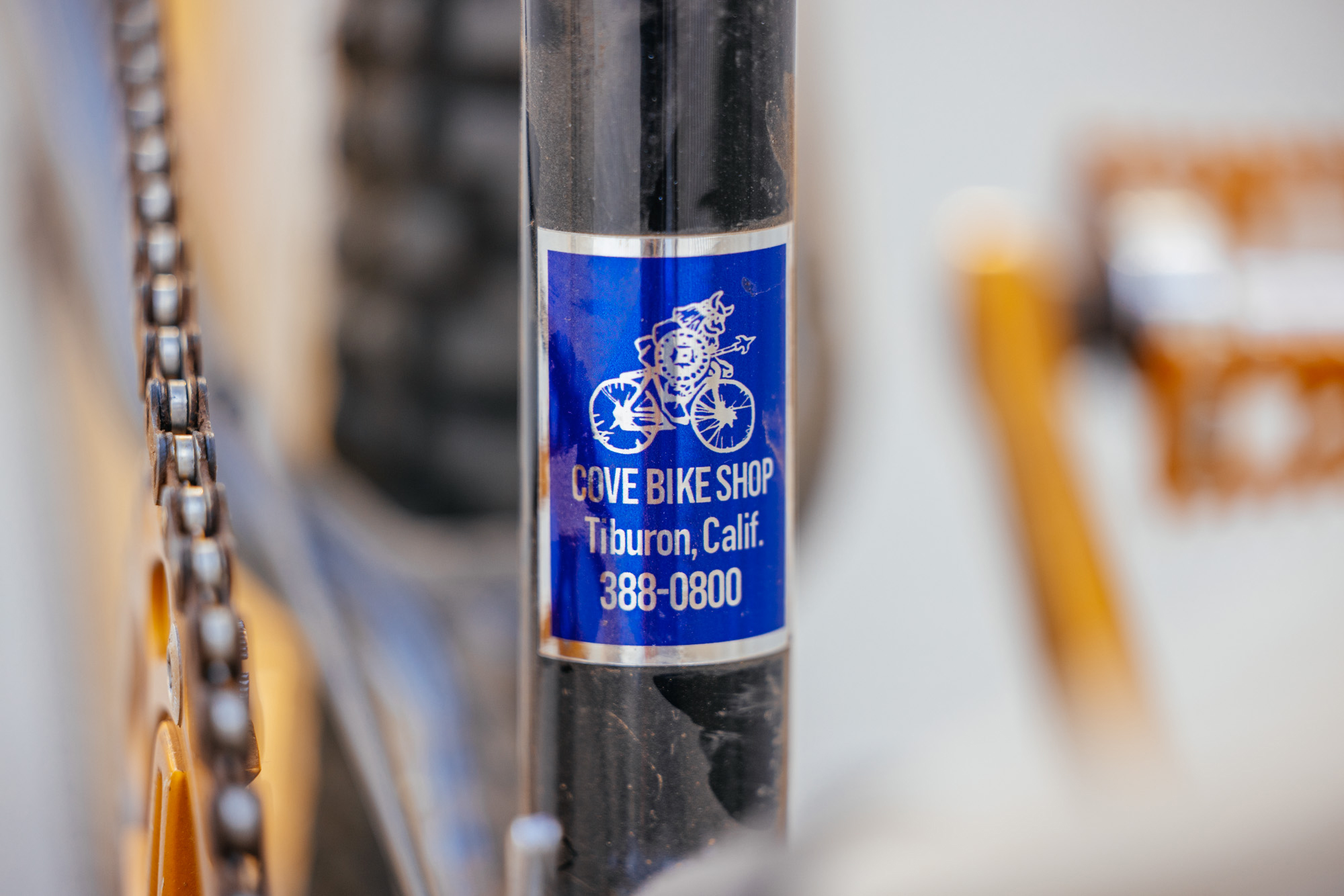
Mert, Terry, and Cove
While Joe Breeze and Tom Ritchey – two mountain bike pioneers – came at the design of the mountain bike from a road cycling background, the Koskis and Cove Bike Shop were inspired by BMX and motorcycles.
Mert Lawwill had already been a legendary motorcycle racer for years. He was building and selling Harley-Davidson flat-track racing frames with Terry Knight when they got the idea to weld up a batch of BMX frames. In 1977, Don Koski of the Cove Bicycle Shop in Tiburon, Marin County, California, convinced them to instead make a production run of “mountain bikes” in batches of 50.
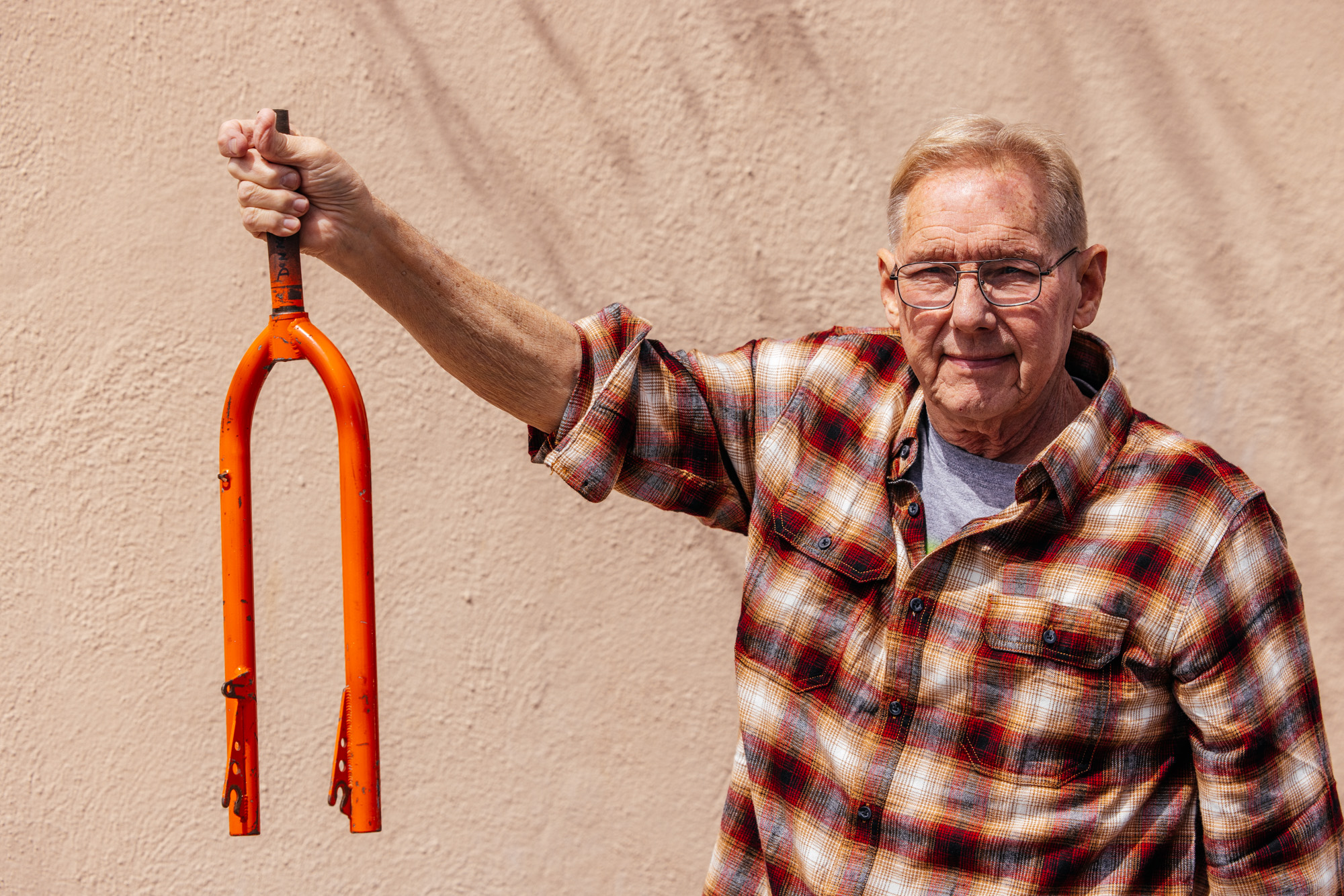
Don Koski with CBR/Koski 26″ Fork Number One
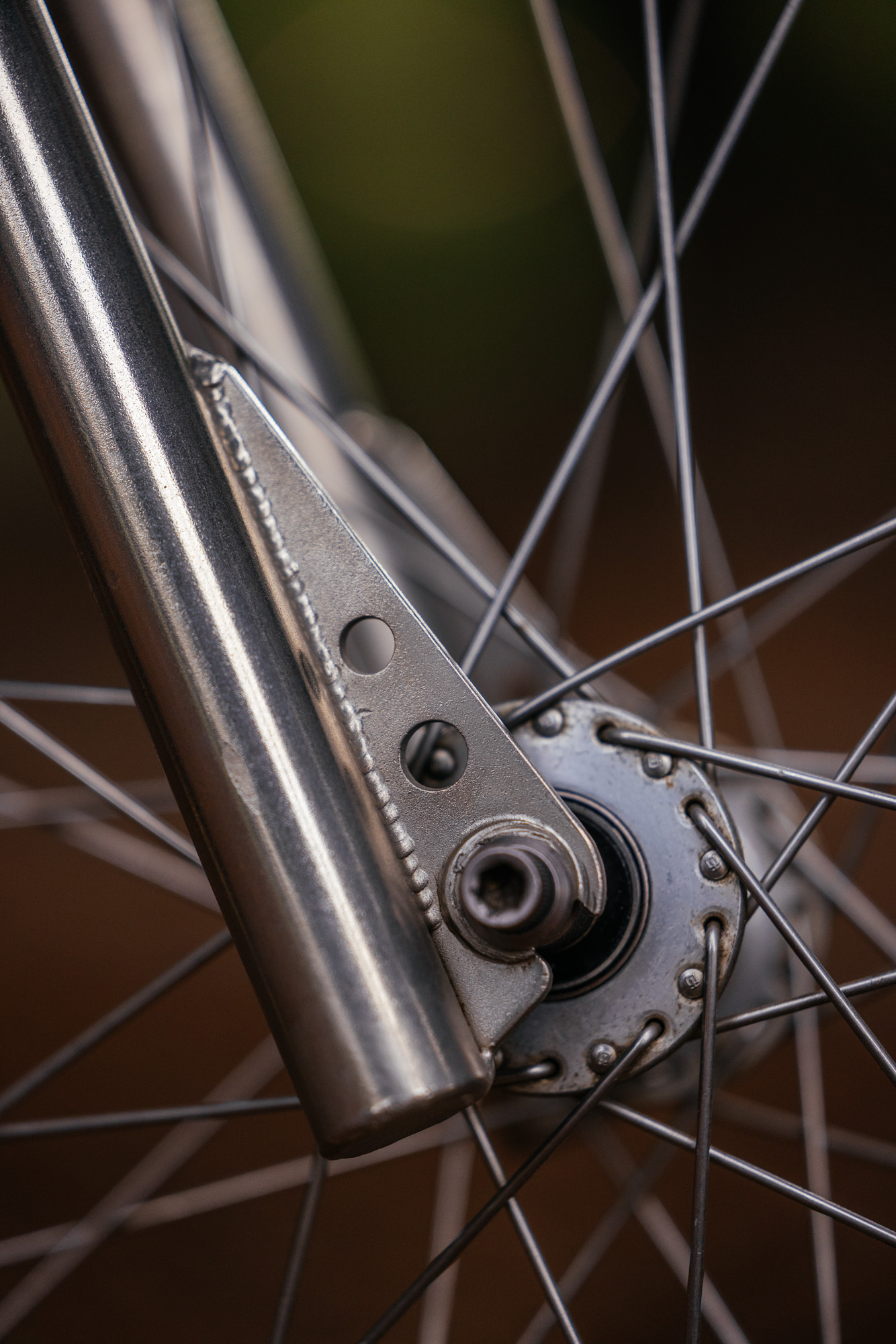
Mert and Terry were intrigued. This came after Don Koski’s success in 1975 in developing the first mountain bike fork with Cook Brothers. Who knew that a simple sketch would help birth a movement in Marin County? These 26″ forks could withstand the rigors of bombing Marin County fire roads, and quickly they found their way onto pre-war balloon tire cruisers and klunkers.
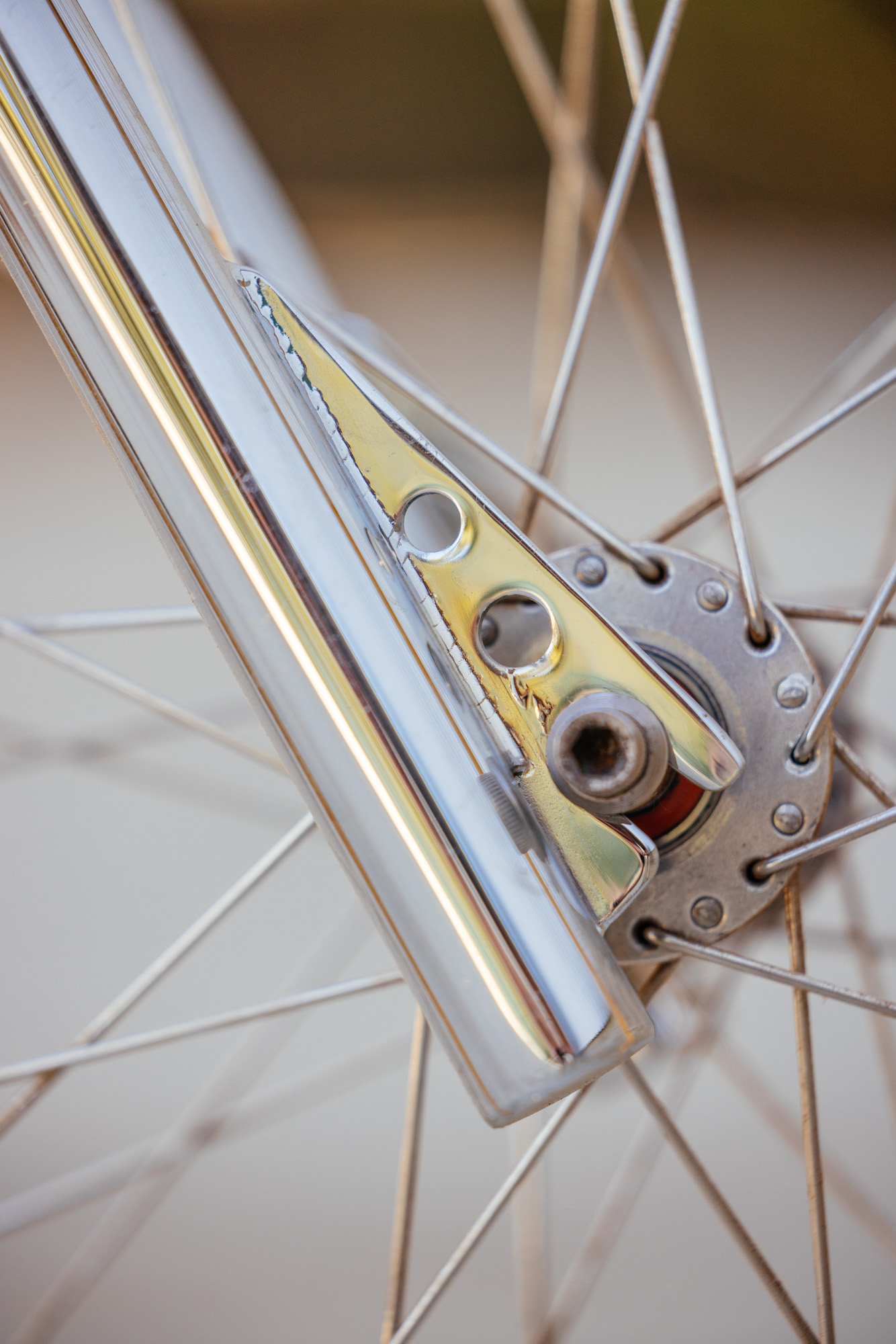
Cook Brothers fork on the left, modified Breezer on the right
When Don Koski designed the Cook Brothers 26″ fork, he greatly underestimated its impact. Later, Joe Breeze would order forks from Cove Bike Shop for his first production Breezer frames, adding reinforcement rings to the dropouts for extra strength.
Lawwill Mountain Bike
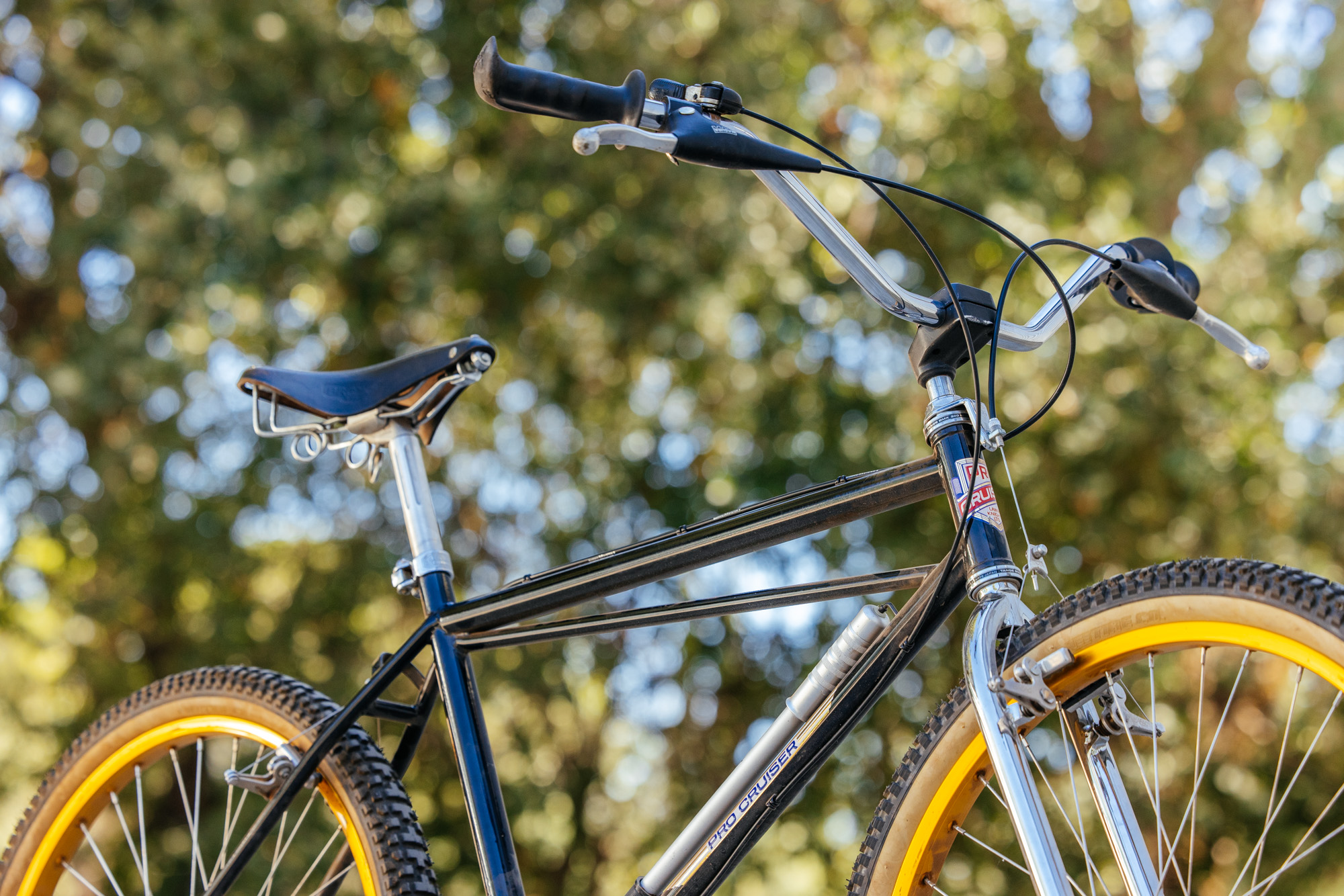
At the time, off-road bicycles weren’t in the ether yet, and only a handful of riders around the globe were pushing these yet-to-be-categorized off-road bicycles. In 1978, Mert first called the Pro Cruiser the “Lawwill Mountain Bike”, but no bike shops would place orders. As such, Mert and Terry had to label and sell these bikes to the public as “cruisers” because, aside from the Cove Bike Shop, other bicycle shops didn’t understand what a “mountain bike” even was.
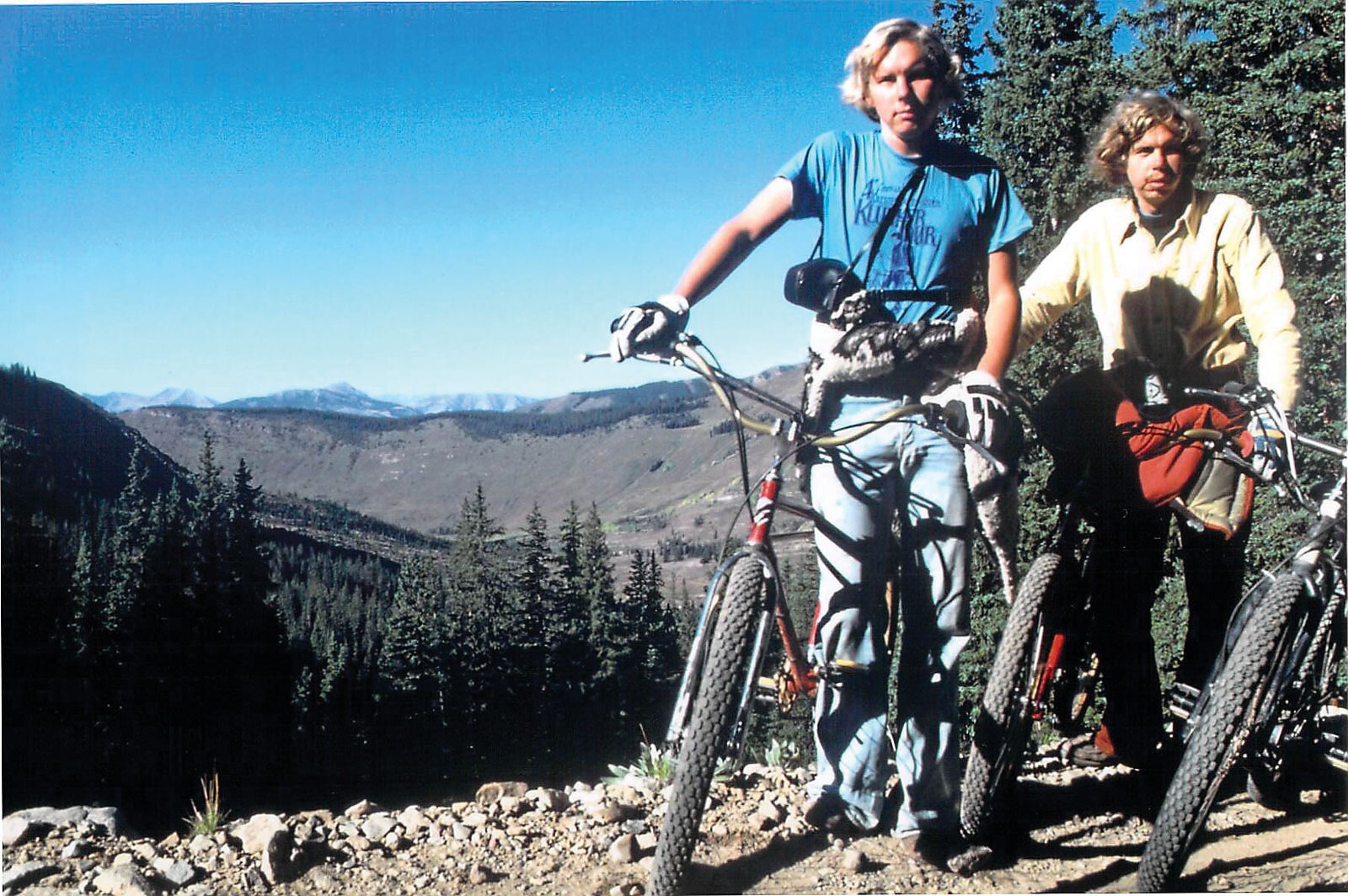
Don and Dave Koski on Pro Cruisers
While the Pro Cruiser and the original Breezer Series I came into the scene around the same time, give or take a few months, it ultimately came down to the marketing of these bikes that determined their relevance in the evolution of the mountain bike in California. Cove and the Koskis had a different thing going on compared to Fairfax, and while there’s a bigger story on the Koskis and the Cove Bike Shop on the way, for now, it’s safe to say this is a mountain bike.
Three Bar
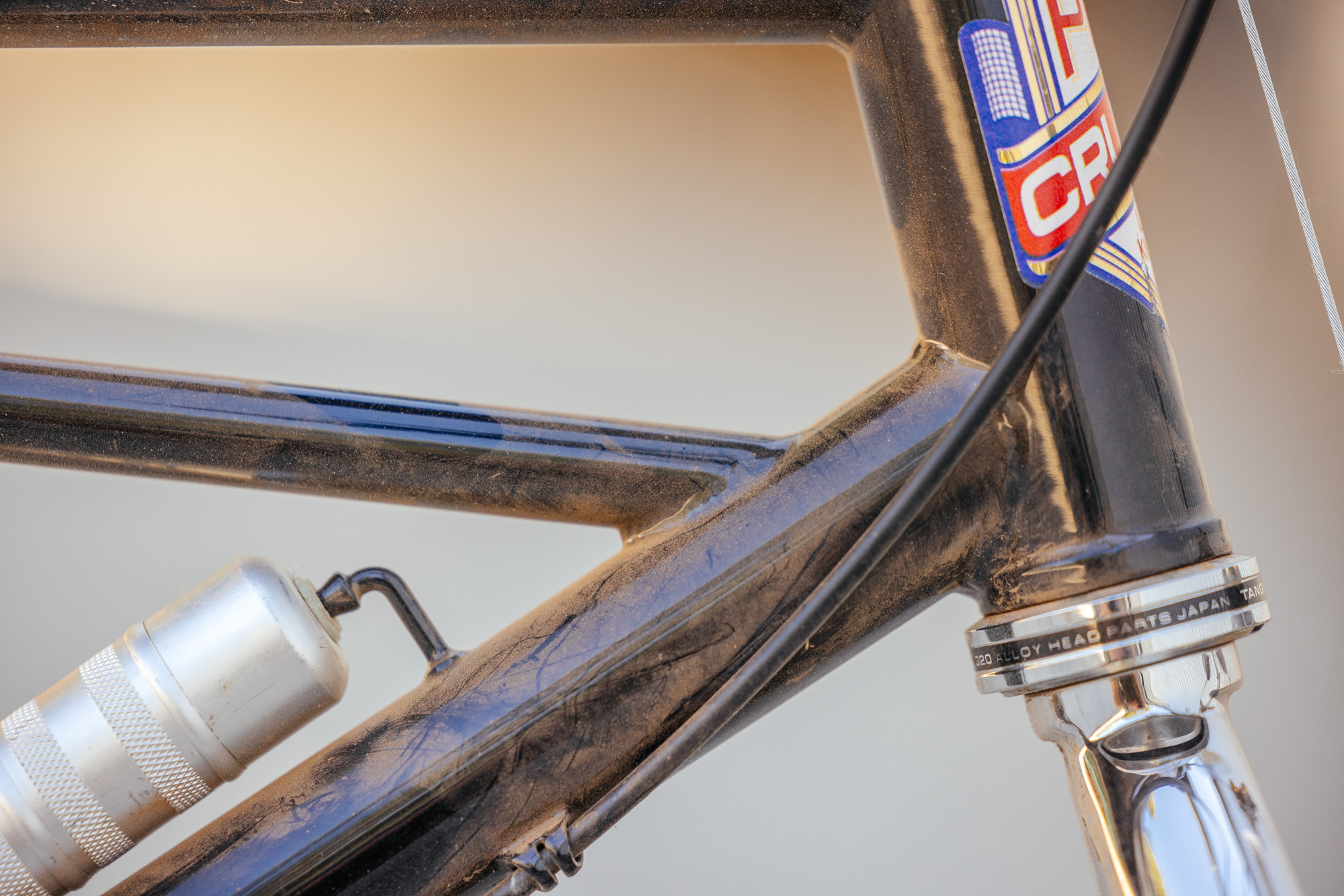
Cruisers often have an extra piece of tubing that runs from the seat tube to the downtube. This was believed to make the bike stronger. Mert and Terry took this three-bar design and pierced the downtube with the third bar, welding it directly to the head tube. This technique was first developed by Champion Racing Frames.
At the time of the Pro Cruiser’s inception, Terry Knight was chief fabricator and welder at Champion Frames in Hayward, California, until their closing in 1977, when the Champion brand was sold to Redline Frames. At this point, Terry decided to take the opportunity to start something new and joined up with Mert Lawwill at Harley Davidson Skunk Works in Hayward.
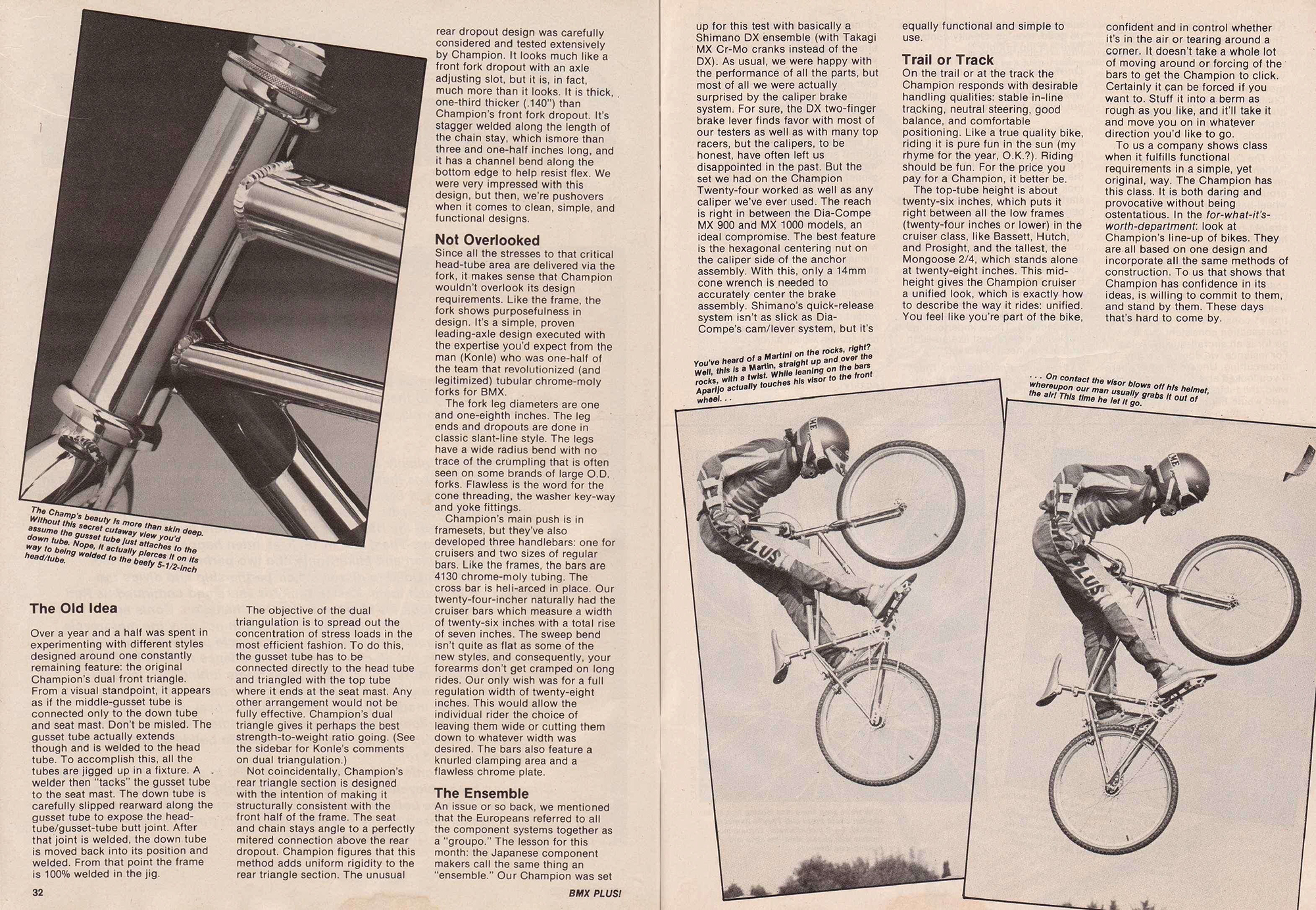
The above photo shows the same fabrication technique utilized on the Pro Cruiser. The original article explains the rationale and procedure:
“Over a year and a half was spent in experimenting with different styles designed around one constantly remaining feature: the original Champion’s dual front triangle. From a visual standpoint, it appears as if the middle-gusset tube is connected only to the down tube and seat mast. Don’t be misled. The gusset tube actually extends through and is welded to the head tube. To accomplish this, all the tubes are jigged up in a fixture. A welder then “tacks” the gusset tube to the seat mast. The down tube is carefully slipped rearward along the gusset tube to expose the head-tube/gusset-tube butt joint. After that joint is welded, the down tube is moved back into its position and welded. From that point, the frame is 100% welded in the jig.
The objective of the dual triangulation is to spread out the concentration of stress loads in the most efficient fashion. To do this, the gusset tube has to be connected directly to the head tube and triangulated with the top tube where it ends at the seat mast. Any other arrangement would not be fully effective. Champion’s dual triangle gives it perhaps the best strength-to-weight ratio going.”
Pretty f’in rad and relevant! This gusseting resulted in incredibly robust frames, meant to endure the rigors of mountain klunkin’.
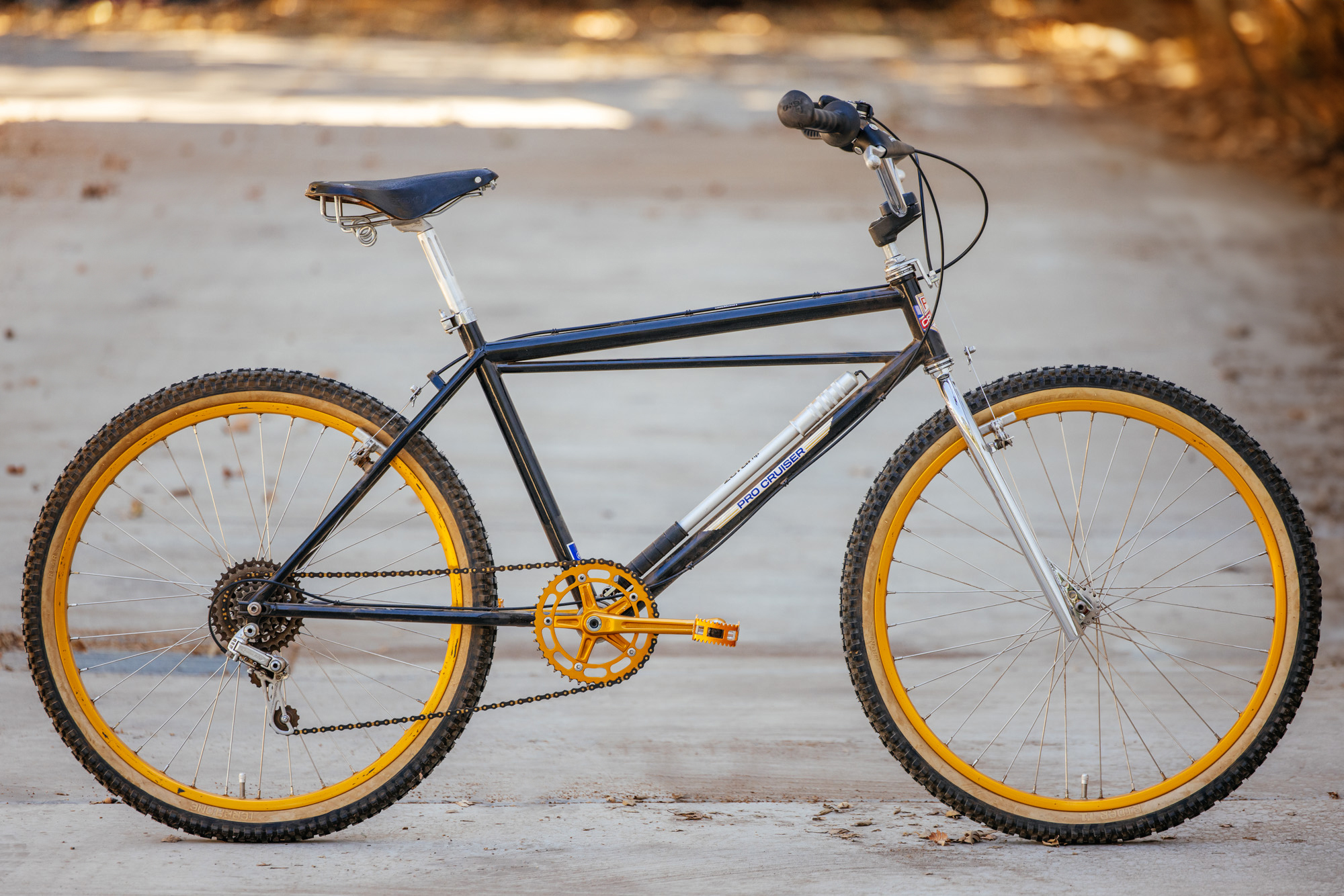
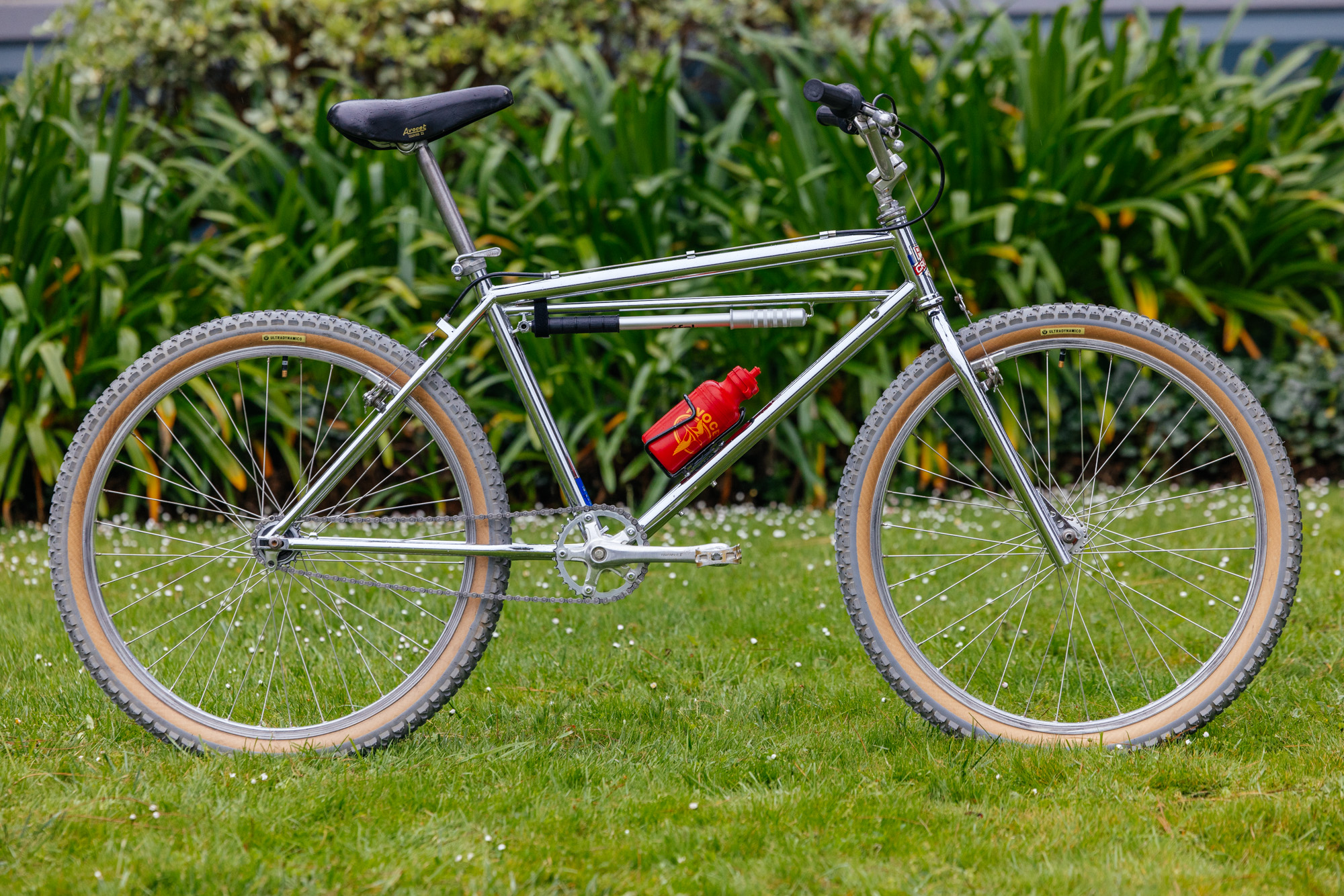
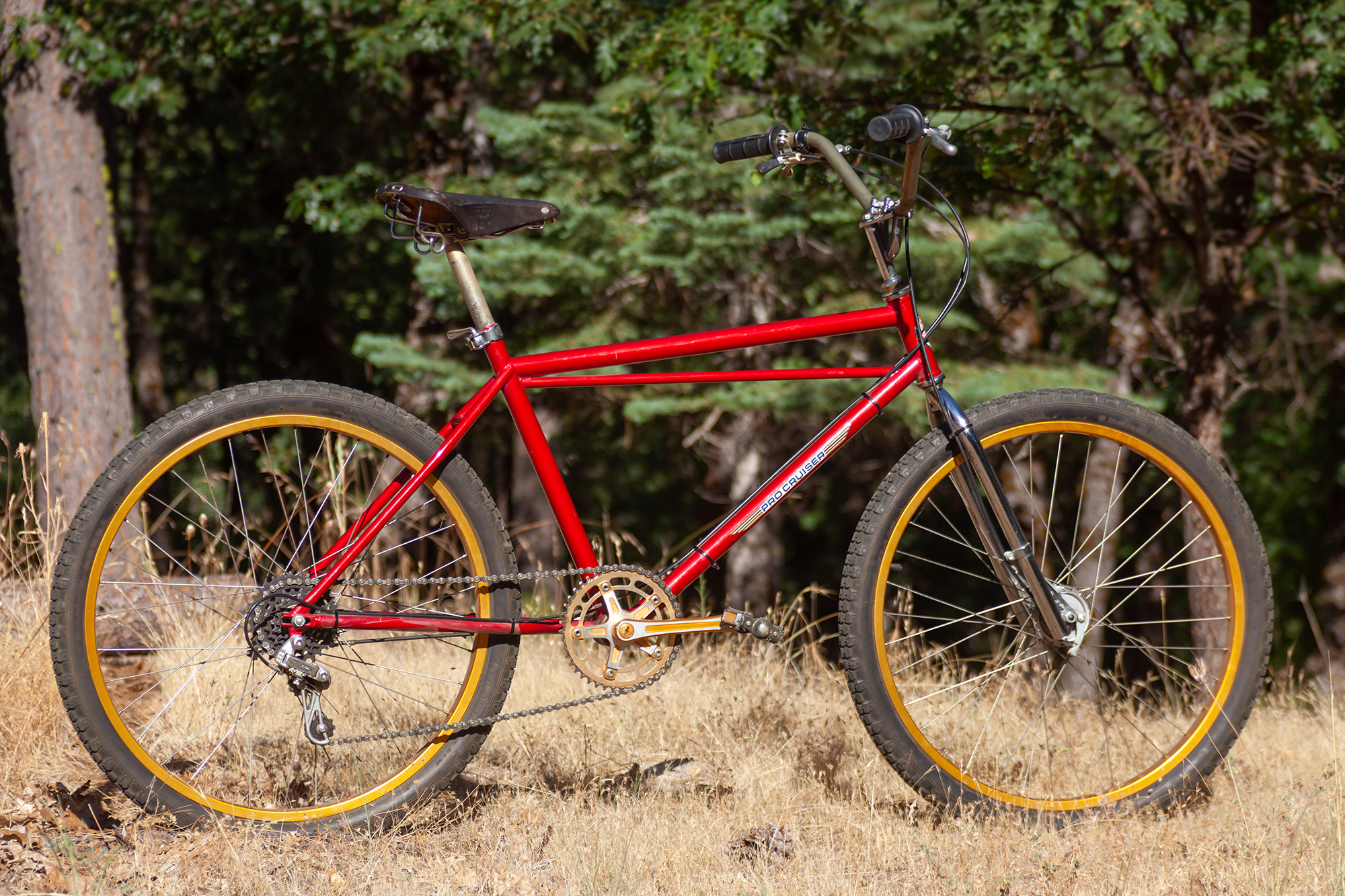
Paul’s 1979, Shawn’s 1977 pre-serial, and Cam’s 1979. All we’re missing here is a blue Pro Cruiser with a coaster brake!
Pro Cruiser Model Types
The Pro Cruiser came in a few different models. The traditional three-bar designs included the single-speed “Pro Cruiser Street”, the cantilever-equipped “A” bikes, and the drum brake “B” bikes that used American standard bottom brackets, commonly found in BMX bikes. Meandering from the iconic three-bar silhouette was the shorter third-bar Trail-Blazer that was lighter weight and used a European bottom bracket cup. Later, the Trailmaster would continue in this evolutionary trajectory.
Ken Baker, a Pro Cruiser historian, started working on Paul’s restoration by taking the rusty, grease- and oil-caked chassis and completely stripping it down to the bare metal. Paul’s bike was an “A” bike, or a cantilever model. There was also a “B” bike, or drum brake model. Several modifications could be added at the Cove Bike Shop, the number one Pro Cruiser dealer, such as pump pegs, rack mounts, canti brake hangers, and more.
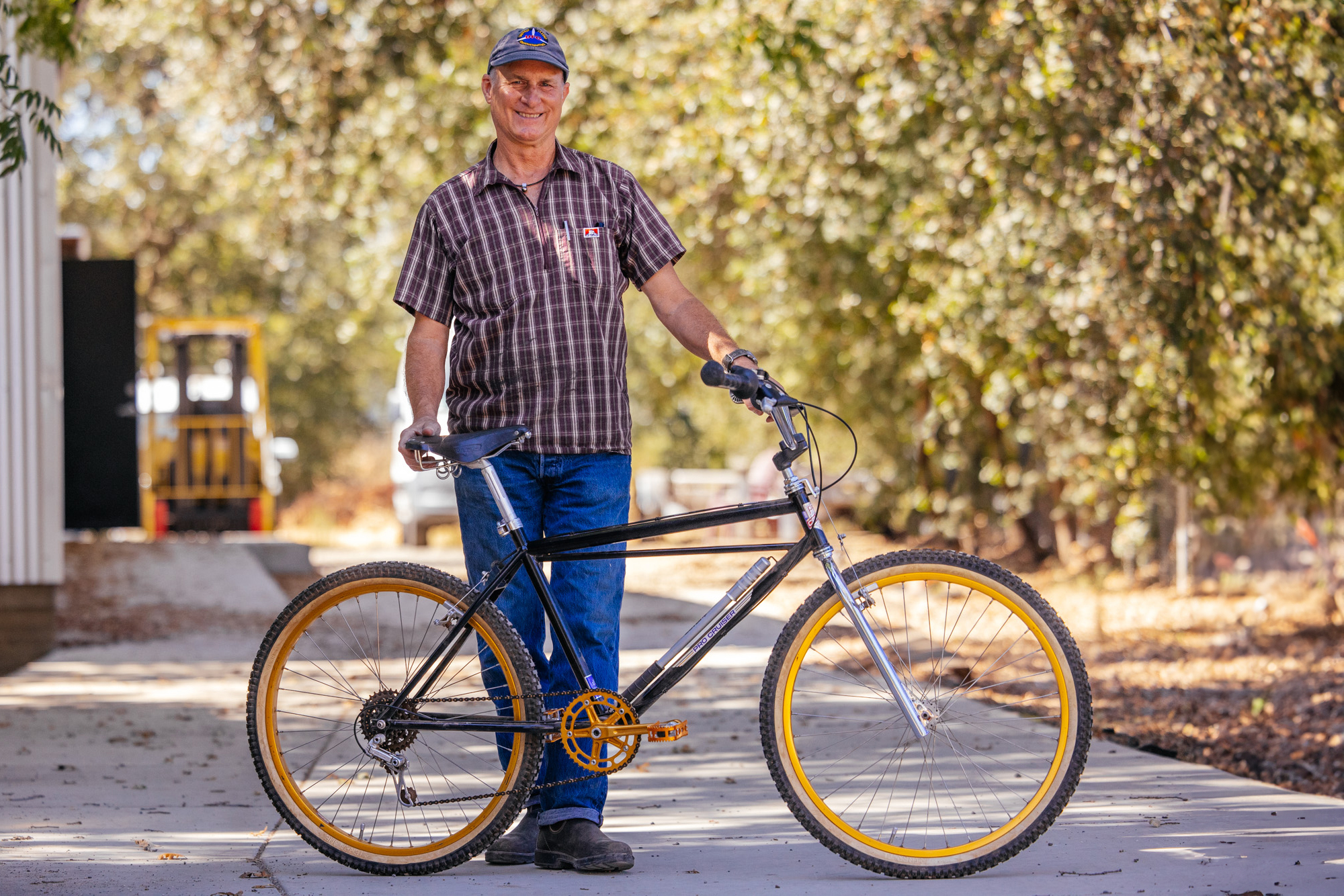
Paul’s Pro Cruiser
Paul had this to say about how he came upon this coveted bike:
“Way back in 1993, I was still in touch with some college friends. One of them had grown up in Marin in the midst of the mountain bike’s invention. Somehow, he ended up with the Pro Cruiser before college, and he had told me about it. Once my company got a little traction in the early 90s, he contacted me and wondered if we could trade two pairs of Stoplight brakes and the just-then-brand-new Love Levers for his Pro Cruiser.”
“These were for his girlfriend’s bike. Even though I was pretty poor at the time, those parts represented me paying my $354 mortgage that month, and I still took him up on that offer, which was a very smart move. Besides just the normal lust over bikes that directly contributed to the “invention” of the mountain bike, the guy who designed and made it was a star of that one movie I loved: On Any Sunday.
Somehow, the mortgage got paid too. Then it hung in a couple of my shops for about 20 years until I was making enough to justify restoring it.”
The Restoration
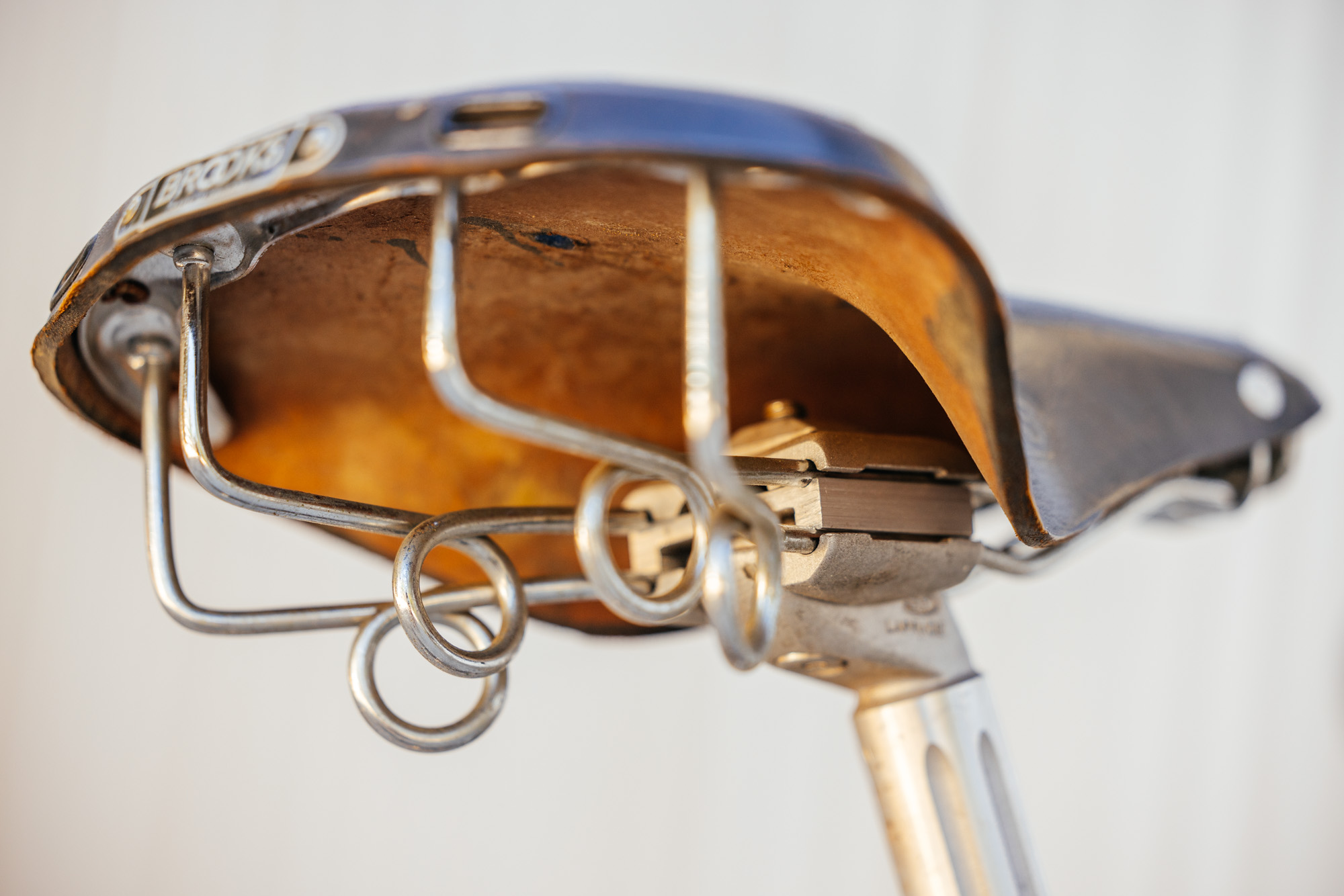
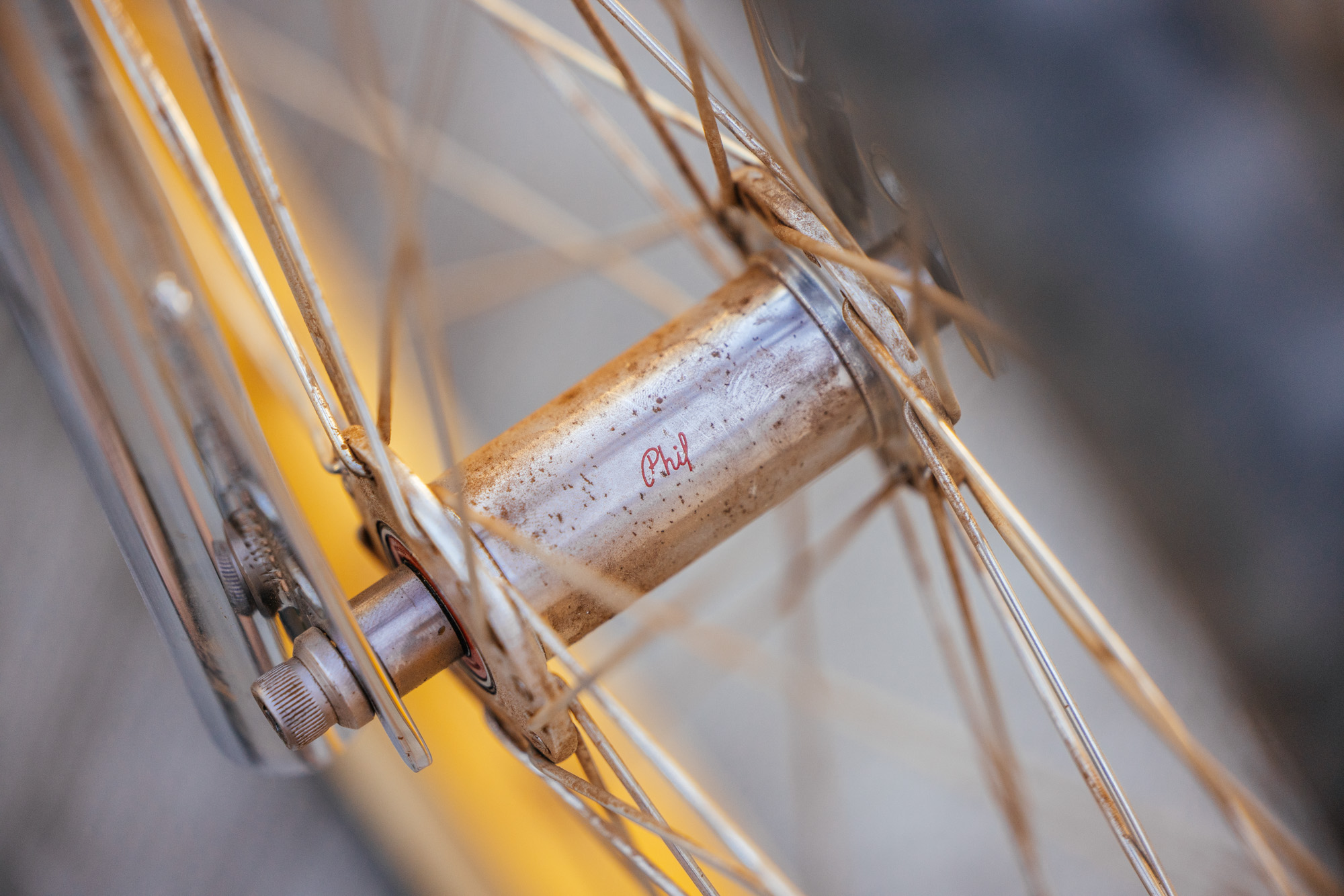
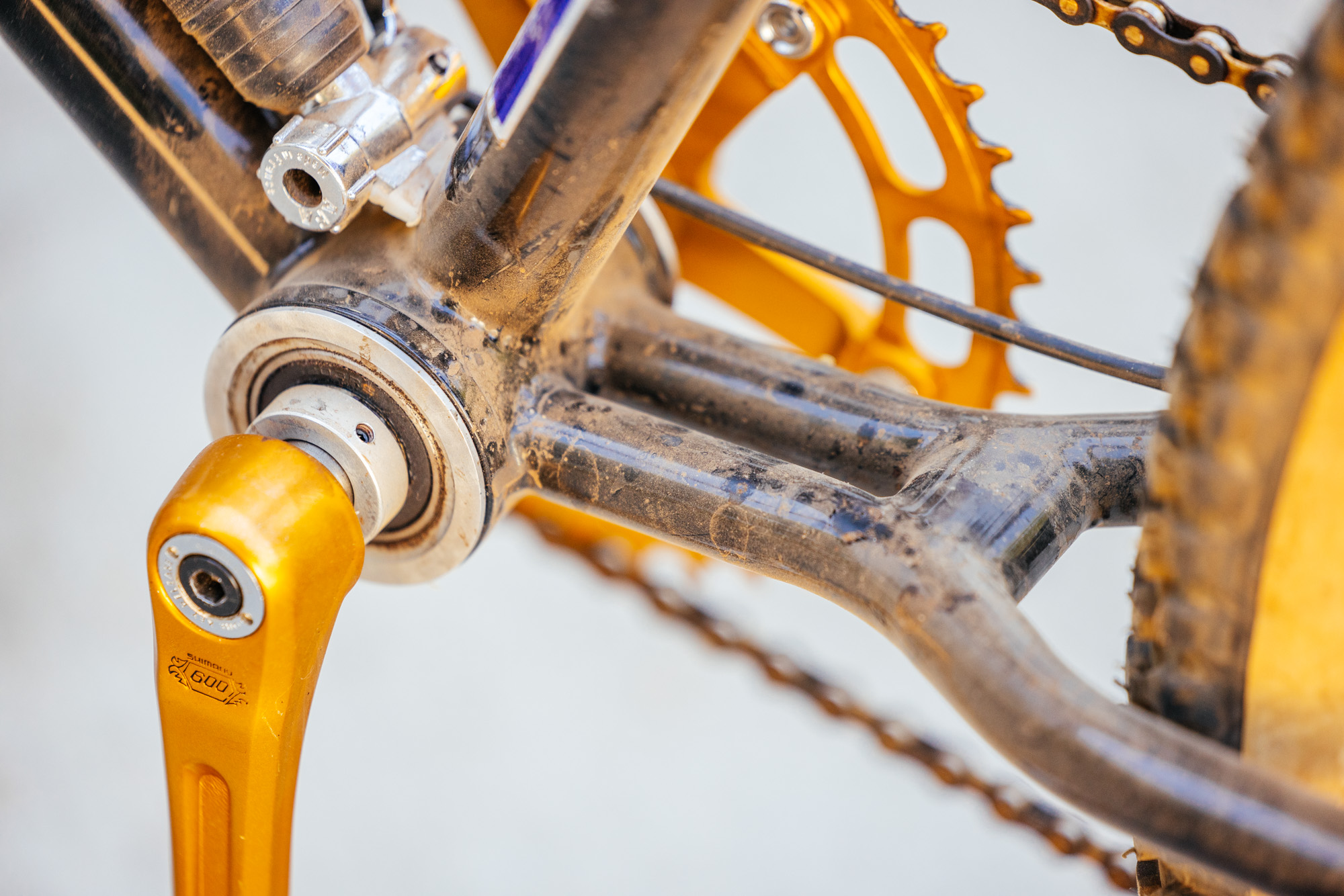
Paul’s frame had good bones, so no metal work was required, and some of the original parts, like the Phil Wood hubs, MKS pedals, Dia Compe stem, and those gold Shimano 600 cranks, could be reused in the final build. The Phil Woods hubs were re-laced to gold Araya rims, which Cove Bike Shop sourced and imported in the late 1970s. Sourcing period-correct components is never easy, but the end result is always worthwhile. Eagle-eyed viewers will note the “Breezer Block” between the Brooks B72 saddle rails, making it possible to be mounted on a single bolt seatpost.
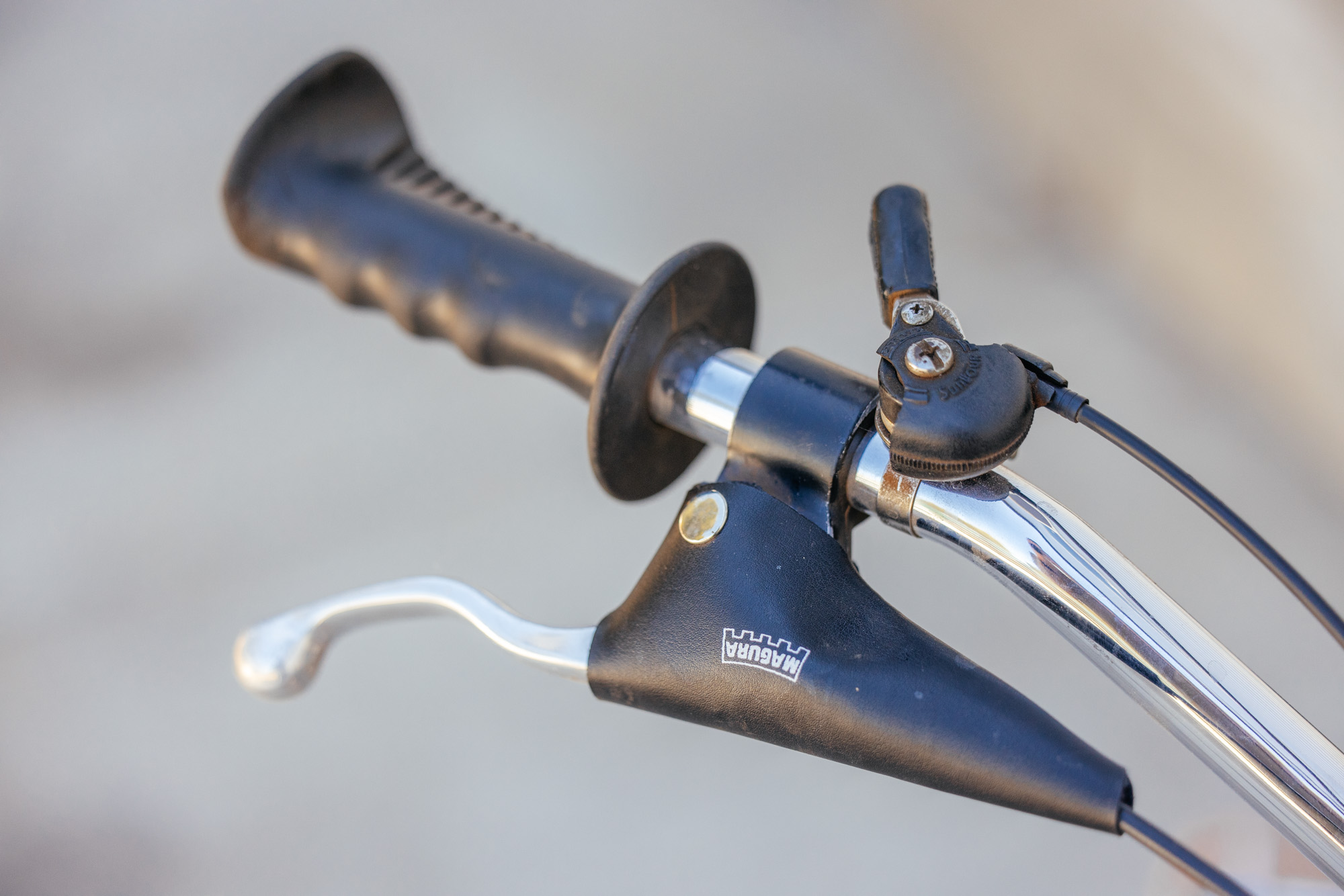
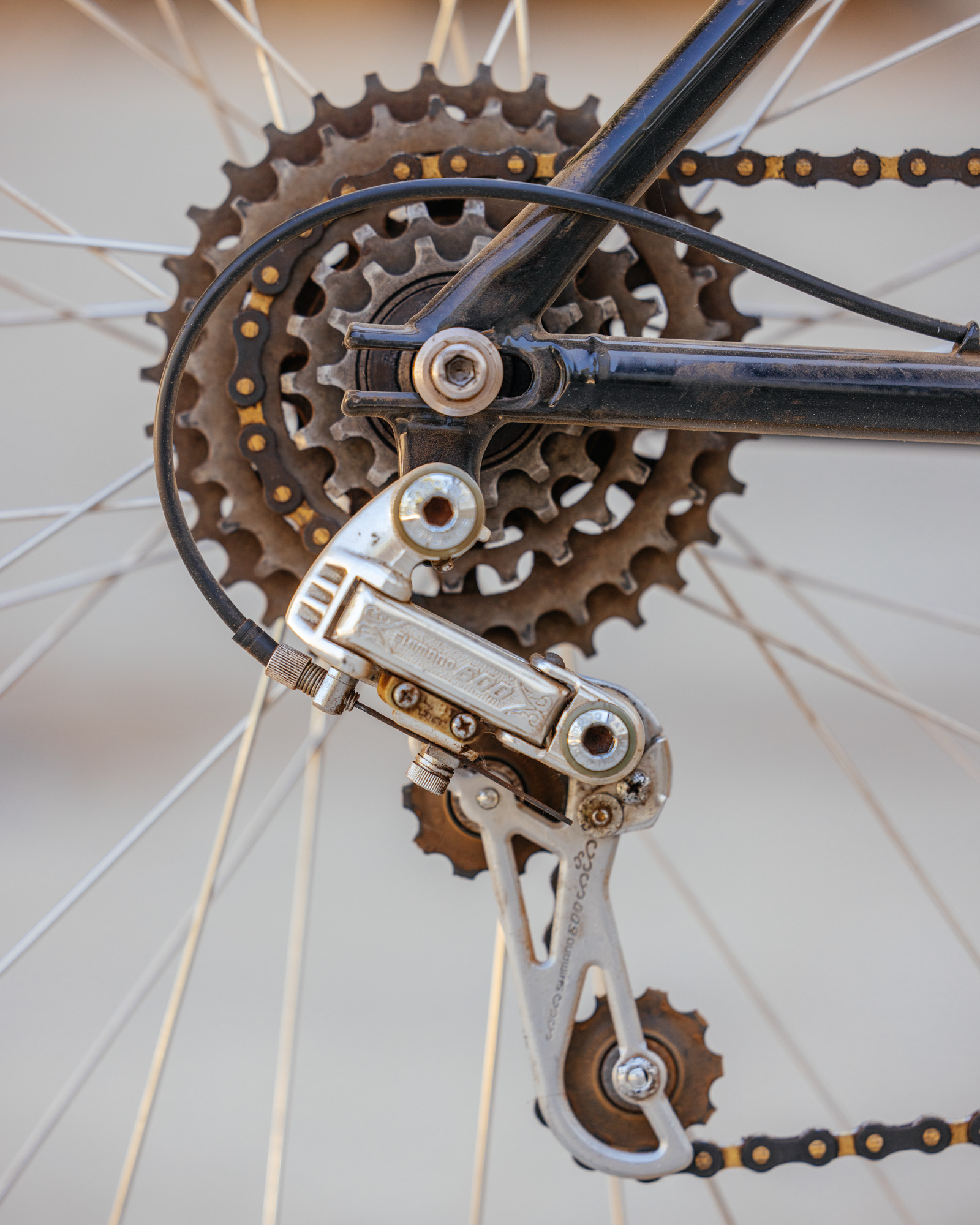
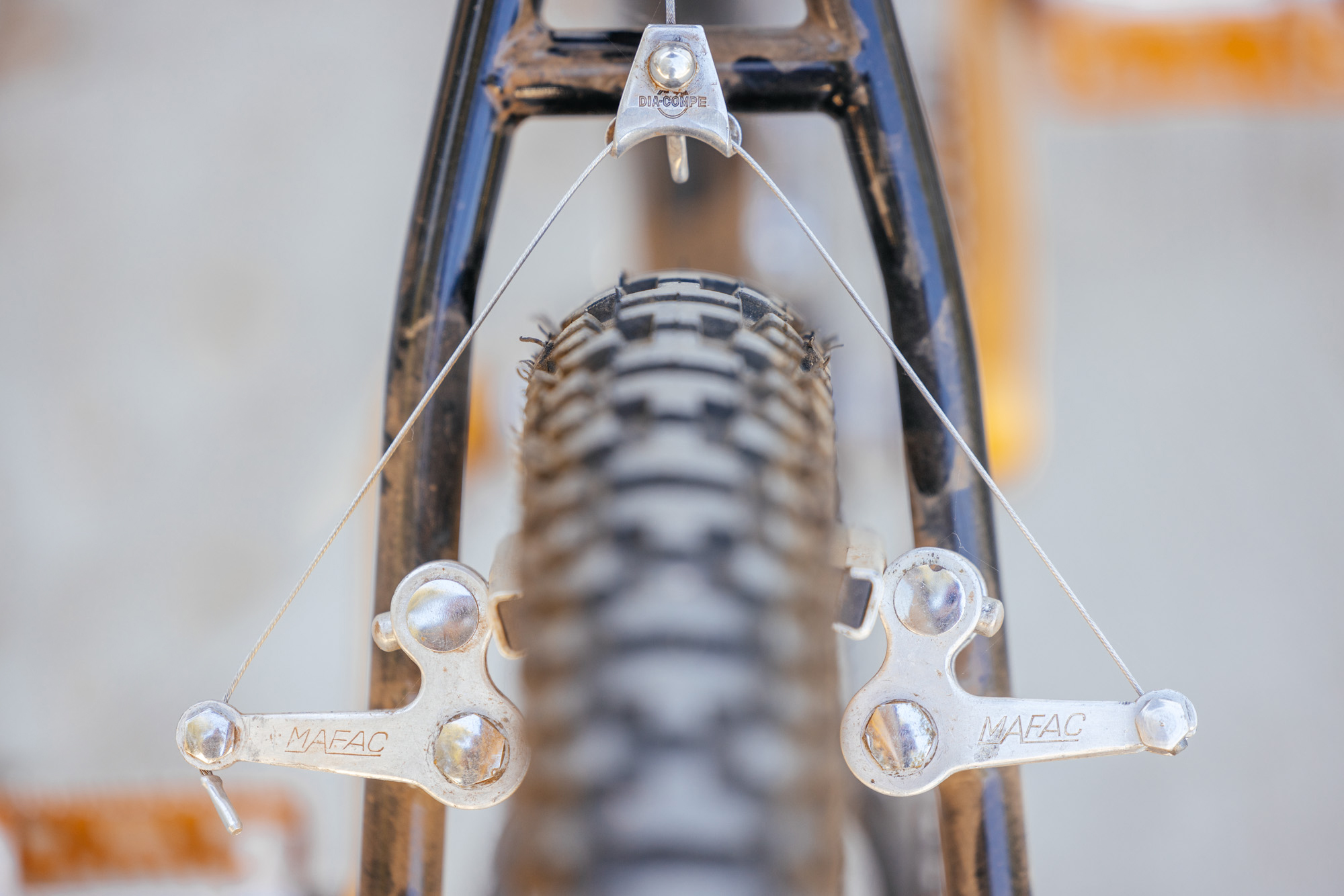
Similar to other early mountain bikes, Paul’s example uses parts from existing at the time BMX, road, and motorcycle offerings. This includes a Shimano 600 rear mech and 600 cranks, Suntour seat post clamp, SR seat post, Mafac tandem cantilever brakes, MKS Foot Jaw pedals, Dia Compe stem, moto bars, Magura levers, Suntour shifters, a Tange headset, American bottom bracket, and Oakley grips. A stand-in for period-correct tires, Terra One rubber completes the look.
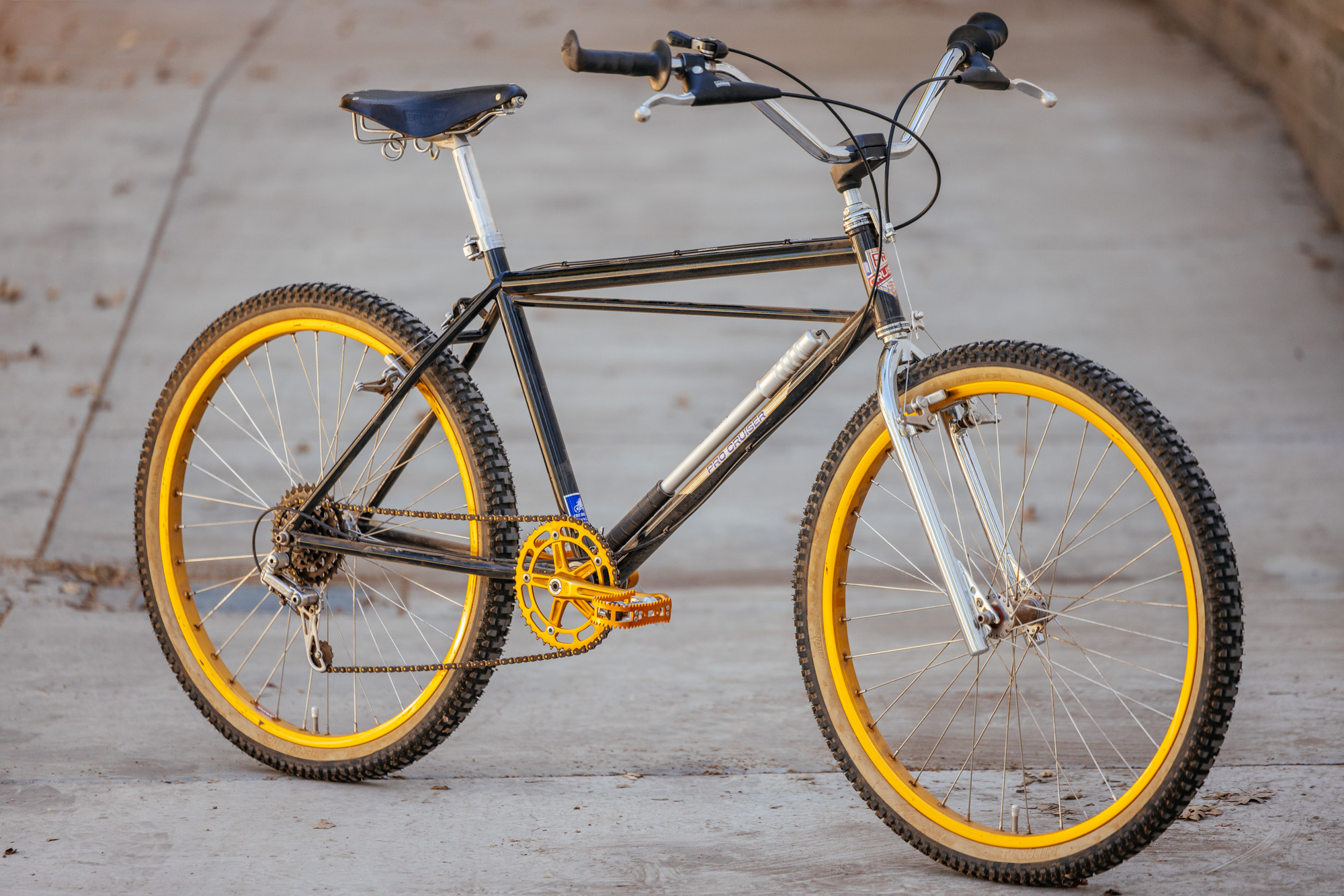
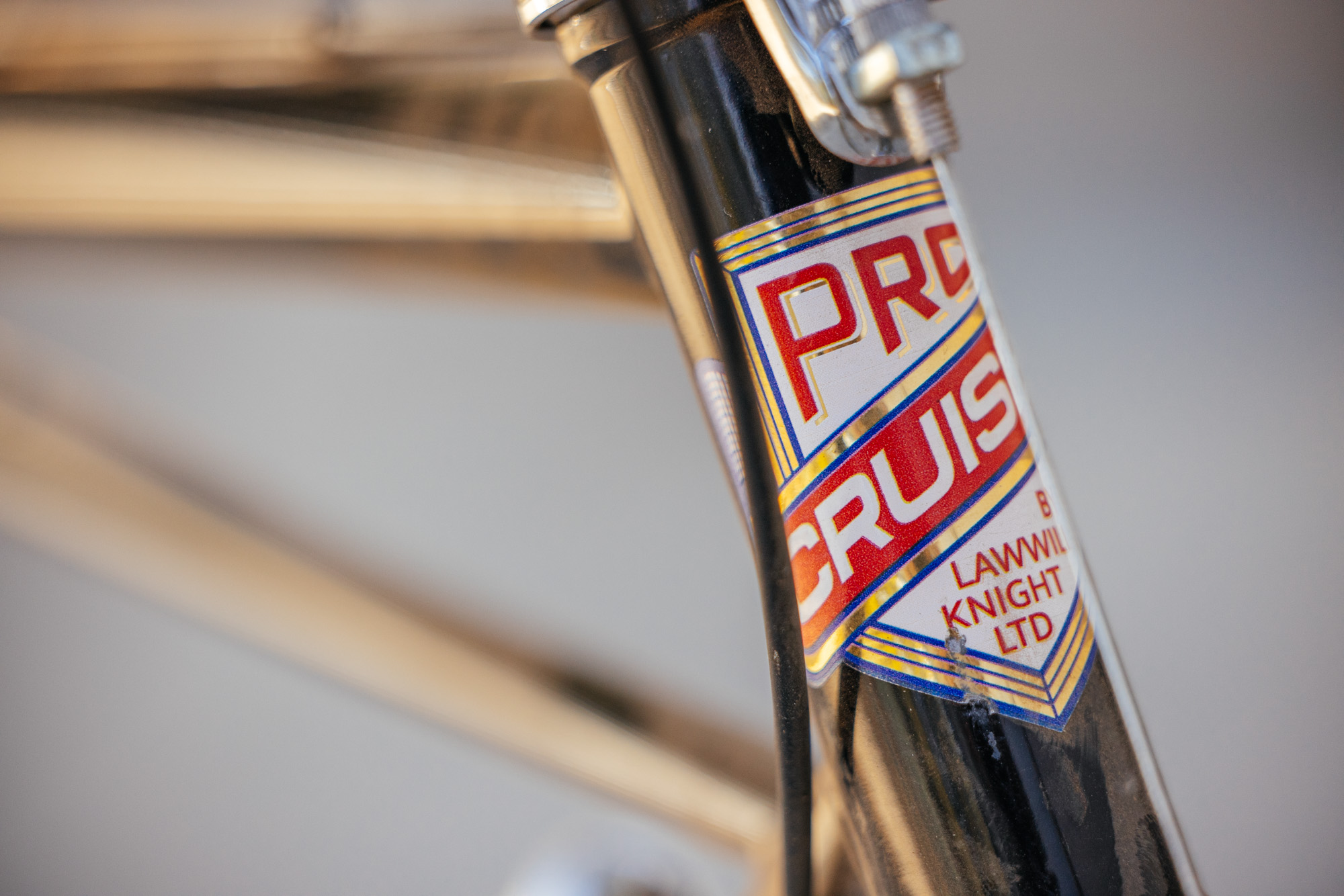
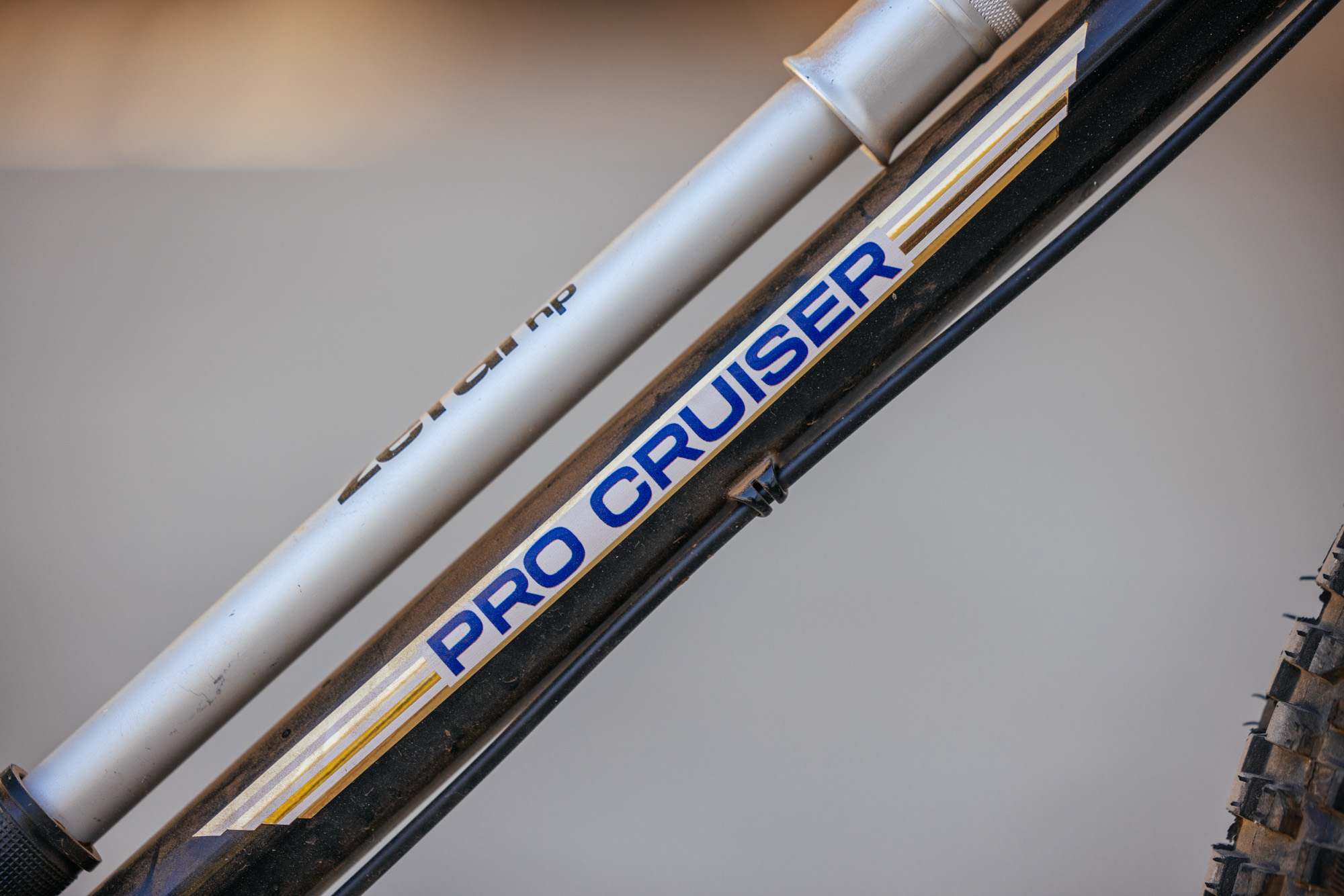
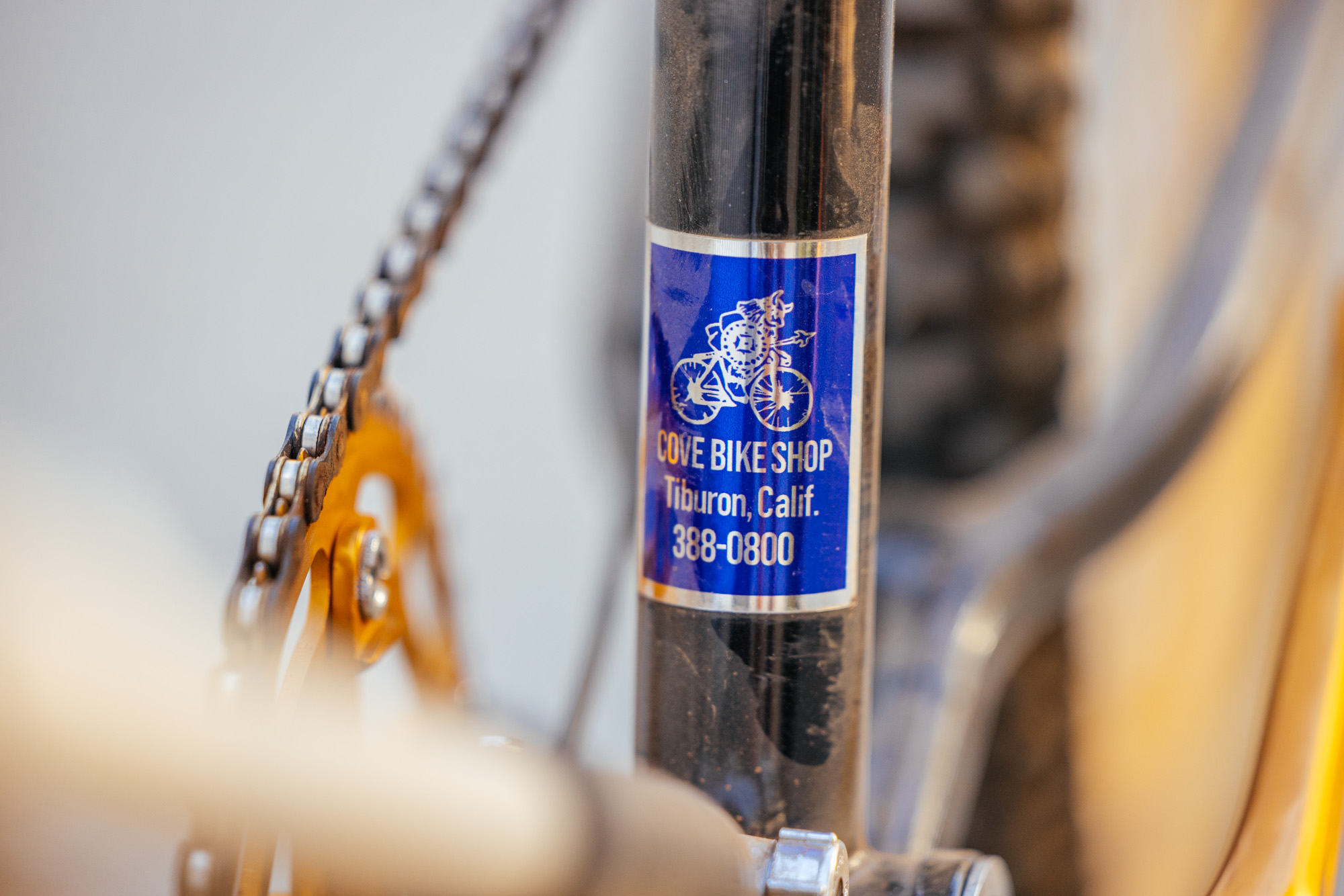
The final touch was the reproduction decals, which Mert Lawwill himself applied to the bike once it was complete. Don Koski applied the last touch: the Cove Bike Shop decal.
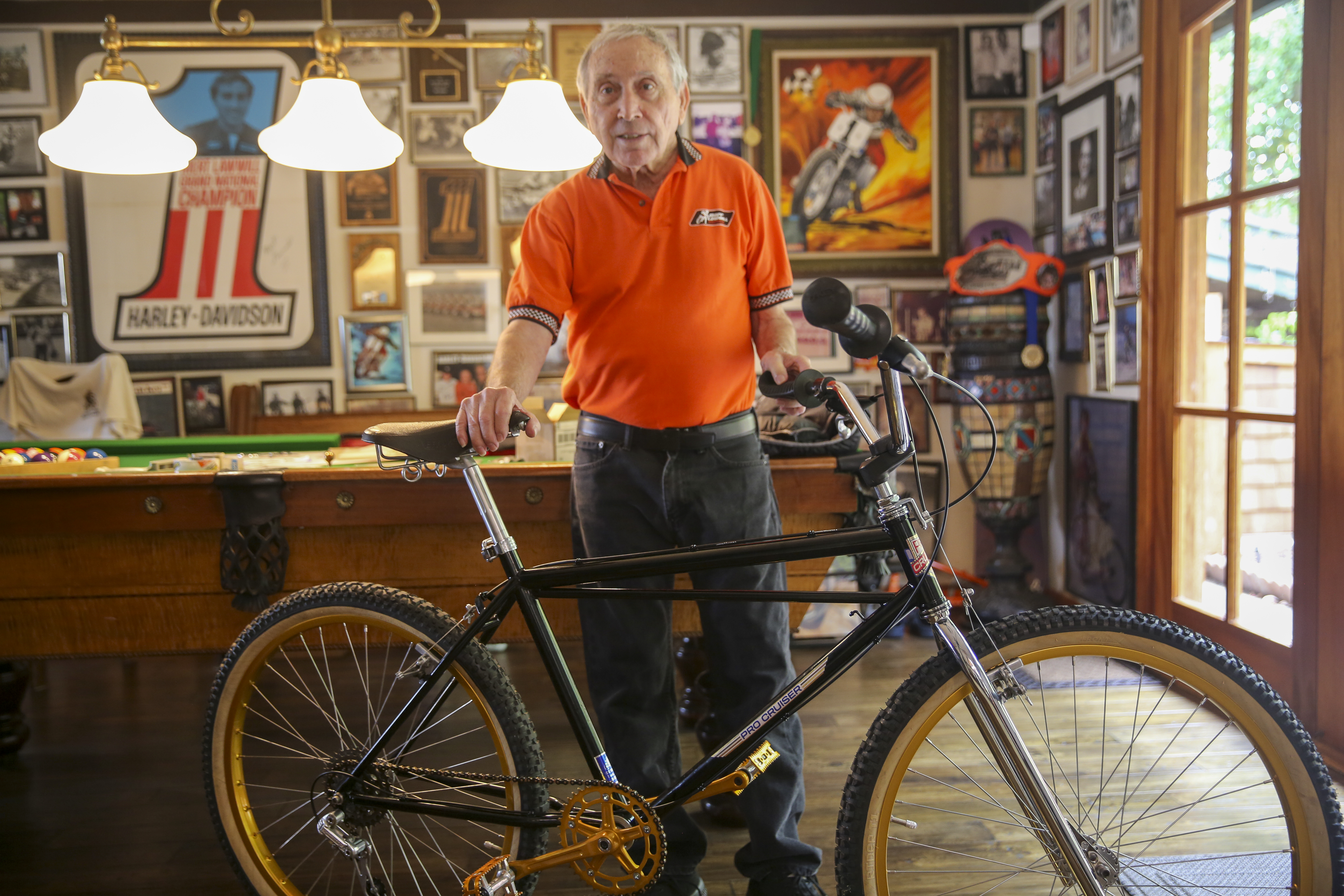
Mert with Paul’s finished Pro Cruiser, photo by David Smith
Many thanks to Ken Baker, Paul Price, Shawn Wilkerson, and the legend himself, Don Koski, for helping out on this article!
Build Spec
- Frame: Pro Cruiser
- Fork: Cook Brother
- Headset: Tange
- Stem: Dia Compe
- Handlebars: Magura
- Grips: Oakley 3
- Shifter: Suntour
- Derailleur: Shimano 600
- Brake levers: Magura
- Brake calipers: Mafac
- Seatpost: SR
- Saddle: Brooks B72
- Hubs: Phil Wood
- Freewheel: Shimano
- Rims: Araya
- Tires: Terra One
- Cranks: Shimano 600
- Pedals: MKS